



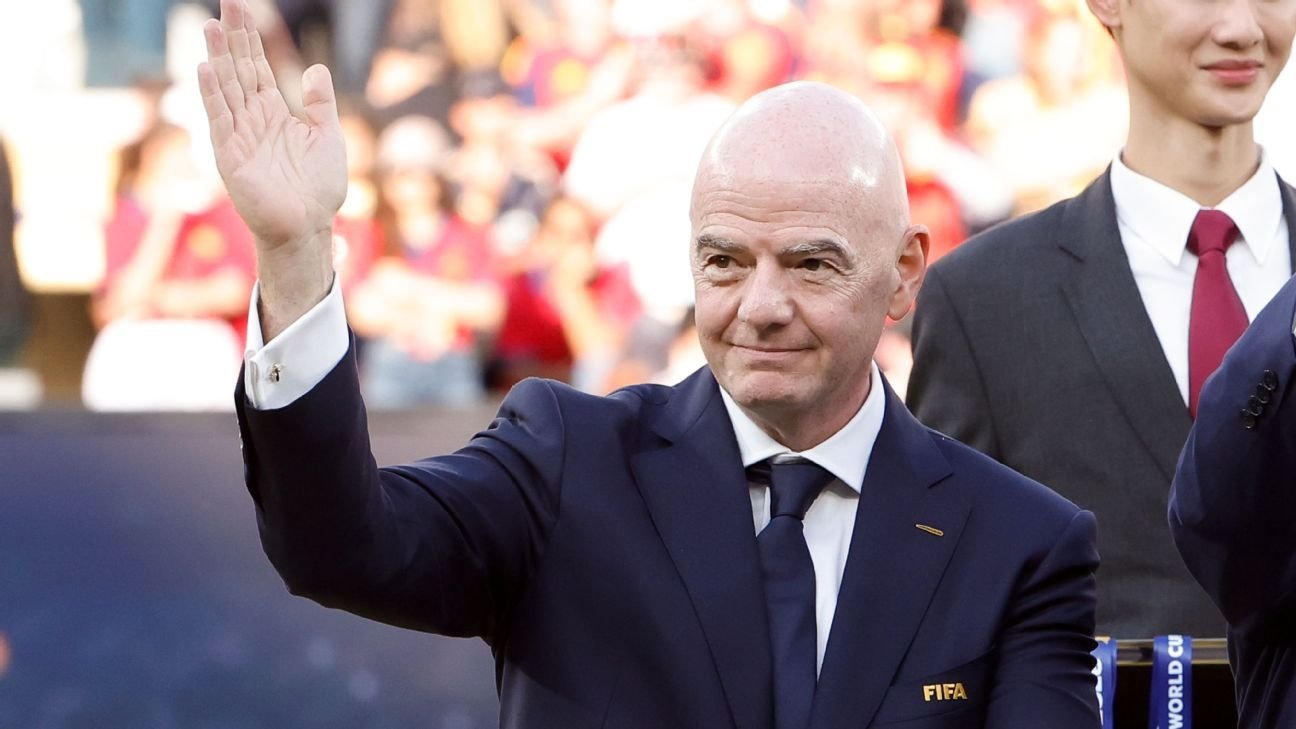
On Wednesday, FIFA issued an apology for the mistakes surrounding Gianni Infantino’s controversial proposal to sell stakes in the World Cup. During a summit in Morocco, senior staff expressed their unwavering support for Infantino’s presidency.
World soccer’s governing body sought to maintain a united front amidst growing criticism and calls for Infantino to resign due to the fallout from these plans.
– Potential challengers to Infantino for FIFA presidency
– Analysis of why Infantino’s plan to sell World Cup stakes was flawed
– Could Infantino face challenges to his FIFA presidency following the rejection of his World Cup plans?
According to a statement from FIFA, Secretary General Mattias Grafström and members of the management board present at the meeting voiced their support for Infantino, despite the ongoing controversy.
The organization acknowledged mistakes related to the proposed sale of World Cup profits through a commercial arm, FIFA Forward Enterprise (FFE), and conceded that the situation should have been managed more effectively.
FIFA communicated that a letter had been dispatched to the FIFA Council and member associations, apologizing for the missteps and promising that similar issues would be prevented in the future.
Grafström’s show of support was significant, especially following his previous remarks that distanced him from Infantino’s now-abandoned proposal, which he described as a “sad and reproachable series of events” in an email to FIFA staff.
Infantino also expressed his backing for Grafström, while FIFA confirmed that the FFE initiative was “no longer under consideration.”
“Lessons will be learned from this experience, and FIFA is committed to enhancing its processes,” the statement added.
Nonetheless, the statement emphasized that “FIFA will not tolerate any attacks on its integrity, governance, or due process and is prepared to take all necessary steps to protect its reputation.”
Infantino withdrew his ambitious $20 billion proposal following significant backlash from global soccer officials, which aimed to raise $4.2 billion by selling a minority stake in FFE, with Thrive Eternal, a firm initiated by Joshua Kushner, positioned as the primary investor.
It remains to be seen whether Wednesday’s meeting will alleviate the pressure surrounding Infantino.
Earlier on the same day, the association representing European soccer leagues, which includes the Premier League, LaLiga, and Serie A, called for reforms in FIFA governance. They labeled the FFE proposal “dangerous,” highlighting broader concerns regarding FIFA’s operational framework.
They raised “serious questions about FIFA’s governance, internal culture, and decision-making processes.”
“Now more than ever, FIFA must pursue governance reforms that grant all relevant stakeholders a formal voice in decisions shaping the future of our sport,” they insisted.
Former Portuguese star Luis Figo has also called for Infantino’s resignation, expressing that he has “debased the office.”
FIFA refuted a report from a British media outlet, which claimed Infantino had offered Morocco the chance to host the final of the 2030 World Cup in exchange for support. Morocco is vying to host the final at the planned 115,000-seat King Hassan II Stadium near Casablanca. Spain also has potential sites in mind, including the home stadiums of Real Madrid and Barcelona.
A FIFA spokesperson labeled the notion as “false and misleading,” stating, “The FIFA president has made no promises regarding the hosting of the 2030 World Cup final, with decisions to be made by FIFA in due course.”
Additionally, Canadian Prime Minister Mark Carney expressed a loss of confidence in Infantino, citing a “fatal” governance failure due to a lack of consultation with senior advisers.
“I certainly do not have confidence in Mr. Infantino,” said Carney, who had previously shared stages with Infantino at various events during the 2026 World Cup co-hosted by Canada, Mexico, and the United States.
This tumultuous week has raised significant questions regarding Infantino’s leadership ahead of the upcoming elections in March.
The European governing body, UEFA, has been particularly vocal, threatening to boycott the World Cup if Infantino proceeded with the FFE.
Even after Infantino’s retraction, UEFA expressed a loss of confidence in FIFA’s leadership, possibly setting the stage for a challenge to Infantino’s presidency. The governing body for North and Central American and Caribbean soccer (Concacaf) also criticized the FIFA leadership for failing to prioritize football.
Moreover, signs of division within FIFA have surfaced, with Arsène Wenger, FIFA’s chief of global football development, distancing himself from the FFE initiative. Last week, Infantino’s senior adviser Carlos Cordeiro resigned, and chief operating officer Kevin Lamour claimed staff had been “deceived” by the president’s lack of transparency.
Infantino is vying for his fourth and final term in office during the elections scheduled for March.
This report was contributed by the Associated Press.