



A few weeks can significantly change the landscape of soccer. On July 19, FIFA president Gianni Infantino was celebrating Spain’s victory at the 2026 World Cup and gearing up for an uncontested election process for his final term at a FIFA congress in Rabat, Morocco. Fast forward to last week, and Infantino is facing backlash for nearly unilaterally advancing his FIFA Forward Enterprise (FFE) initiative — a plan to sell a minority stake of FIFA to a private entity that would manage the men’s and women’s World Cups’ commercial affairs. This proposal has drawn criticism from various nations, confederations, and influential stakeholders in the sport, putting Infantino under significant scrutiny.
As the FIFA presidential elections approach in March, the strength of Infantino’s position has wavered. Should the emerging dissent present credible challengers — candidates must declare and submit their proposals by November 18 — who could they be and what sets them apart?
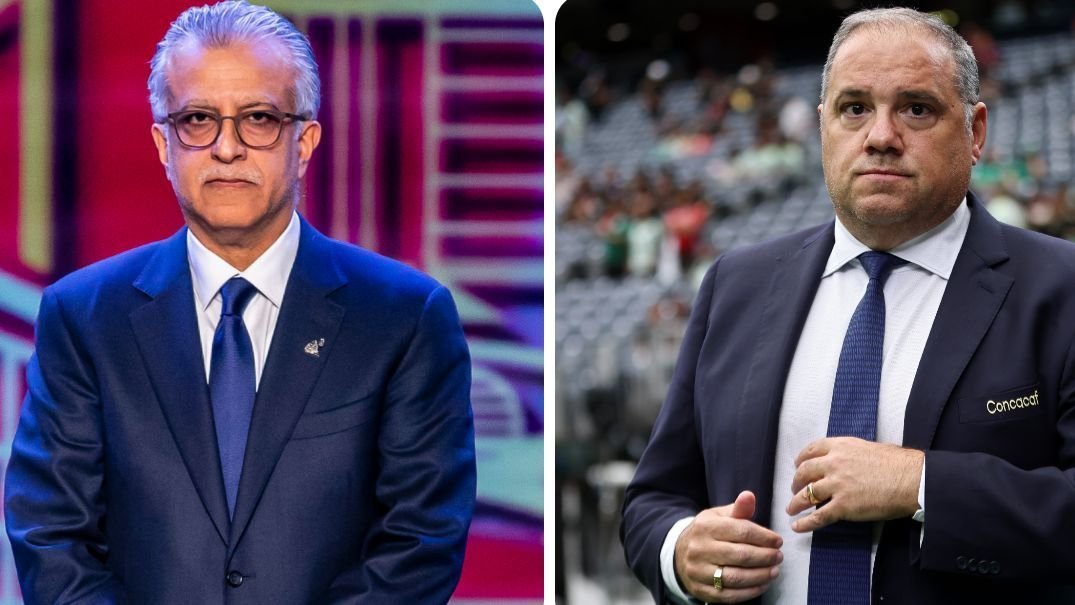
Victor Montagliani, Concacaf President
Among potential candidates, Montagliani stands out as he is the only one honored with a dedicated day. Last year, his hometown of Vancouver, Canada, declared September 12 as “Victor Montagliani Day” to celebrate his role in bringing the World Cup to Canada. “Having a day dedicated in my name is an unimaginable and deeply humbling honor that I will treasure forever,” he remarked.
As a prominent contender to succeed Infantino if he runs in March, Montagliani boasts a wealth of accomplishments from his 20-year career in soccer administration. He oversaw Canada’s hosting of the 2015 Women’s World Cup, launched the Canadian Premier League, and stabilized Concacaf since becoming president in 2016, following a tumultuous period marked by corruption charges against his predecessors.
“I’ve received numerous questions regarding corruption from a Concacaf perspective, and I fully understand why,” Montagliani stated during his presidential campaign. “The day I’m no longer asked about that, and we lack a legal report, will be the day we’ve truly moved forward. Let’s not kid ourselves; the journey ahead is still long.”
At 60 years old, Montagliani faces the challenge of building trust at FIFA if he ascends to leadership. His background as Concacaf president may work to his advantage, as he is perceived as a candidate with broad appeal beyond Europe.
Yet, he has not navigated through controversies unscathed. In 2008, while serving as the director of Canada’s national teams, he faced criticism for the handling of sexual assault allegations against Bob Birarda, a former Vancouver Whitecaps coach. Birarda was sentenced to jail in 2022 due to those allegations, leading former players to criticize Montagliani’s response and call for his suspension.
Montagliani also defended a controversial agreement forged during his tenure with the Canadian Soccer Association that invited private investment to manage its media and marketing rights, which resulted in player strikes, a $40 million lawsuit from players, and parliamentary inquiries.
Sheikh Salman bin Ebrahim Al Khalifa, AFC President
As UEFA emerged as a staunch opponent of Infantino’s stake sale plan, the Asian Football Confederation, led by Sheikh Salman bin Ebrahim Al Khalifa, voiced its own discontent. The AFC issued a letter to FIFA, listing numerous concerns about the proposal and highlighting weaknesses in FIFA’s consultative processes that need addressing.
Part of Bahrain’s royal family, Al Khalifa has been immersed in soccer administration for over three decades. He led the Bahrain Football Association from 2002 to 2013 before becoming the AFC president. His tenure has seen the expansion of the AFC Champions League, which stands out as one of his notable achievements.
If a non-European candidate is sought, Al Khalifa is a viable option. He has championed women’s football in the region and has expressed opposition to expanding the men’s World Cup to 64 teams. Nevertheless, he has faced criticism due to his ties to allegations of human rights violations by the Bahraini royal family amid the 2011 Arab Spring.
Nasser Al-Khelaifi, PSG President
Having started his career as a professional tennis player over 30 years ago, Nasser Al-Khelaifi has evolved into one of the most influential figures in global soccer.
Al-Khelaifi’s longstanding relationship with Qatar’s now-emir, Tamim bin Hamad Al Thani, began when they played tennis together as children, and this alliance has greatly benefited both men. Al-Khelaifi has served as head of Qatar Sports Investments for the past 14 years, alongside his role at beIN Media Group.
Under his leadership, QSI acquired Paris Saint-Germain, resulting in the club’s 12 Ligue 1 titles and two recent Champions League titles. He has overseen QSI’s investments, including record-breaking transfers such as Neymar’s €222 million move and Kylian Mbappé’s €180 million transfer, along with acquiring Lionel Messi as a free agent in 2021.
Al-Khelaifi’s significant achievements extend beyond the pitch. In April 2021, when major clubs attempted to establish a European Super League, he publicly opposed the initiative and led the charge against it. He became chairman of the European Clubs Association (ECA) and has emerged as a prominent voice within European soccer. However, despite calls from some quarters for him to succeed Infantino, he has reportedly shown little interest in pursuing the position.
Moreover, the Qatar Football Association’s backing of Infantino poses an obstacle to any potential Al-Khelaifi candidacy.
Nonetheless, Al-Khelaifi is not free from criticism. In 2024, Bayern Munich supporters displayed a banner expressing discontent with him, which the club later apologized for. He has faced scrutiny for perceived conflicts of interest arising from his various roles, particularly as the ECA influences the Champions League’s format and strategy while beIN is a major broadcasting partner of the competition.
Other Mentioned Names
Aleksander Čeferin, UEFA President
If anyone could be considered Infantino’s most prominent critic, it would be UEFA president Aleksander Čeferin. The 58-year-old Slovenian boycotted the World Cup final in protest of FIFA’s handling of USMNT forward Folarin Balogun’s controversial red card. During his presidency, he successfully thwarted the European Super League but has faced his own share of controversies, particularly regarding proposed changes to the Champions League and Women’s Champions League formats.
Lise Klaveness, Norwegian Football Association President
Under Lise Klaveness’s leadership, the Norwegian Football Association has vocally challenged FIFA. A former professional player with 73 caps for Norway, Klaveness is also a trained lawyer and has gained support from notable figures, including former FIFA president Sepp Blatter, who endorsed her as the time for FIFA to have its first female president. Blatter stated, “Lise Klaveness deserves the utmost respect,” praising her unwavering stance against Infantino.
Mattias Grafström, FIFA Secretary General
Reports suggest that the relationship between Grafström and Infantino has soured over the proposed FFE. In an email to FIFA staff, Grafström remarked on the unfortunate series of events surrounding FFE that ultimately led to its abandonment. He noted that “individuals, unstable moments, and unfortunate episodes come and go,” emphasizing the importance of professionalism and perspective for the organization moving forward.
His lack of support for Infantino is significant, and as FIFA’s second-most senior figure, a leadership challenge from Grafström cannot be ruled out.