



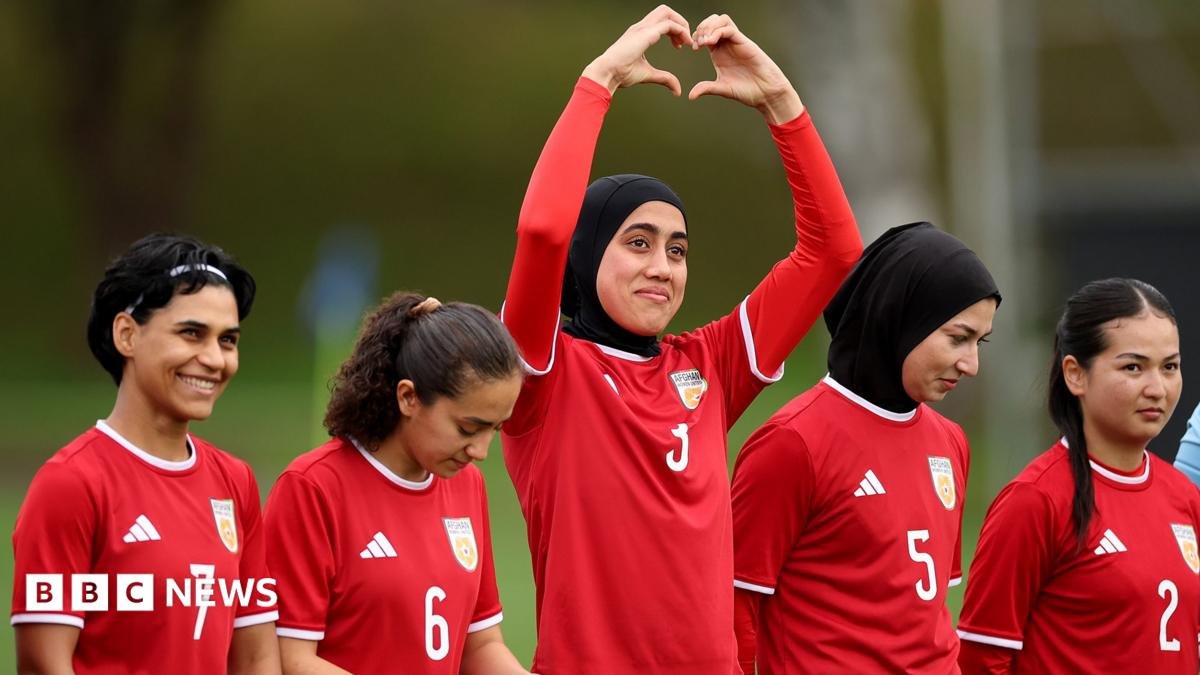
She is studying criminal justice at college, plays football, and makes her own choices. Having that freedom feels incredible, she says.
Still, she often feels guilty and deeply sad about the freedoms denied to women back home.
She notes that millions of girls are unable to study or pursue their dreams, which makes her determined to seize every opportunity.
At times, she admits, she puts too much pressure on herself, tears streaming down her face.
She credits Khalida Popal, founder of the original Afghan women’s team, for pressing FIFA to recognize them in exile. Gaining recognition without Taliban approval, she says, is historic.
She adds that this official status is something she will always cherish.
When the BBC asked the Taliban’s sports director, Ahmadullah Wasiq, about FIFA’s backing of the women’s team, he declined to comment. He did say he wanted FIFA to visit and resume its general support for football in the country, which largely ended after the Taliban took power. FIFA has previously said any return of support depends on women being allowed to play.
The matches in Auckland are unforgiving. A single goal decides the opener, giving the Cook Islands a 1-0 win. Three days later, despite Afghanistan’s effort, the Cook Islands win again, 3-0.
For the players, though, these games symbolize far more than two defeats.
They mark a return to the field and a statement that, despite exile, separation from family, and years of uncertainty, Afghanistan’s women footballers have not disappeared.