



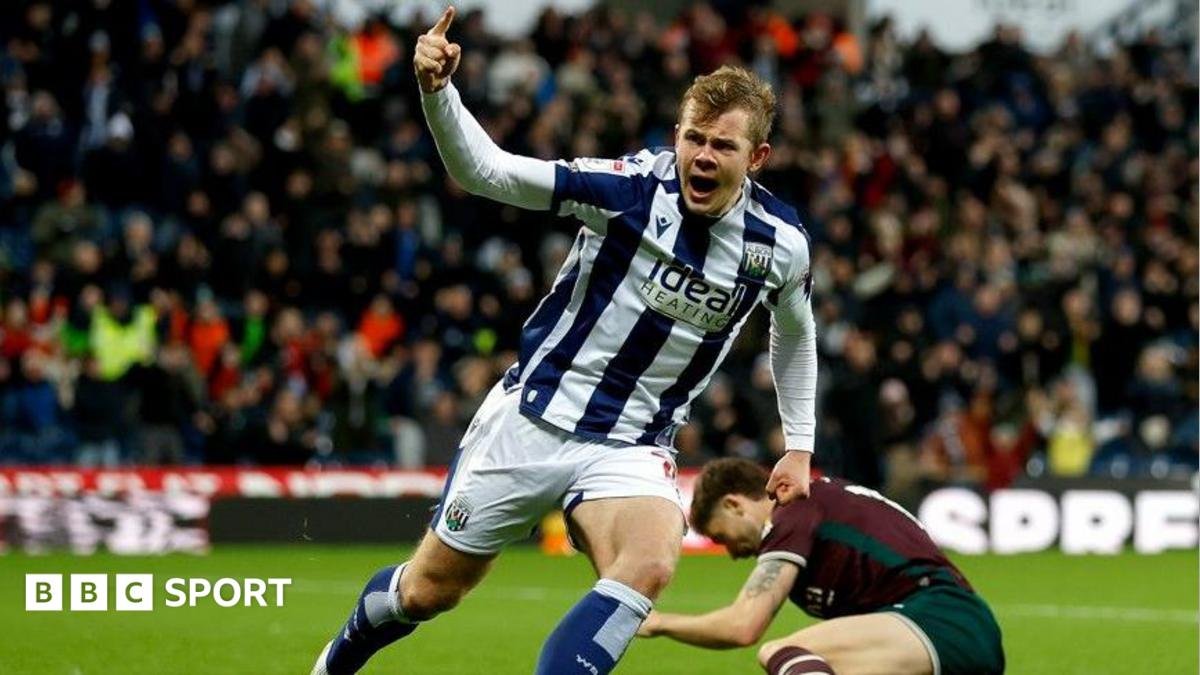
On Tuesday, the Football Association charged Heggebo with misconduct under FA Rule E3.1.
West Brom argued in his defence that the ball deflected off the goalkeeper before hitting Heggebo’s hand.
The Baggies say the deflection changed the ball’s path, leaving the player with less than a tenth of a second to react.
Given that the handball was accidental, the club contends it should not be considered a deliberate attempt to deceive.
Since the ban was announced on Thursday, West Brom have said they will write to the FA to ask how players are reasonably expected to respond in similar scenarios in the future.
Players guilty of simulation have previously faced retrospective punishment.
English football’s governing body says the FA can take retrospective action when a match official may have been misled.
This pathway is not for contentious calls, only for cases with compelling evidence that a player intentionally deceived an official.
However, West Brom believe this is the first charge of its kind in English football since a rule change two years ago.
The incident has reignited debate about using Video Assistant Referees (VAR) in the Championship.
VAR is used in every Premier League match, but EFL clubs have blocked its introduction so far.
In April, clubs in the second tier rejected a proposal to bring in a version of VAR for the 2026-27 season.
BBC Sport understands the idea has been shelved for the foreseeable future and is unlikely to be revived next year—meaning there would be no quick reviews of incidents like this.