



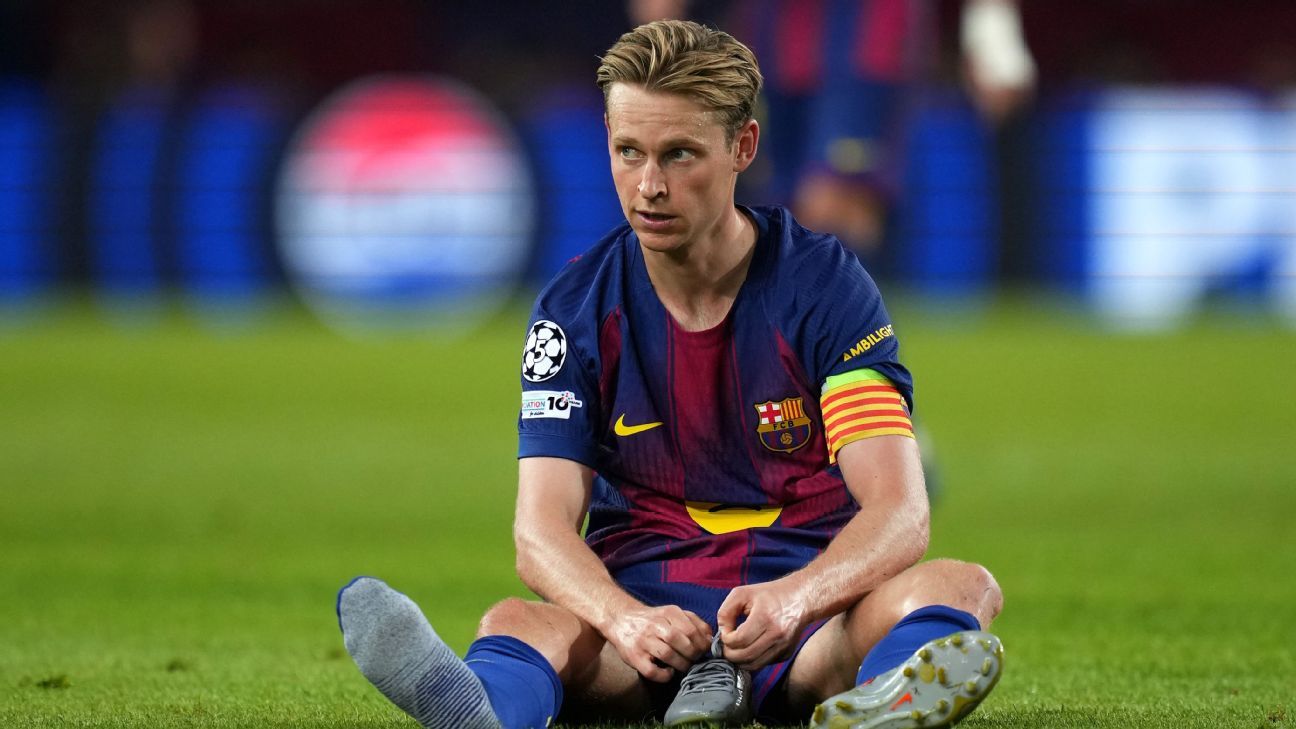
The Premier League season is now seven matches in, and with the transfer window closed until January 1, there will be no further player movement unless a free agent is available.
‘
As teams begin to find their rhythm and recent summer signings settle in, it’s a good time to assess the status of players within their clubs.
Below are depth charts highlighting the primary starters and backup options for the six most popular teams in the league. Predicting who will be relied upon as the schedule intensifies is tricky, but this should offer insight into the strength of each squad.
(Note: Each player is listed in the main squad only once, regardless of potential roles. Injured players are included, with long-term absences indicated separately.)


Goalkeeper: David Raya, Kepa Arrizabalaga, Tommy Setford
Right back: Jurriën Timber, Ben White
Left back: Riccardo Calafiori, Myles Lewis-Skelly
Center back: William Saliba, Gabriel, Cristhian Mosquera, Piero Hincapié
Central midfield: Declan Rice, Martín Zubimendi, Martin Ødegaard, Mikel Merino, Christian Nørgaard, Ethan Nwaneri, Eberechi Eze
Forward: Bukayo Saka, Gabriel Martinelli, Leandro Trossard, Noni Madueke, Max Dowman
Striker: Viktor Gyökeres, Gabriel Jesus, Kai Havertz
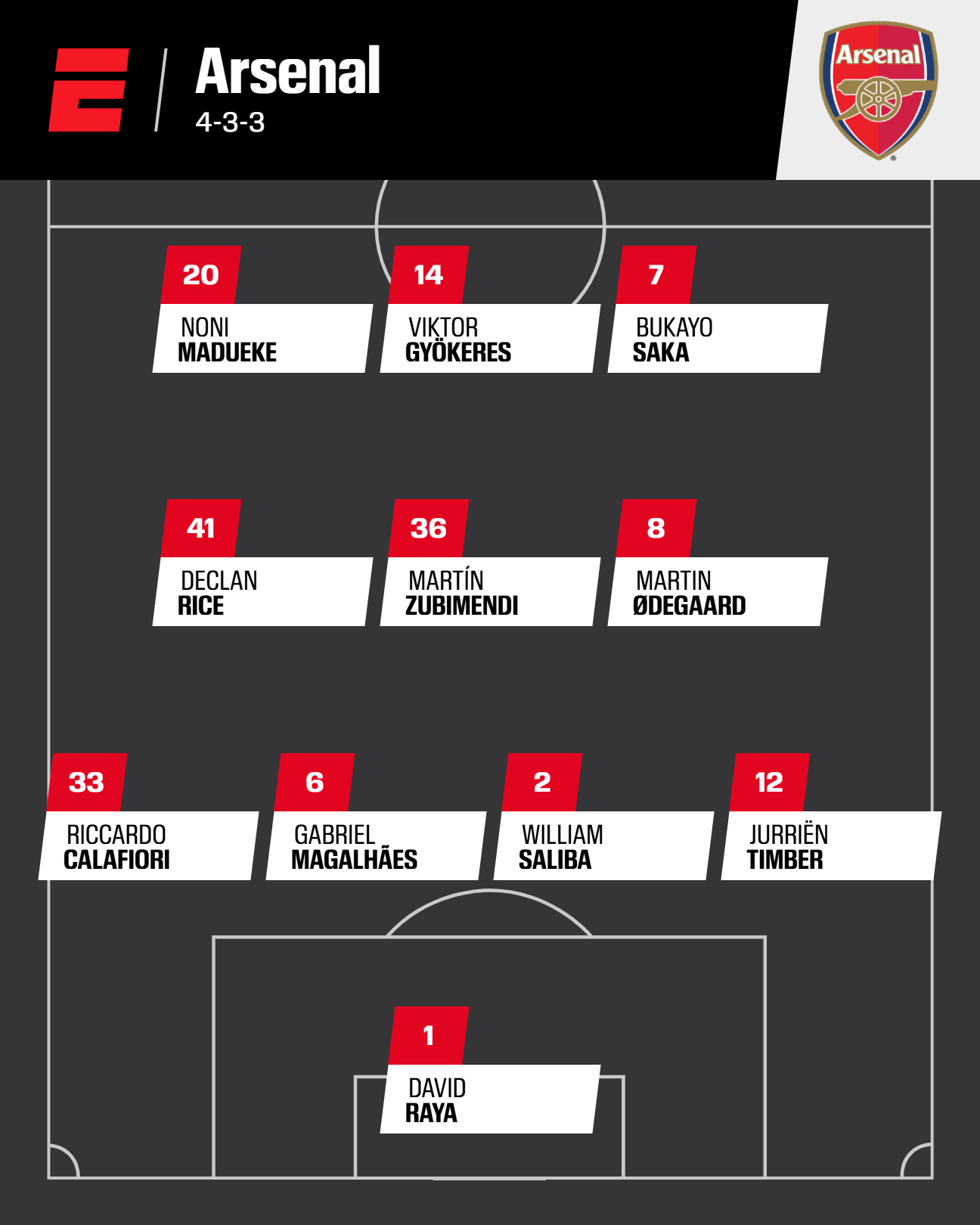
FIRST XI (4-3-3)
Raya
Timber – Saliba – Gabriel – Calafiori
Ødegaard – Zubimendi – Rice
Saka – Gyökeres – Madueke
SECOND XI (4-3-3)
Arrizabalaga
White – Mosquera – Hincapié – Lewis-Skelly
Merino – Nørgaard – Eze
Trossard – Havertz – Martinelli
EXTRAS: Setford, Dowman, Nwaneri
LONG-TERM INJURY: Gabriel Jesus
Arsenal has emerged from the summer transfer window significantly strengthened. The only notable departure was midfielder Thomas Partey, while five elite international players were brought in, creating credible competition for each starting position.
Among the summer signings, Martin Zubimendi stands out as a clear upgrade for the No. 6 role, providing manager Mikel Arteta with a resilient, deep-lying playmaker. Eberechi Eze and Piero Hincapié were eye-catching additions, while striker Viktor Gyökeres fulfills the long-standing need for a traditional No. 9, known for his tenacity and goal-scoring ability. Additionally, Kai Havertz’s ability to drop into deeper positions enhances the team’s attacking options.
Versatility is a consistent theme within the squad. Myles Lewis-Skelly effectively covers both left back and holding midfield, while Riccardo Calafiori, Hincapié, and Jurriën Timber are adept at playing both left back and center back, allowing Arsenal to vary their build-up strategies.
Midfielders Mikel Merino and Eze can operate effectively either as advanced No. 8s or as link players, complementing the creative output of Martin Ødegaard and the defensive capabilities of Declan Rice. Out wide, Noni Madueke adds depth to an already talented trio of wide forwards, despite his current injury setback. Furthermore, young academy graduates Max Dowman (15) and Ethan Nwaneri (18) bring game-changing energy off the bench.
While establishing cohesion may take some time, Arsenal is now well-equipped with depth, balance, and tactical flexibility to compete for silverware on all fronts.

Goalkeeper: Robert Sánchez, Filip Jørgensen, Gabriel Slonina
Right back: Reece James, Malo Gusto, Josh Acheampong
Left back: Marc Cucurella, Jorrel Hato
Center back: Levi Colwill, Benoît Badiashile, Wesley Fofana, Trevoh Chalobah, Tosin Adarabioyo
Central midfield: Enzo Fernández, Moisés Caicedo, Romeo Lavia, Andrey Santos, Dário Essugo, Cole Palmer, Facundo Buonanotte
Forward: Pedro Neto, Cole Palmer, Jamie Gittens, Mykhailo Mudryk, Estevao, Tyrique George
Striker: João Pedro, Liam Delap
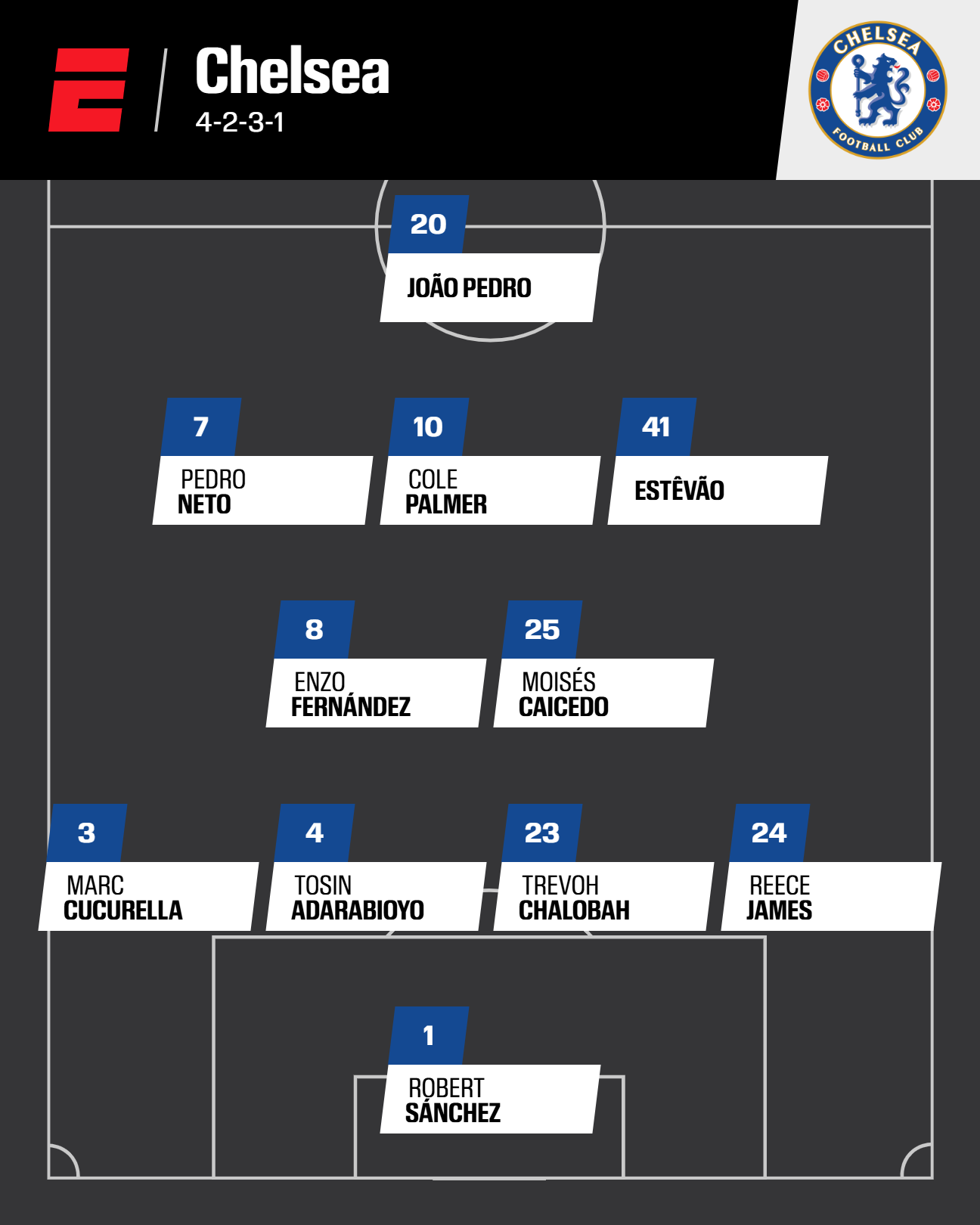
FIRST XI (4-2-3-1)
Sanchez
James – Adarabioyo – Chalobah – Cucurella
Fernandez – Caicedo
Estevao – Palmer – Neto
Joao Pedro
SECOND XI (4-2-3-1)
Jørgensen
Gusto – Fofana – Badiashile – Hato
Andrey Santos – Lavia
Gittens – Buonanotte – Garnacho
Delap
EXTRAS: Slonina, Essugo, George.
LONG-TERM INJURY: Levi Colwill.
LONG-TERM ABSENTEES / INACTIVE: Disasi, Mudryk, Sterling.
After spending over £2 billion, a sense of stability is finally emerging, although injuries and some internal conflicts are challenging squad depth. Currently, the team is facing a defensive crisis, compounded by absences in attack, alongside Raheem Sterling, Axel Disasi, and Mykhailo Mudryk being left out of the squad.
A clearer picture of the central defense was forming following the Club World Cup, but Levi Colwill’s injury has necessitated adjustments. Establishing a consistent pairing is now a priority; until then, the backline feels patched together. However, the full backs are quality starters, and Chelsea has experienced cover on both sides, such as Malo Gusto’s strong competition for a starting spot.
In midfield, the established double pivot of Enzo Fernández and Moisés Caicedo offers control and energy, representing arguably the best duo in the league on paper. Yet, performance drops when either is absent; while Andrey Santos is a talented player, he lacks experience at this level, and Romeo Lavia’s fitness is a concern.
In front, there is undeniable talent; however, cohesion remains a work in progress. Summer signings Alejandro Garnacho and Jamie Gittens are still adapting but offer strong competition for Pedro Neto and Estevao in their respective roles. Up front, Liam Delap’s physicality and directness complements the more technical abilities of Joao Pedro.
Despite ongoing challenges, manager Enzo Maresca has enough quality to compete on multiple fronts. The essential focus lies on solidifying the center back partnership, maintaining the double pivot’s availability, and integrating new wide players effectively—there are promising signs, particularly with Estevao’s impressive start.

Goalkeeper: Alisson Becker, Giorgi Mamardashvili, Freddie Woodman
Right back: Jeremie Frimpong, Conor Bradley
Left back: Andy Robertson, Milos Kerkez
Center back: Virgil van Dijk, Ibrahima Konaté, Joe Gomez, Giovanni Leoni
Central midfield: Alexis Mac Allister, Dominik Szoboszlai, Curtis Jones, Wataru Endo, Ryan Gravenberch, Stefan Bajcetic, Florian Wirtz
Forward: Mohamed Salah, Cody Gakpo, Federico Chiesa, Rio Ngumoha
Striker: Alexander Isak, Hugo Ekitike
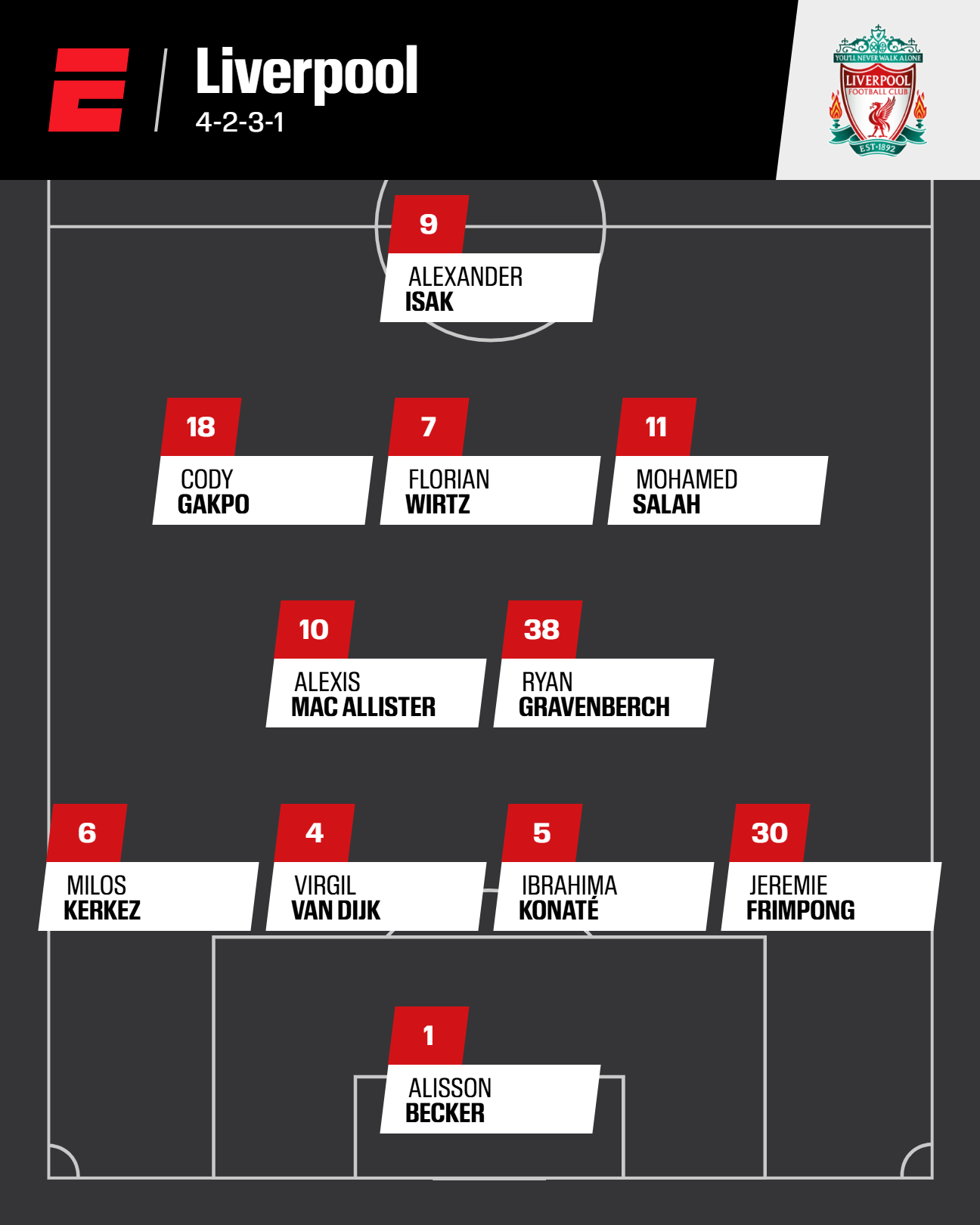
FIRST XI (4-2-3-1)
Alisson
Frimpong – Konate – Van Dijk – Kerkez
Mac Allister – Gravenberch
Salah – Wirtz – Gakpo
Isak
SECOND XI (4-2-3-1)
Mamardashvili
Bradley – Gomez – Leoni – Robertson
Endo – Jones
Ngumoha – Szoboszlai – Chiesa
Ekitike
EXTRAS: Bajetic
As reigning champions, Liverpool has reinforced their squad with over £450 million spent on five high-profile players this summer. Despite a shaky start to the season, the potential within their squad is immense, and the challenge ahead lies in effectively integrating these new additions.
Alisson remains the trusted No. 1 and arguably the world’s most complete goalkeeper, while Giorgi Mamardashvili provides sound backup. However, he will need to improve his distribution if he hopes to challenge Alisson for the starting position.
Liverpool’s full-back positions have traditionally relied on pace and vigor, and the new signings, including Jeremie Frimpong and Milos Kerkez, are set to enhance this aspect, bringing significant attacking contributions. Competent cover exists in the form of Andy Robertson and Conor Bradley.
In central defense, although Virgil van Dijk and Ibrahima Konaté form an exceptional partnership, the lack of depth is worrisome, particularly with Joe Gomez and Giovanni Leoni unable to replicate their high standard. Losing either starting central defender may compromise the team’s stability.
The midfield duo of Alexis Mac Allister and Ryan Gravenberch is crucial; while Curtis Jones and Wataru Endo provide reliable rotation options, Gravenberch’s creativity is hard to substitute. The attacking line has exciting talent, but cohesion remains a work in progress. New recruit Florian Wirtz needs time to adjust, while Dominik Szoboszlai offers versatility, yet the team has not maintained the momentum from last season. Potentially impactful players like Hugo Ekitike and young talent Rio Ngumoha can generate excitement, but stars like Alexander Isak and Mohamed Salah need to find their form.
Despite the uneven beginnings, Liverpool is poised for success, having built a squad primed to contend across multiple competitions.

Goalkeeper: Gianluigi Donnarumma, James Trafford, Stefan Ortega
Right back: Rico Lewis
Left back: Rayan Aït-Nouri,
Center back: Rúben Dias, John Stones, Nathan Aké, Joško Gvardiol, Abdukodir Khusanov
Central midfield: Rodri, Mateo Kovacic, Tijjani Reijnders, Nico González, Nico O’Reilly, Bernardo Silva, Matheus Nunes,Kalvin Phillips
Forward: Phil Foden, Jérémy Doku, Savinho, Rayan Cherki, Oscar Bobb
Striker: Erling Haaland, Omar Marmoush
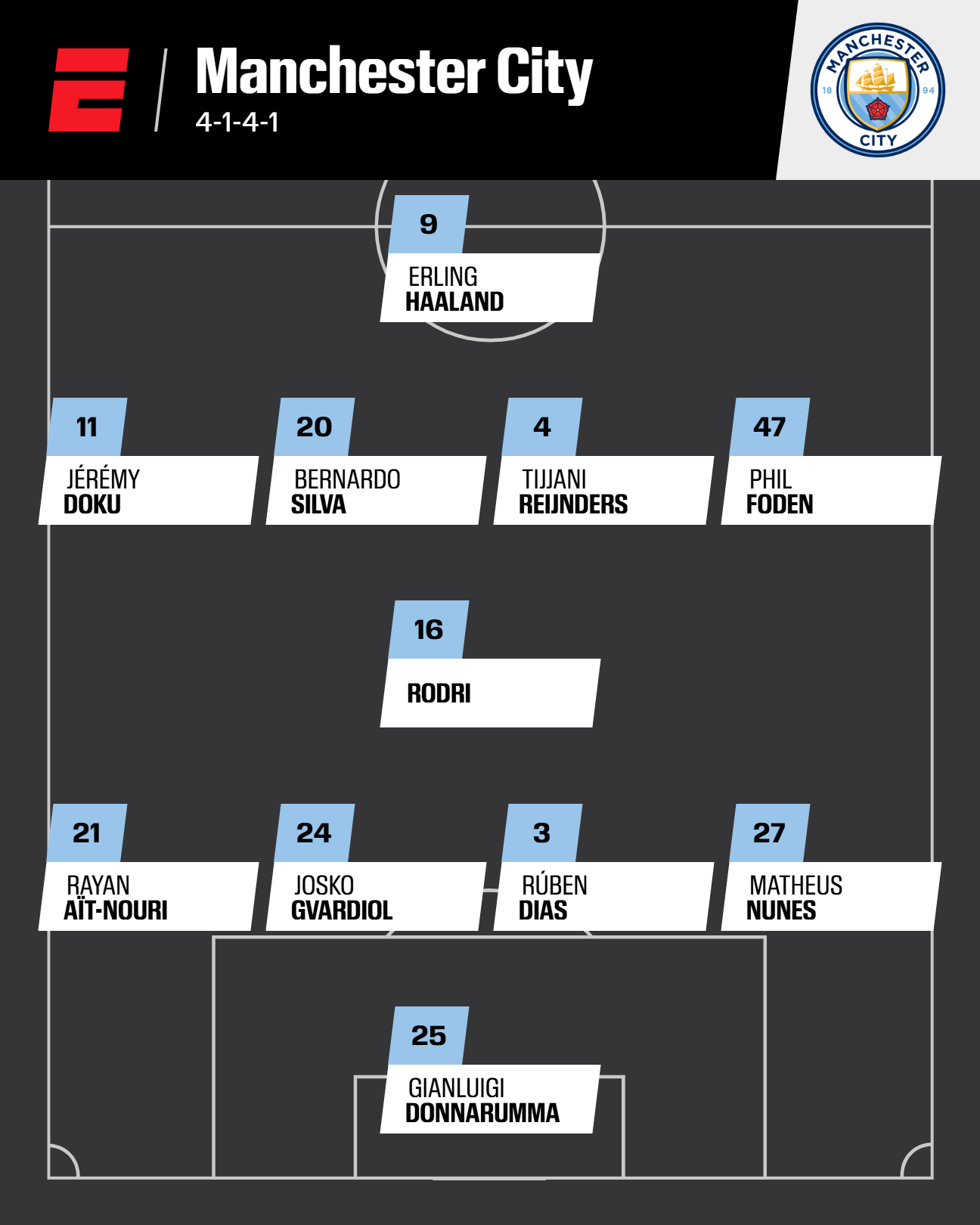
FIRST XI (4-1-4-1)
Donnarumma
Matheus Nunes – Dias – Gvardiol – Aït-Nouri
Rodri
Foden – Bernardo Silva – Reijnders – Doku
Haaland
SECOND XI (4-1-4-1)
Trafford
Khusanov – Stones – Aké – O’Reilly
Nico Gonzalez
Savinho – Kovacic – Cherki – Bobb
Marmoush
EXTRAS: Ortega, Phillips, Lewis
Following a historically active summer transfer window, Pep Guardiola has assembled a squad with remarkable depth, which paradoxically offers more options than ever during his tenure. This skillful squad should enjoy versatility under Guardiola’s unique tactical approach.
The acquisition of Gianluigi Donnarumma, shortly after James Trafford was signed for £25 million, exemplifies the club’s opportunistic strategy rather than strict planning. Nevertheless, this has considerably upgraded their goalkeeping situation following Ederson’s departure to Fenerbahçe.
The defensive unit boasts various tactical options. Right backs include Khusanov for robust challenges, Matheus Cunha for possession-heavy styles, and Rico Lewis for his underlapping runs. The four left-footed defenders, including Nico O’Reilly who can adeptly cover left back, provide luxury depth in defense.
With 2024 Ballon d’Or winner Rodri commanding central midfield and capable coverage from Nico Gonzalez, there’s strength across the board. Mateo Kovacic is also available for most midfield roles or pairings. With five high-quality dribblers competing for the wing roles, there’s ample talent, and Guardiola enjoys rotating players as matches progress. The only concern remains the absence of a reliable backup striker to take off the pressure from Erling Haaland, although the addition of Omar Marmoush for £70 million in January aims to address this need.
After a significant squad overhaul over two windows, City now possess greater depth and overall quality; however, a pressing question is whether they can muster enough elite players to pursue another Premier League and Champions League title this season.

Goalkeeper: Altay Bayindir, Senne Lammens, Tom Heaton
Right back: Diogo Dalot, Noussair Mazraoui
Left back: Luke Shaw, Tyrell Malacia, Patrick Dorgu, Diego León
Center back: Matthijs de Ligt, Harry Maguire, Lisandro Martínez, Ayden Heaven
Central midfield: Casemiro, Bruno Fernandes, Mason Mount, Manuel Ugarte, Kobbie Mainoo
Forward: Amad, Bryan Mbeumo, Matheus Cunha
Striker: Benjamin Sesko, Joshua Zirkzee, Chido Obi
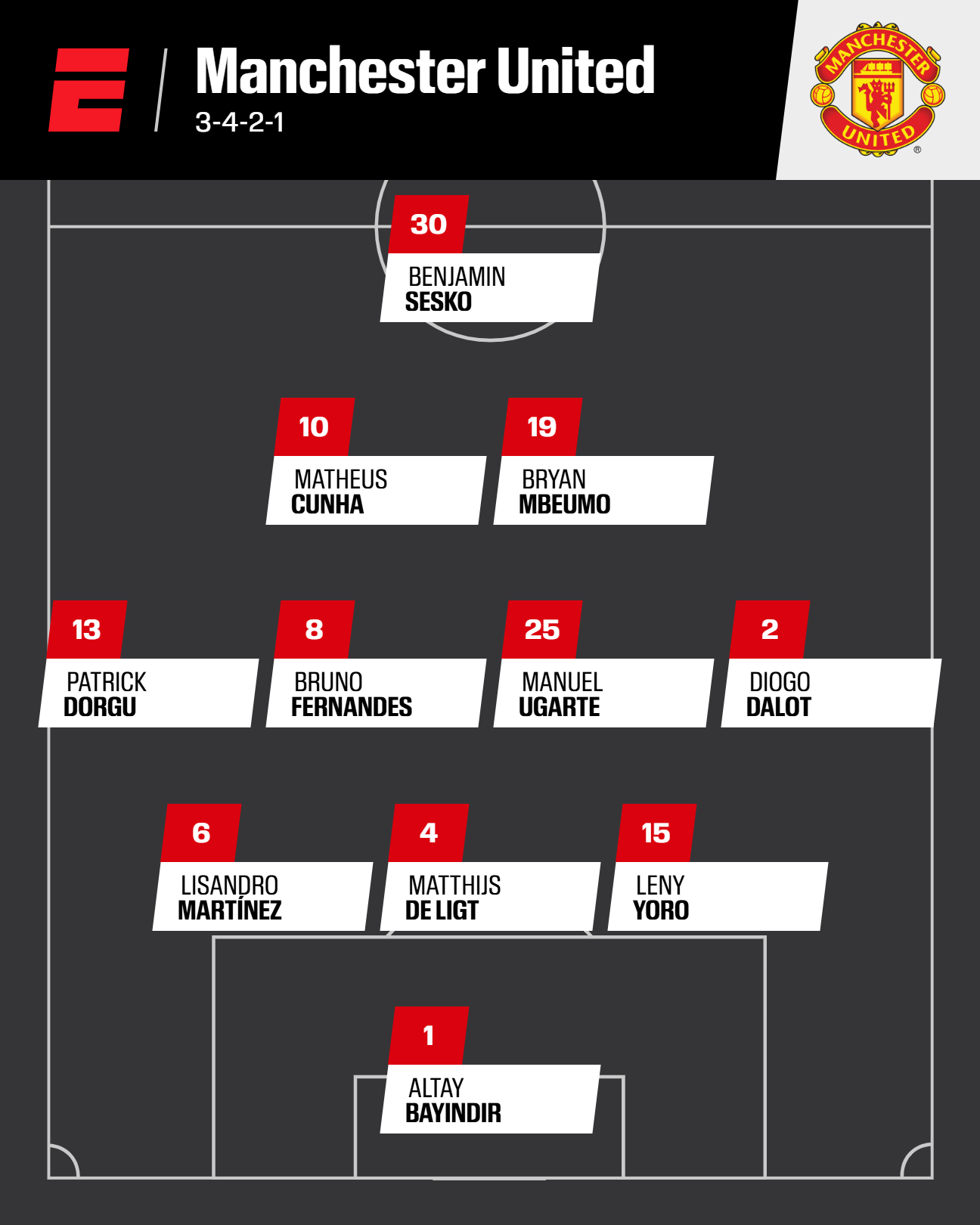
FIRST XI (3-4-2-1)
Bayindir
Yoro – De Ligt – Martinez
Dalot – Fernandes – Ugarte – Dorgu
Cunha – Mbeumo
Sesko
SECOND XI (3-4-2-1)
Lammens
Maguire – Heaven – Shaw
Mazraoui – Mainoo – Casemiro – León
Amad – Mount
Zirkzee
EXTRAS: Heaton, Obi
LONG-TERM INJURY: Malacia
Manchester United’s significant summer investment of £200 million has improved the squad, yet progress remains ongoing, particularly in the 3-4-2-1 system favored by manager Ruben Amorim. While wingback options have improved, other areas continue to pose challenges.
The midfield remains a critical concern, as no new players were recruited to enhance stamina or defensive capability in this vulnerable area. This has led to issues, especially concerning star player Bruno Fernandes, who is pulled deeper into build-up play, diminishing his effectiveness closer to goal.
In central defense, absences of key players like Lisandro Martínez hinder the team, forcing reliance on Luke Shaw, and lacking suitable replication of Martínez’s role impacts cohesion. As a result, the defense oscillates between competent and weak under pressure.
On a brighter note, the forward line has seen significant upgrades due to summer signings Matheus Cunha, Benjamin Sesko, and Bryan Mbeumo, providing speed and finishing ability. However, their fit within the current system is still being assessed, and one of these players might better serve the team coming off the bench to inject momentum. The overall offensive effectiveness remains tied to the platform for supply and structure behind it, which continues to raise questions until addressed appropriately.

Goalkeeper: Guglielmo Vicario, Antonin Kinsky, Brandon Austin
Right back: Pedro Porro, Djed Spence
Left back: Destiny Udogie, Ben Davies
Center back: Cristian Romero, Micky van de Ven, Radu Dragușin, Kevin Danso, Kota Takai
Central midfield: João Palhinha, Yves Bissouma, Rodrigo Bentancur, Pape Matar Sarr, James Maddison, Archie Gray, Lucas Bergvall
Forward: Dejan Kulusevski, Brennan Johnson, Wilson Odobert, Mohammed Kudus, Xavi Simons
Striker: Dominic Solanke, Richarlison, Randal Kolo Muani, Mathys Tel
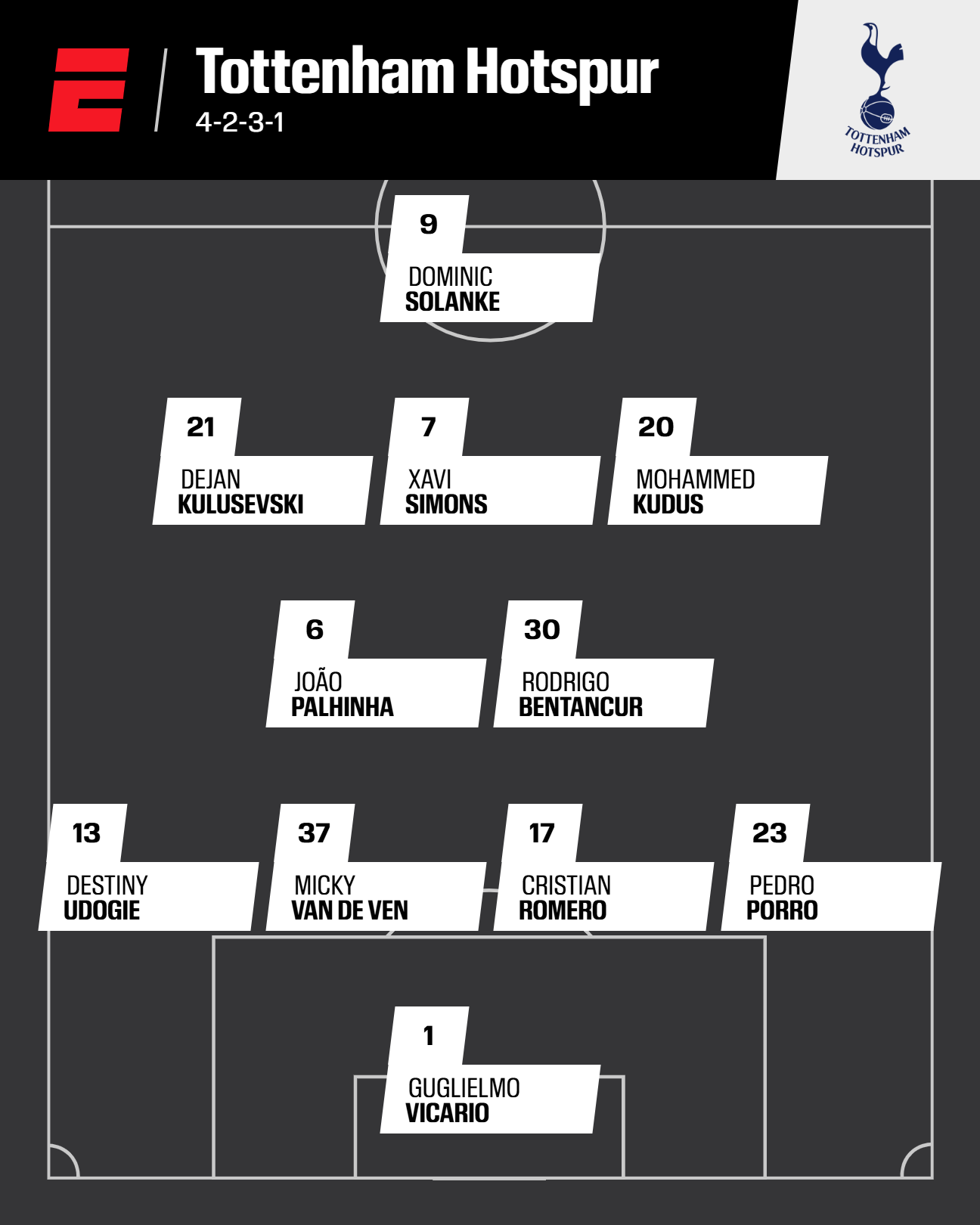
FIRST XI (4-2-3-1)
Vicario
Porro – Romero – Van de Ven – Udogie
Bentancur – Palhinha
Kulusevski – Simons – Kudus
Solanke
SECOND XI (4-2-3-1)
Kinsky
Gray – Danso – Dragusin – Spence
Bergvall – Bissouma
Johnson – Sarr – Richarlison
Kolo Muani
EXTRAS: Austin, Davies, Takai, Odobert, Tel
LONG-TERM INJURIES: Bissouma, Maddison
The current Spurs squad is arguably the most competitive in modern history, with new manager Thomas Frank possessing a fresh and talented group that is largely well-balanced. The defense features ten players with international experience, showcasing impressive depth.
Despite ongoing injury issues that have plagued the team, particularly with center backs like Cristian Romero and Micky van de Ven often unavailable, the first-choice pairing remains among the Premier League’s elite.
If the midfield and forward lines can remain injury-free, the selection for the starting XI will be highly contested. All available players, from Pape Matar Sarr and Rodrigo Bentancur to James Maddison and Lucas Bergvall, demonstrate top quality. However, under the 4-2-3-1 formation, only two of these midfielders can feature in the starting lineup, making it a challenging environment for selection.
The depth extends to the wide positions, where Dejan Kulusevski, Brennan Johnson, Mohammed Kudus, and Wilson Odobert each offer different strengths, ensuring robust competition for places. Up front, the fight for the No. 9 position is intense, with players competing for playing time, showcasing a conveniently diverse skill set.
In summary, while injuries complicate matters, this squad’s depth and quality suggest their potential to contend for a top-four finish and improve on last season’s performances.