



-

Sam Tighe
What links Chelsea, Paris Saint-Germain, and Real Madrid? Two noteworthy points stand out now: they’ve all been burdened with numerous and unusual injuries early in this season, and they played competitive football late into the summer while participating in the newly revamped FIFA Club World Cup, which Chelsea clinched on July 14.
This year marks an unprecedented extension of the European club season beyond May, aside from the unusual circumstances of the COVID-19 pandemic. Club medical teams are grappling with the daunting challenge of maintaining player fitness and health.
PSG recently faced Barcelona in what was expected to be a thrilling Champions League clash. However, the absence of five starters from their victorious squad against Inter Milan in May—namely Ousmane Dembélé, Désiré Doué, Khvicha Kvaratskhelia, João Neves, and Marquinhos—lessened the excitement.
Shortly after, Chelsea fans cringed as both Benoît Badiashile and Josh Acheampong exited the field nursing injuries during their impressive 2-1 win against Premier League champions Liverpool. They join a staggering number of injured players: Cole Palmer has faced two muscle strains this season; Liam Delap suffered a Grade 2 hamstring strain; Dário Essugo underwent thigh surgery; Tosin Adarabioyo, Wesley Fofana, and Andrey Santos were all absent from the match due to minor injuries; and Levi Colwill‘s ACL injury has sidelined him for a significant portion of the season.
– Tighe: How ‘Little Messi’ Estêvão rose from Palmeiras to Chelsea
– Hunter: Why Spain’s player production line is the envy of the world
– 2026 World Cup squads ranked: All 87 national teams that could win
Real Madrid has experienced slightly fewer setbacks but has nonetheless encountered challenges, particularly with their right-back position. Dani Carvajal has faced fitness issues, while new player Trent Alexander-Arnold has also succumbed to a Grade 2 hamstring injury.
Fluminense, who reached the Club World Cup semifinals, have had a different experience, thanks to the Brazilian league running from March to December, allowing them to enter the tournament midway through their season in peak condition. They’ve employed a large squad to manage the usual demands of Serie A, having utilized 37 players thus far.
While well-prepared for the demanding summer tournament, the elite European clubs faced an unanticipated challenge. The toll from the Club World Cup is undeniable for the three European teams that progressed far. Yet, can we hold it solely accountable for their injury woes?
An impossible situation
When Chelsea triumphed over PSG with a 3-0 scoreline in the Club World Cup final on July 14, it marked the conclusion of a grueling 355-day season for the Blues and 357 days for Les Parisiens. Merely 20 days later, both clubs reported for preseason—with Chelsea defender Colwill suffering an ACL tear on the very first day, an ominous sign.
The Blues managed to squeeze in two friendlies in a tightly packed preparation period, following which they commenced the 2025-26 Premier League season at home against Crystal Palace. In contrast, PSG skipped friendlies and kicked off their campaign even earlier, playing the unpredictable UEFA Super Cup final against Tottenham Hotspur on August 13 (winning 4-3 on penalties after a 2-2 draw in regulation time).
Meanwhile, Madrid started preseason on the same day as Chelsea, played a solitary friendly against Austrian team WSG Tirol, and failed to have their first LaLiga match against Osasuna postponed due to inadequate preparation time. They ultimately played it on the following Tuesday—gaining an extra six days compared to the other two finalists.
ESPN provided insights into the demanding schedules faced by Chelsea, PSG, and Real Madrid to several football professionals. The responses ranged from astonishment to serious concern.
Paul Bower, a physical performance coach at MLS club CF Montréal and a doctoral researcher in training periodization strategies at Leeds Beckett University, expressed disbelief as the schedule was disclosed, noting the unparalleled nature of this challenge.
“No one in football has experienced the impact of a Club World Cup on preseason preparations,” he remarked. “It’s unprecedented for a squad to remain together for such an extended period. Their [PSG, Chelsea, and Real Madrid] seasons started last July and are still ongoing.”
“Taking mere weeks off isn’t sufficient to ‘detrain.’ It generally requires around four weeks before players start to lose fitness.” Detraining allows players to reset, which involves stepping away physically and psychologically from the sport before gradually restoring their conditioning for the new season.
“A week off isn’t equivalent to going back to ‘zero,'” he added. “Players haven’t had the chance to decompress emotionally and psychologically.”
Bower pointed out that the clubs’ medical teams had to make estimations about feasible training schedules, ultimately admitting no perfect solution existed. “I wouldn’t attribute blame to anyone connected with these clubs,” he concluded. “The circumstances make it almost impossible.”
Dave Carolan, a sports science veteran and current consultant for FIFPro, echoed this sentiment: “These are some of the world’s elite clubs in terms of facilities, squad depth, expertise, and resources aimed at ensuring every detail is attended to. Nonetheless, the human body and mind have limits on the extent to which overload can lead to issues.”
“The clubs had little choice and found themselves caught between allowing adequate rest and commencing preseason training. While they aimed to provide nearly three weeks’ rest, it ultimately compromised the critical retraining phase.”
What should a preseason plan entail?
2:14
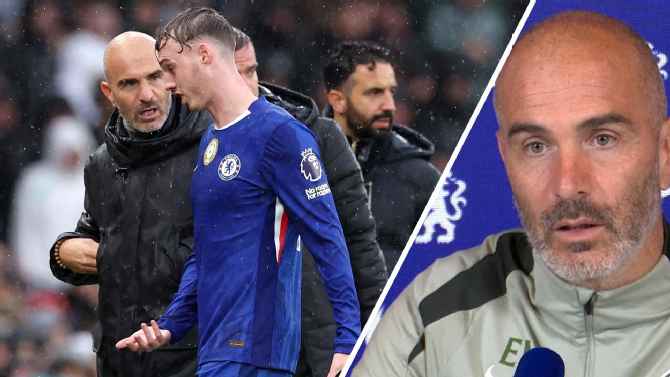
Maresca reveals Palmer will miss ‘2-3 weeks’ for Chelsea
Enzo Maresca provides an injury update on Cole Palmer and the rest of the Chelsea squad.
Preseason preparations vary across clubs, but larger teams often face additional commercial commitments leading to extensive travel. Arsenal toured Singapore and Hong Kong; Liverpool visited Hong Kong and Japan; while Manchester United embarked on a journey to the United States.
“Ideally, a preseason wouldn’t involve mass travel to distant locations, yet that’s the reality,” Bower explained. “Even if the immediate effects seem minimal, the cumulative toll is significant.”
“Preparing for the season requires adequate rest. A good rule of thumb is that you need as much training time as you had rest. If you took six weeks off, you’ll likely need six weeks of preparation before your first competitive match. Similarly, if your offseason was four weeks, you’d ideally need four weeks of preparation.”
Carolan recently contributed to a FIFPro report on player health, which backed Bower’s recommendation of mandatory 28 days’ rest and 28 days’ preparation between seasons—this is a minimum, ideally, it should be longer.
“Psychological rest is crucial,” Bower emphasized. “Your physical potential improves when your mind is more rested. While it’s hard to define, burnout and exhaustion can be alleviated with a proper break, leading to renewed vigor.”
In the midst of challenges, Chelsea, PSG, and Real Madrid appeared to disregard the balance of rest versus preparation, opting to prioritize rest instead.
An anonymous sports scientist shared with ESPN that perhaps this choice stemmed from a desire to ensure the necessary psychological respite, albeit acknowledging that the initial competitive matches would regrettably serve as part of their preparations.
While far from the ideal scenario, PSG may overpower teams like Nantes, Angers, and Toulouse in a semi-prepared state due to their talent disparity within Ligue 1; similarly, Real Madrid has faced gentler opposition in their early LaLiga fixtures against Osasuna, Real Oviedo, and Real Mallorca. Both managed to secure victories in these matches.
However, for Chelsea, competing in the highly challenging Premier League makes this outcome less likely. They could only muster a 0-0 draw against Palace on opening day and required a confirmed VAR decision for a 2-0 win over Fulham.
Ultimately, regardless of their best efforts, time was not on the side of these three clubs. They didn’t have sufficient opportunity to reset. As Bower remarked, “There was no adequate preparation available in such a brief preseason window.”
A calendar crisis
1:59
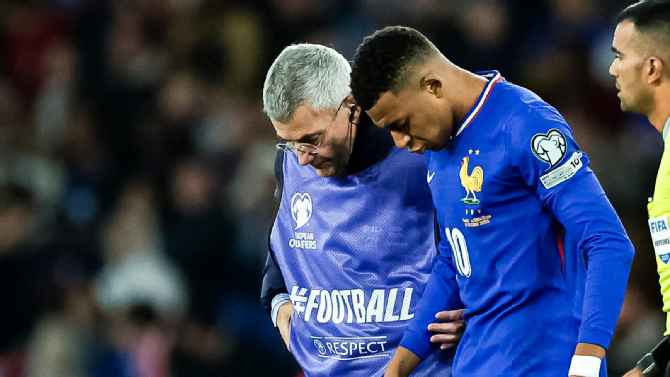
Is Kylian Mbappe in danger of missing El Clasico?
Julien Laurens provides an update on the ankle injury Kylian Mbappe suffered during international duty with France.
While PSG and Real Madrid might have navigated their opening fixtures successfully, it was expected that injuries would begin to accumulate soon after, particularly for PSG.
The timing of September’s international break didn’t help either; after carefully managing players through August, both Dembélé and Doué suffered injuries while representing France.
This led to some strong statements from PSG, which expressed discontent over the French Federation’s disregard for medical information they had provided regarding players’ workloads and injury risks, as well as the absence of consultation with their medical staff.
When asked whether this situation could have been avoided, Bower remarked, “Only if France didn’t select those players. But, of course, preparations for the World Cup take precedence. That’s the context we’re dealing with.”
The overarching issue at play is described by Carolan as a “calendar crisis.” He asserts that “those responsible for scheduling should bear the brunt of the blame. New tournaments cannot be integrated into an already overloaded global calendar without considering player health and wellbeing.”
Concern is warranted for the short- and long-term health of these players. Injuries occurring in such circumstances are not surprising but rather expected and, in many ways, predictable.
For Chelsea, PSG, and Real Madrid, the 2024-25 and 2025-26 seasons have morphed into an extended campaign. Without adequate rest and preparation time in between, players are likely feeling as though they’re in month 15 of a single season rather than just three months in, and indeed they have every reason to feel this way.