



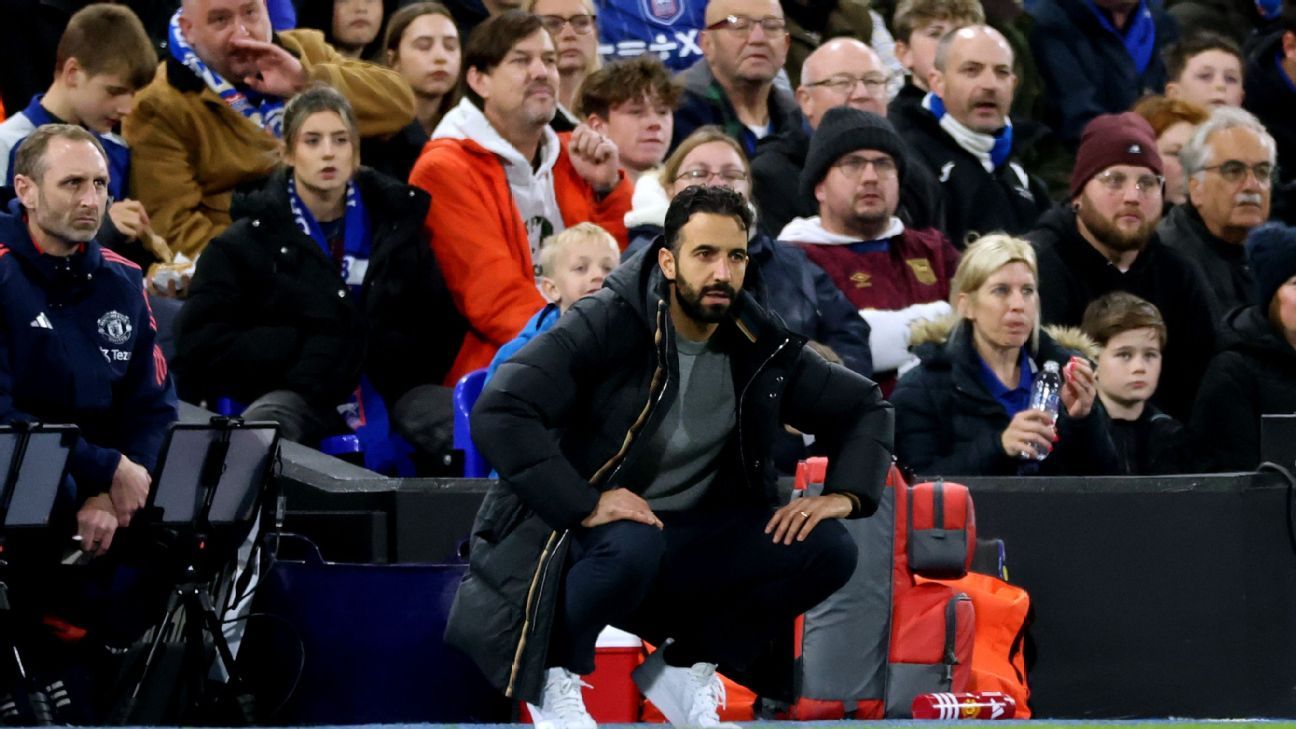
Ruben Amorim attempted to postpone his debut at Manchester United, but after finally agreeing to leave Sporting CP midway through last season, he wasted no time in getting to work.
Arriving during a chilly November international break, Amorim’s first day at Carrington came when most of his squad was occupied with national duties. However, he and his staff took the opportunity to conduct a rapid onboarding for the remaining players.
At the top of his agenda was the implementation of a new tactical system, distinct from that of his predecessor, Erik ten Hag.
“From the moment he arrived, he was very explicit about how he wanted us to play and the system he had in mind,” recalled Jonny Evans. “He laid it all out for us.”
“We were on an international break when he joined. He gathered the squad and presented his ideas. When the others returned, he did the same with them.”
– A week of World Cup miracles: Best stories from amazing qualifiers
– Reacting to World Cup playoff draw: Who takes the final six spots?
– Connelly: Fixing what’s wrong with Liverpool, Barcelona, and more
Monday marks the anniversary of Amorim’s first match in charge—a 1-1 draw against Ipswich Town in November 2024, which showcased his vision for United while highlighting the challenges he would face.
“Everything felt very fast,” Amorim recalled. “I immediately recognized that the environment in the Premier League was quite different, and it excited me. I knew we’d encounter obstacles right away.”
Even before meeting the players, Amorim had seen enough footage to understand that the team under Ten Hag frequently lost possession and lacked the fitness to recover it effectively. The initial moments at Portman Road highlighted the individual talents on the squad, as Amad Diallo, playing in a new wing-back role, sprinted down the flank to cross for Marcus Rashford to score within two minutes.
Omari Hutchinson equalized just before halftime, but the second half revealed the issues Amorim had anticipated.
“We need to enhance the physical aspect of our team,” he stated post-match. “We often surrender possession, and we need to improve our ball retention. Our ability to transition back defensively must also improve.”
Another significant challenge was a limited two-day training window to adapt to the transition from Ten Hag’s 4-3-3 setup to Amorim’s 3-4-3 formation. Evans, tapped to start against Ipswich, admitted to frequently glancing at the sideline, unsure if he was executing the plan correctly. Diogo Dalot noted that while Amorim’s pregame instructions were “very clear,” it would take time for the team to learn how to implement them effectively.
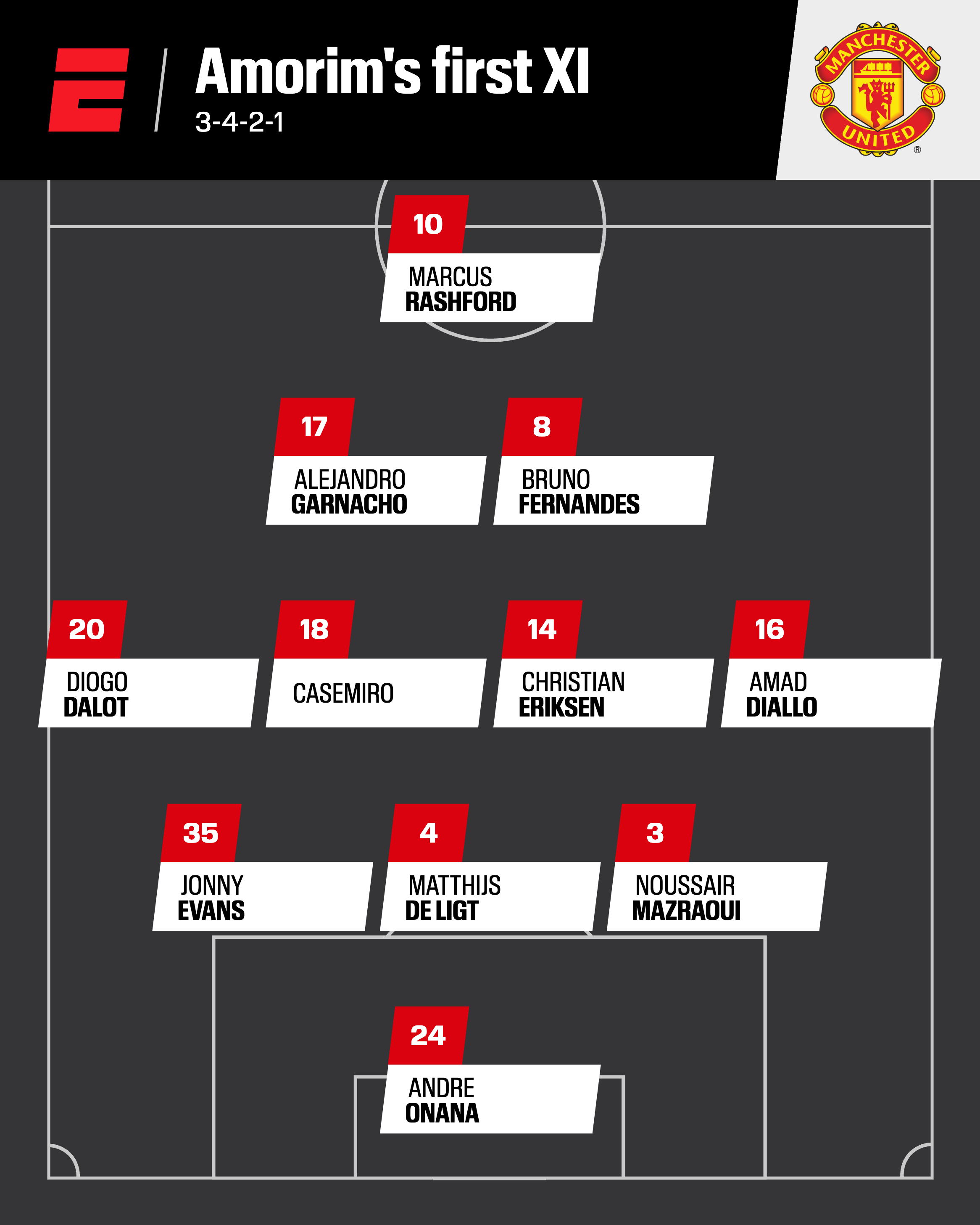
Leading up to the match against Ipswich, Amorim dedicated time to refining the team’s formation on the indoor pitch at the academy, a space previously used primarily for warm-ups by Ten Hag. He took charge of the sessions, frequently pausing to give directions and physically guiding players into the correct positions when necessary.
“Time was limited since it was during an international break when he arrived,” Evans shared. “Most players didn’t regroup until Thursday, with the game set for Sunday, leaving us just a couple of days to prepare.”
“Adjusting to a new system was challenging as we tried to get a grasp on it. There were moments in our pressing where he wanted us to be more aggressive. I often looked over, wondering if I was doing it right.”
Throughout the match, Amorim sensed that his players were overthinking and occasionally “confused.”
“It was tough for them; they were worried about what to do,” he reflected. “It lacked fluidity, which is expected after just a couple of training sessions.”
“Things have changed significantly. They were accustomed to making quick passes and advancing, even the center-backs. Now, they have to focus on maintaining their positions. For players to adjust to all that in just three days is quite demanding.”
“Next year, we could encounter the same issues, or we can start making progress now. We take some risks, endure some hardships, and in a year, we’ll see improvement.”
1:28
Gab and Juls rate Ruben Amorim’s first year at Man United
Gab Marcotti and Julien Laurens reflect on the first year of Ruben Amorim’s management at Manchester United.
The challenges faced in the match against Ipswich a year ago haven’t been easily rectified, leading to a disappointing 15th-place finish in the Premier League. However, as they prepare for Everton‘s visit to Old Trafford on Monday, there’s optimism that, as Amorim noted, things are “improving.”
Only six players who started against Ipswich remain at the club, indicating the changes that have occurred. New summer signings, especially Bryan Mbeumo and Matheus Cunha, have accelerated United’s progress, making the team’s play look more cohesive and fluid.
Although Amorim initially preferred to begin his tenure in the summer, he now considers the early opportunity to make crucial decisions a benefit. It has allowed for a fresh start this season, an idea he emphasized during the preseason tour of America.
The trip to Chicago, New York, and Atlanta not only involved intense tactical sessions but also emphasized team bonding. This was part of a philosophy that started in the hotel before the Ipswich game, where Amorim replaced circular tables with two long ones—one for players and one for staff—to promote unity and discourage cliques among the team.
Amorim prefers group conversations over individual discussions with players, as he believes addressing the entire squad fosters a collective mindset.
There was no team debrief in the dressing room after the Ipswich match last year, and this trend is likely to continue following the game against Everton, as Amorim favors giving the team time to process matchday emotions before regrouping. However, he undoubtedly holds players accountable, delivering stern critiques during difficult stretches last season at Carrington.
The atmosphere surrounding the team has notably changed. Heading into the Everton match, Amorim is buoyed by a five-match unbeaten streak and acknowledges that enduring the struggles of last season was necessary for a head start on the long journey ahead at Old Trafford.
“We are showing signs of improvement, but it’s crucial to note that recent performances mean little,” Amorim stated on Friday. “We must remember where we began against Ipswich and acknowledge last year’s hardships. We need to treat every match as if it were our last.”
“I expect a team against Everton that exhibits more control, dominance, and improved performance, and above all, they must be more competitive in every way.”
As he approaches the anniversary of his first match in charge, Amorim is hopeful that United will continue to take significant strides toward regaining their place among the elite.