



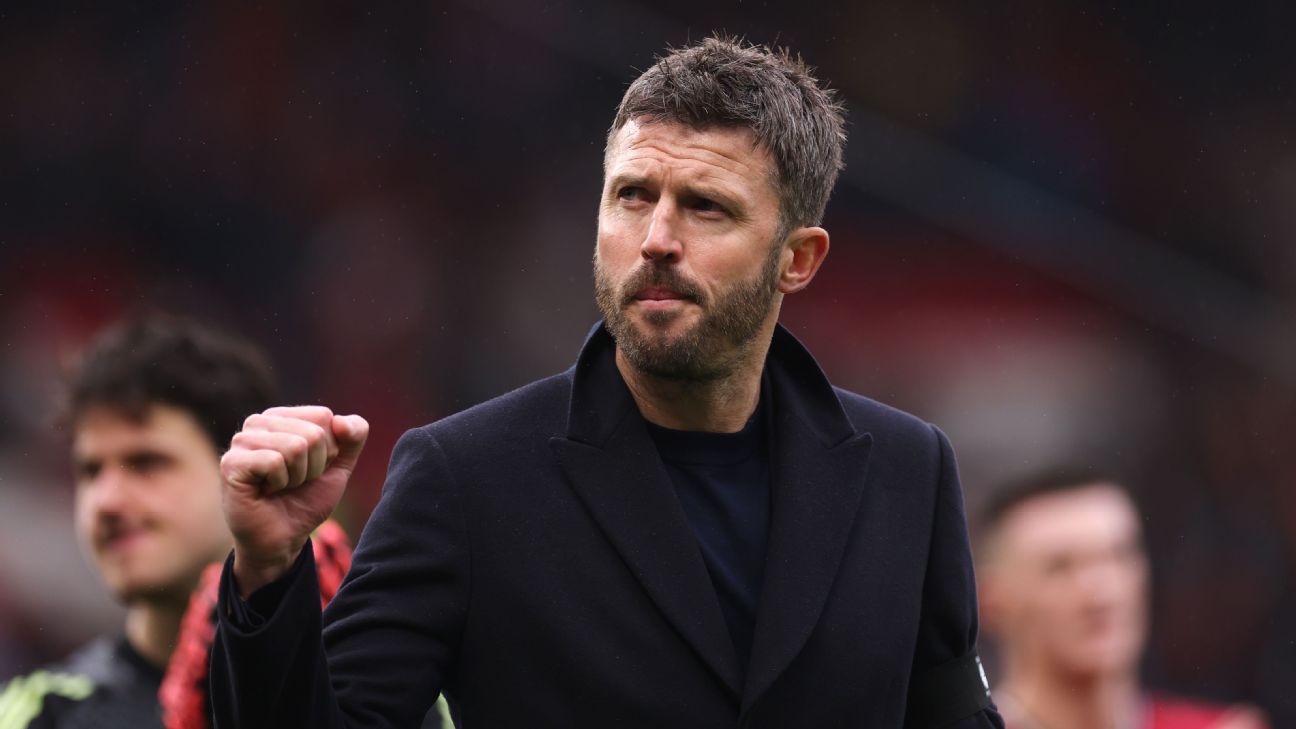
Following his fourth consecutive victory—a 2-0 triumph over Tottenham Hotspur on February 7—Manchester United head coach Michael Carrick entered the interview room adjacent to Old Trafford’s tunnel, sporting a bright smile. Having already engaged with the same broadcaster twice earlier in the day, the former United midfielder, who was appointed as coach until the season’s end, jokingly stated he was surprised that “there were any questions left.”
Since Carrick’s arrival on January 13, the four wins and a draw from five outings have been a much-welcomed change for United, but so has the air of tranquility. In contrast to his predecessor Ruben Amorim, whose turbulent 14-month tenure raised numerous challenging questions, Carrick has instilled a sense of calm.
While results speak for themselves, Carrick’s efforts to stabilize the atmosphere in other ways have also been significant. In the latter stages of Amorim’s tenure, club executives grew anxious whenever the Portuguese coach was set to address the media. With Carrick, however, there have been no calls for increased support from ownership, nor has he publicly criticized any players. He has deftly avoided potentially controversial topics regarding team selection or performance.
In accordance with Carrick’s vision of United’s principles, he has emphasized to players that representing the club is a privilege—a belief he held during his 12 years in the United midfield. Although he has given the squad a fresh start—beneficial for individuals previously overlooked by Amorim, such as Kobbie Mainoo—he has concurrently highlighted the need for accountability for past actions.
Before this role, Carrick was part of Ole Gunnar Solskjaer’s staff and was deeply affected by the Norwegian’s dismissal in November 2021. During a brief stint as interim manager, he encouraged players to start with self-reflection, a philosophy he has carried into his current managerial position.
His appointment was partly due to his calm demeanor during conversations with CEO Omar Berrada and director of football Jason Wilcox. Insiders noted that, although he clearly desired the position, he did not appear desperate for it. He maintained a low profile during negotiations, and even after his candidacy became public, he “went quiet” in his friends’ WhatsApp groups.
After leaving Middlesbrough last summer, Carrick remained engaged through his charitable foundation and punditry. He was scheduled to appear on television for the Manchester derby, but had to quickly back out when he learned he would be coaching instead.
Those close to Carrick believe that the United position was the only coaching role compelling enough to draw him back to the game full-time, especially after he showed little interest in discussions with Wolves regarding their managerial vacancy in November. For many players from the successful era under Sir Alex Ferguson, the chance to return to United is simply too enticing to pass up.
– Wright: Is it happening again? Arsenal’s stumble in title race follows familiar pattern
– Hamilton: Soccer managers’ latest source of inspiration? The rugby pitch
– O’Hanlon: The Premier League’s best and worst players at different skills
Carrick’s approach is distinctly his own, though it’s heavily influenced by his time under Ferguson. He has reinforced the principle that what occurs in the dressing room remains confidential, and has revitalized the focus on the academy.
One of Carrick’s first actions was to inform a select group of academy players that they would permanently join the first team for training. This is a shift from Amorim’s approach, where young players often learned on short notice if they were needed for first-team duties.
There was a moment when Bruno Fernandes approached Amorim to advocate for giving more chances to a young player—a move that might not have been necessary under Carrick, who has taken the initiative to understand the promising talents within the academy.
With a 12-day gap between their 1-1 draw against West Ham and the upcoming match against Everton on Monday, Carrick gave his players some time off but took the opportunity to watch United’s youth teams compete against Manchester City at the City Football Academy over the weekend. Dressed casually in a long black coat and sunglasses, he cheered on his son, Jacey, during the under-16 match and later had an extensive discussion with U18s manager Darren Fletcher following their 3-1 victory on an adjacent field.
Those within the club suggest that Carrick has been so focused on the day-to-day operations that he hasn’t ventured into long-term planning. For instance, he has not engaged in discussions about the potential return of Marcus Rashford in the summer, though he places significant value on promoting youth players. One notable talent he admires is the highly regarded winger Shea Lacey.
Currently, Carrick is steering United towards a potential European qualification after securing 13 points from a possible 15, and a return to the Champions League is also on the horizon. If he continues to achieve favorable results—starting with Everton at the Hill Dickinson Stadium—he could be on track to be appointed as the permanent manager, although the club remains committed to conducting a thorough recruitment process.
The challenging questions Carrick may soon face will likely revolve around his expectations for securing the permanent role. Unlike some who might confront such inquiries with tension to apply pressure, Carrick’s demeanor assures Berrada and Wilcox that he will maintain stability. After a difficult 14 months, everyone at Old Trafford is relishing the newfound sense of calm.