



-

Graham Hunter
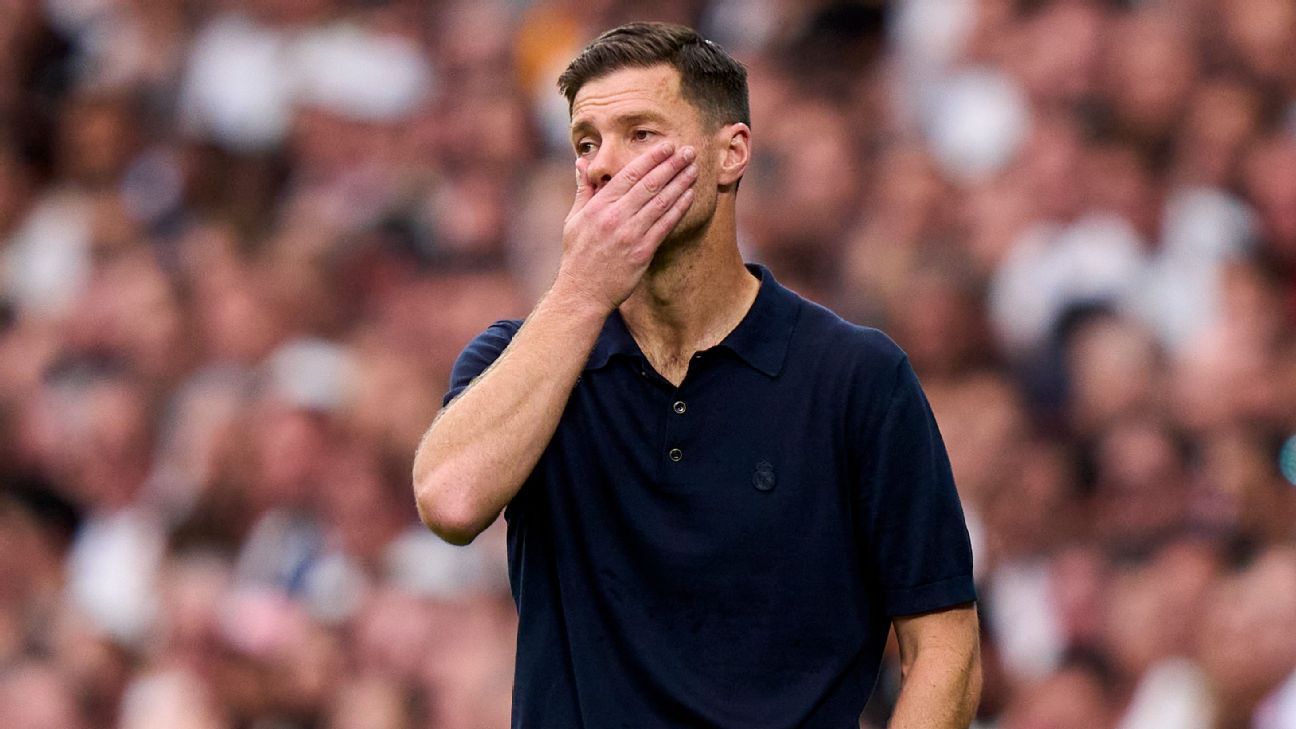
Xabi Alonso has become the tenth permanent manager of Real Madrid during Florentino Pérez’s lengthy presidency to be dismissed before completing a year in charge.
Just as the 44-year-old Madrid legend appeared to navigate the tempestuous waters that had surrounded him since autumn, he faced the ultimate sin for Bernabéu managers: losing to Barcelona in a trophy match. This setback ultimately cost him his position. Those close to Alonso, who leaves with Madrid only four points adrift of the La Liga summit, safely positioned in the top eight of the UEFA Champions League, and facing a tense Copa del Rey match against Albacete on Wednesday, will reflect on the final moments of Sunday’s Supercopa match, where players like Álvaro Carreras and Raúl Asencio squandered clear chances to equalize and send the game to penalties.
In retrospect, Alonso stands criticized—in Pérez’s view, the only one that matters when it involves a coach’s future—for several missteps.
Firstly, his public image and credibility with the club suffered a blow when he substituted Vinícius Júnior during the October Clásico. The Brazilian’s angry outburst towards Alonso, claiming, “This is why I’m going to leave this team,” overshadowed the victory.
Pérez wishes to extend Vinícius’s contract at any cost. Although Alonso managed to mend some damage with the 24-year-old, the fallout from the incident has left an indelible mark on Pérez’s perception of him as coach.
Secondly, losing to Barcelona in a critical final is viewed as a grave offense. Just weeks prior, I cautioned, “If Alonso, the 44-year-old coach who had already built a stellar playing career, can secure a win against Atlético in the Supercopa semifinal and either Barcelona or Athletic Club in the final, he’ll likely keep his job. But failing to return with a trophy? Sacking seems inevitable.”
Third, when Madrid displayed lackluster football against teams like Rayo Vallecano, Elche, and Girona, before being narrowly defeated by Manchester City and Celta Vigo, there was a media frenzy to assign blame. Unfortunately, the coach bore the brunt of the criticism.
Fourth, it must be noted that Alonso has not effectively managed upward within the club. In modern football, especially at a large club, the ability to navigate relations with management is crucial—something that is even more vital at Madrid, under the reign of the powerful Pérez.
Throughout his career, whether as the son of a notable player, a talented midfielder at various top clubs, or as a revered figure at Bayer Leverkusen for leading them to unprecedented success, Alonso has been nothing short of stellar. He has been celebrated in Spain, a hero at Liverpool, and a vital component in winning numerous trophies with Bayern. He has never felt the need to compromise his integrity.
At Madrid, perceptions are different. When Guardiola, a friend and mentor, expressed strong support for Alonso following a Manchester City win at the Bernabéu, Alonso’s remark that seemed to resonate with Guardiola’s critique of his relationship with Pérez raised eyebrows.
Notably, Alonso was previously distant with the often adversarial media during press conferences, attending six times a week at the training ground. Faced with the threat of dismissal, he attempted to change his approach by becoming more engaging and personable, but this shift happened too late.
A telling moment occurred when Alonso suggested a guard of honor for Barcelona’s victorious players, but Kylian Mbappé took control, indicating he had the final say, denying Alonso’s idea and sending a damaging message.
It is surprising that the Spanish football media, having repeatedly predicted Alonso’s dismissal through November and December, were caught off guard by this decision. Despite some inconsistent performances, there seemed to be support among the players for their coach, and they were in a good position in the Champions League with winnable matches upcoming. Headlines on Marca noted, “Xabi revives the Mourinho style” and didn’t place blame on Alonso. Conversely, Diario AS’s output hinted at dissatisfaction with the team’s overall performance.
One key indicator of Pérez’s mindset, which Alonso might have overlooked, is the evolving designation of the stadium. Once universally referred to as the Santiago Bernabéu, it has increasingly been called simply “the Bernabéu”—a subtle shift that signifies Pérez’s aspirations to solidify his legacy as the most recognized president in the club’s history. The redevelopment of the stadium, initially intended to secure Pérez’s legacy, has yet to meet expectations, possibly stirring a sense of urgency in him as he approaches his 79th birthday.
Pérez yearns for more league titles and Champions League victories, fewer instances of Barcelona celebrating, and an ultimate endeavor of forming a European Super League. Currently, he feels thwarted in many of these ambitions.
It is worth noting that the previous nine coaches let go early in their tenure generally cleared the path for more prosperous periods filled with trophies and marquee signings. However, Pérez appears to have misjudged his current situation, ignoring the real issues at hand. While he has now handed over responsibilities to Álvaro Arbeloa, this decision risks perpetuating ongoing flaws rather than addressing them. He remains unswayed by contrary opinions, and his relentless drive has often resulted in success against all odds.
Your adversity was unfortunate, Xabi. Your contribution to this situation, while not negligible, was only partial. Yet, as you’ve often said, Real Madrid operates on a different level. Best of luck in your future endeavors.