



Eric Wynalda had finally reached his limit.
In 1992, while playing for FC Saarbrucken in the Bundesliga, Wynalda was subjected to relentless taunts of “scheiss Ami“—German for “s— American”—from everyone around him, including his own teammates. After six weeks of enduring this disrespect, he decided enough was enough.
“I ended up throwing one of my teammates to the ground and warned him that if he called me that one more time, he’d be visiting the dentist,” Wynalda recounted to ESPN. “After that, everyone backed off and said, ‘Okay, let’s stop calling him that.'”
The teasing quickly ceased, and Wynalda’s performance on the pitch further cemented his standing; he scored both goals in a 2-0 victory against local rivals Kaiserslautern.
Was the treatment he faced mere banter, or did it reflect the broader stigma that American players often encounter when competing at the highest levels of soccer overseas?
It’s likely a combination of both. Though Wynalda’s experience was extreme, many Americans venturing into European soccer faced similar challenges from teammates, coaches, fans, and the media.
Steve Cherundolo, former defender for Hannover 96 and the U.S. men’s national team, noted that when he joined the German club in 1999, he was treated the same as his teammates by players and staff, but the media portrayal was different. This was especially noticeable in player ratings, particularly when playing defensively.
“The stigma was always there,” Cherundolo told ESPN, despite having earned the nickname “The Mayor of Hannover” after making over 400 appearances for the team.
USMNT legend Landon Donovan shared similar sentiments during his tenure at Bayer Leverkusen, which signed him in 1999.
“It wasn’t personal against me or anyone else, but in the early days, you had to be significantly better than the player you were competing with, whether they were Turkish, Brazilian, or German,” he explained. “There was an assumption that Americans didn’t understand soccer.”
However, not everyone agrees with the stigma claim. Current Chicago Fire manager Gregg Berhalter, who played in Europe and coached the U.S. team from 2018 to 2024, attributed the perception to ignorance rather than prejudice, explaining that many people were simply unaware that Americans played soccer.
“After the [1994] World Cup, people recognized names like Alexi Lalas and Tony Meola, but beyond that, they were oblivious to American soccer,” Berhalter stated. “It was a new frontier, but there wasn’t animosity towards us.”
Historically, skepticism of American players had some basis due to the sport’s tumultuous history in the U.S. Soccer has often struggled to gain a foothold, with long stretches in the 20th century marked by minimal semi-professional activity. The U.S. faced a 40-year gap between World Cup appearances and lacked a top-level domestic league from 1985 to 1995.
Since Major League Soccer’s inception in 1996, the U.S. men’s national team has enjoyed modest successes, including seven Concacaf Gold Cups and a Confederations Cup final appearance in 2009. Yet, it still awaits a World Cup victory, with the 2002 quarterfinal run being its farthest progression in recent times. Pioneers like Wynalda, Kasey Keller, Brian McBride, and Clint Dempsey worked hard to open doors and enhance the reputation of American soccer players.
Strong performances at World Cups—reaching at least the second round in 2002, 2010, 2014, and 2022—have also helped improve perceptions of American players, although others have remained in relative obscurity, still making significant contributions.
“People often overlook how talented Tony Sanneh was,” Wynalda remarked about the former Nuremberg and Hertha Berlin defender. “There was a time when the general narrative about America was, ‘You may excel at everything else, but you’re not good at soccer. This is our sport.’ We’ve finally shown that we deserve to be part of that conversation.”
Thanks to the newer generation of American players excelling in Europe, perceptions of their abilities have never been higher. Athletes such as AC Milan’s Christian Pulisic and Juventus’s Weston McKennie have demonstrated their skills at top clubs. The Premier League features standout players like Crystal Palace’s Chris Richards, AFC Bournemouth’s Tyler Adams, and Leeds United’s Brenden Aaronson, all contributing significantly to their teams.
However, remnants of stigma persist. Current U.S. team members acknowledge that they still experience judgment and skepticism, albeit less harsh than in the past. Nevertheless, they don’t claim to be victims; instead, they assert that their performance speaks for itself. They maintain confidence that their quality will elevate them.
“I may have felt at first that some teammates viewed me differently because I was American at Dortmund’s youth teams,” Pulisic told ESPN at a promotional event for Degree. “I had those thoughts, but I always believed that if you’re good enough, the coach will play the best players. I adopted that mentality.
“Is there a bit of stigma? Perhaps in the past. But it’s definitely improving with the incredible talent we now produce.”
For Toulouse FC’s Mark McKenzie, the stigma feels more like banter, an area where he excels. Recently, he noted that the conversation has taken humorous turns.
“With my teammates, we enjoy playful banter,” McKenzie shared with ESPN. “They joke about American quirks, like our food or how we view training facilities compared to back home. I try to sidestep these debates; they’re subjective and depend on individual backgrounds.
“Now I’m known for my long throw-ins. Apparently, I’ve ruined the game with my American strategy of launching the ball as far as I can. My teammates playfully chide me about it—’You’ve destroyed the game now’ they say.”
Former U.S. international and long-time Premier League goalkeeper Brad Friedel, who has also served as a club executive with Besiktas in Turkey, believes any stigma tied to American players has grown more subtle over time. While American players aren’t typically seen in a negative light, they are often not viewed as potential stars either.
“When clubs consider American players, they generally think, No. 1, salaries may be lower initially, which is accurate,” Friedel remarked. “Their transfer fees could also be lower at first, and they view Americans as solid professionals—capable of starting but not necessarily the reason a team wins.”
Pulisic, however, breaks that mold, having commanded a $73 million transfer fee when he moved to Chelsea in 2019. Until another player matches such heights, this aspect of the perception surrounding American players is unlikely to change.
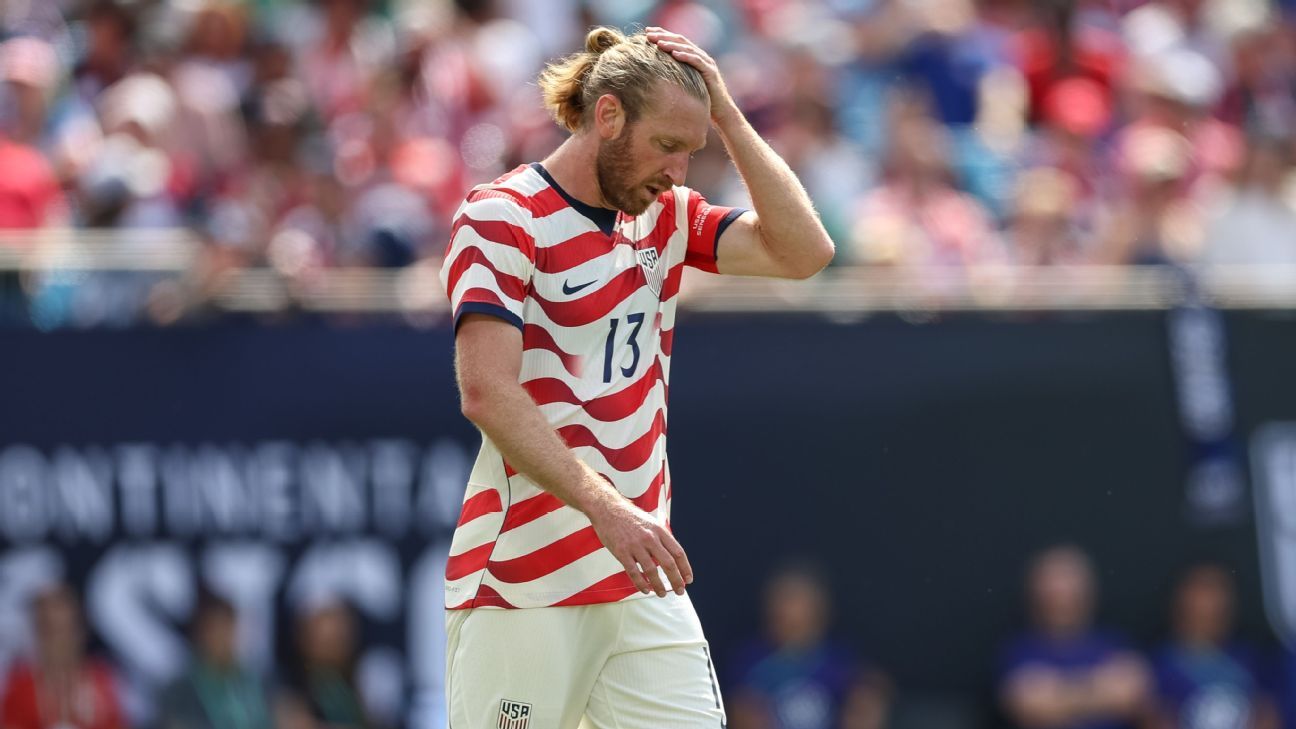
Despite notable progress on and off the field, the journey is far from over, with the stigma surfacing unexpectedly. Current Charlotte FC defender Tim Ream spent over a decade playing in England with Bolton Wanderers and Fulham FC. He noted that he benefitted from joining clubs familiar with American players.
Ream stated he never encountered a manager who looked down on him because of his nationality, but some teammates occasionally referenced an outdated mindset.
“You’d hear things like, ‘Oh, you’re American. Do you actually understand football?’ And I’d reply, ‘Well, I’m on the same team as you, so you tell me who knows football and who doesn’t,'” he recounted.
However, nothing shifts perceptions quite like a World Cup, especially with standout moments against highly regarded teams. Ream observed this after the U.S. drew 0-0 with England at the 2022 World Cup; it was a match they could have won.
“When we returned, the guys were stunned. They said, ‘Whoa. You guys are really good; a very good team,'” Ream remembered. “That seemed to be a revelation for many of them.”
The upcoming World Cup presents another chance to reshape perceptions and inspire future generations. Although the U.S. is still seen as outsiders in soccer, hosting the event has raised the stakes for potential achievements.
“For me, it’s much larger than just our performance,” Adams stated. “It’s about inspiring the next generation to choose soccer over basketball or football. This is a significant opportunity.”
Ream emphasized that progress should be viewed through a long-term lens. The quarterfinal run at the 2002 World Cup created momentum, but as he noted, the U.S. program has been “a bit of a slow burn” since then.
The U.S. men’s national team continues to look for its next major breakthrough. Past struggles, including failing to qualify for the 2018 World Cup, serve as humbling reminders. A solid performance building on 2022’s round of 16 effort would signal greater consistency.
“If we can maintain a national team filled with talent, and our players are competing well at top clubs worldwide—which many are—then we can genuinely shift perceptions,” Ream concluded. “People might start recognizing that we do produce quality players who can compete with stars from traditional footballing powerhouses like Brazil, France, and England. But this change must be sustained and cannot be a fleeting success.”
If the U.S. can achieve that crucial breakthrough and maintain consistency, it could potentially elevate perceptions and gradually dispel the remaining stigma.