



-

Graham Hunter
Multiple Authors
It’s often said that a home isn’t truly complete until it hears the joyful noise of children. By that measure, the casa of Real Madrid is brimming with happiness as they prepare for their UEFA Champions League second-leg clash against Manchester City on Tuesday.
Under the guidance of Coach Álvaro Arbeloa, Real Madrid is experiencing an unprecedented influx of young talent into its starting lineup, all achieved in less than nine weeks since he took over.
Los Blancos are motivated to pursue success in LaLiga and continue their Champions League journey with several promising teenagers: Thiago Pitarch (18), Dani Yáñez (18), Jorge Cestero (19), Víctor Valdepeñas (18), and Diego Aguado (19). Additionally, players from the B team like César Palacios (21) and Manuel Ángel (22) have made their debut this season. They are supported by slightly more seasoned players like Gonzalo García and Raul Asencio, who, though relatively new, have already combined for 123 first-team appearances and 20 goals or assists.
– Arbeloa: Mbappé to travel for 2nd leg at Man City
– Real Madrid hails Güler’s ‘amazing’ goal from his own half
– Haaland’s slump costs Man City the title
Interestingly, while the aforementioned players did not emerge from La Fábrica (the Academy), current first-team members also include 21-year-old Türkiye international Arda Güler (who recently scored a remarkable goal from his own half), 18-year-old Argentine talent Franco Mastantuono, and 20-year-old Spanish international Dean Huijsen.
For decades, since Johan Cruyff’s tenure at Barcelona, the Blaugrana have championed the philosophy of “if you’re good enough, you’re old enough.” Now Arbeloa has embraced that same ethos at the Santiago Bernabéu, coinciding with the 10th anniversary of Cruyff’s passing.
Moreover, waiting in the wings are promising young talents often referred to as “factory-produced” future first-team members like Joan Martínez (19), Lamini Fati (19) and Jesús Fortea (18).
The last time Real Madrid experienced a similar youth transcendence was in 1983, heralding the rise of the Quinta del Buitre, a historic group whose influence solidified Madrid’s academy’s prestige during a remarkable era.
The nickname, which translates to “The Vulture,” honors their legendary figure, Emilio Butragueño, with fellow members Miguel Pardeza, Manolo Sanchís, Míchel González, and Rafael Martín Vázquez. Together, they amassed an impressive haul of 16 trophies, including two UEFA Cups, six LaLiga titles (five consecutively), and three Copa del Rey trophies. However, only Sanchís has two Champions League titles to his credit.
Returning to this season’s Champions League aspirations, the excitement surrounding the rise of this dynamic, all-Spanish squad is palpable.
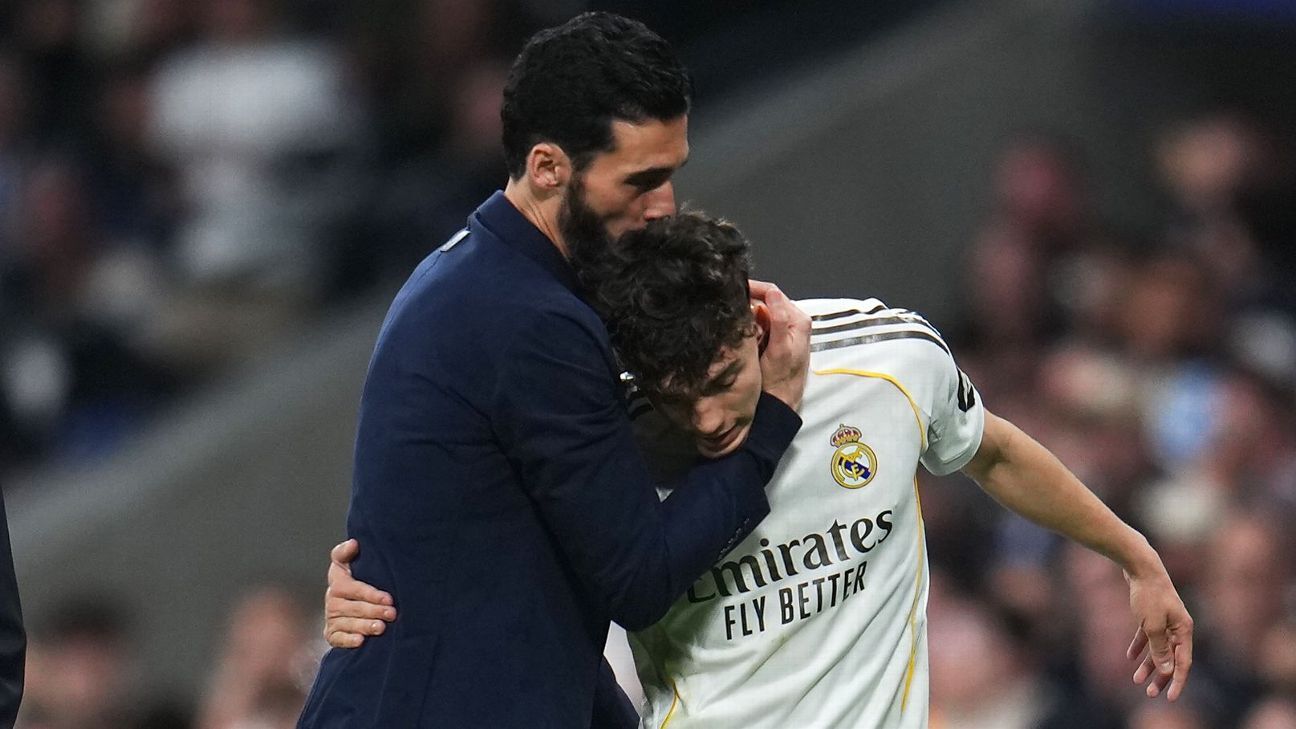
Pitarch stands out as the leader of this youthful ensemble. When he was substituted during their match against Elche, the Bernabéu crowd erupted in applause, reflecting their admiration for him. The team’s response to Yáñez’s assist, which led to a goal by Huijsen, was a celebration filled with genuine camaraderie and support.
Arbeloa’s post-match remarks shed light on the significance of this moment:
“For someone who came through Madrid’s youth setup to reach the first team, I could die happy after a night like this,” he shared with RMTV. “After the match, I had a conversation with Yáñez and Aguado, who I first coached in our academy when they were just teens. Being able to see them play at the Bernabéu is a dream realized for me.
“Alongside players like [Dani] Carvajal, the quintessential homegrown player, plus Thiago, César, Gonzalo, and others, this experience is beyond words. I’m incredibly proud. It’s not just about their inclusion but how well they performed.”
“It felt reminiscent of Real Madrid during the Quinta del Buitre era. I’m sure Emilio, watching from the stands, would have been proud of what he witnessed today,” he added.
Arbeloa emphasized the importance of having academy graduates in the first team, noting their contributions extend beyond talent, offering a unique spirit that influences newcomers to the club. He hopes that future managers will continue the tradition of integrating academy players into the first team.
This resurgence of homegrown talent is particularly sweet for both the players and fans, as Madrid’s youth system had been underwhelming for years. Carvajal and Nacho established themselves in the team back in 2013-14, but genuine homegrown first-team players have been scarce until now. This marks a significant shift after over a decade of disappointment.
Madrid has not only broken this dismal trend but is also aligned with the broader youth movement across top European clubs.
Last season, Paris Saint-Germain‘s Senny Mayulu became the youngest scorer in a final in 30 years, while Arsenal’s Max Dowman made history recently as the youngest goal scorer in Premier League history. This season, Kenan Yildiz became Juventus’s youngest captain at just 20 years old, while Lamine Yamal continues to break records at 18, and Lennart Karl has tallied seven goals and three assists across 26 Champions League and Bundesliga appearances at only 17 years old.
Though just 21, Güler, who has been playing at a continental level since age 16, remarked: “I might seem shy off the field, but once I’m on the pitch, age is irrelevant. We’re all teammates there. I don’t know what it is, but when I play, I transform—I become a different player.”
Of course, this focus on youth is not new for Arbeloa’s opponent on Tuesday. Pep Guardiola similarly integrated young talents like Pedro and Sergio Busquets into Barcelona’s first team during a historic Treble-winning season, maintaining his trust in emerging talents that continues today with players at City like Max Alleyne and others.
As they head into this crucial match, what matters most is securing victory and a place in the quarterfinals, regardless of player age. However, Madrid heads into the contest imbued with a fresh sense of youthful enthusiasm and confidence.