



-

Emily Keogh
Multiple Authors
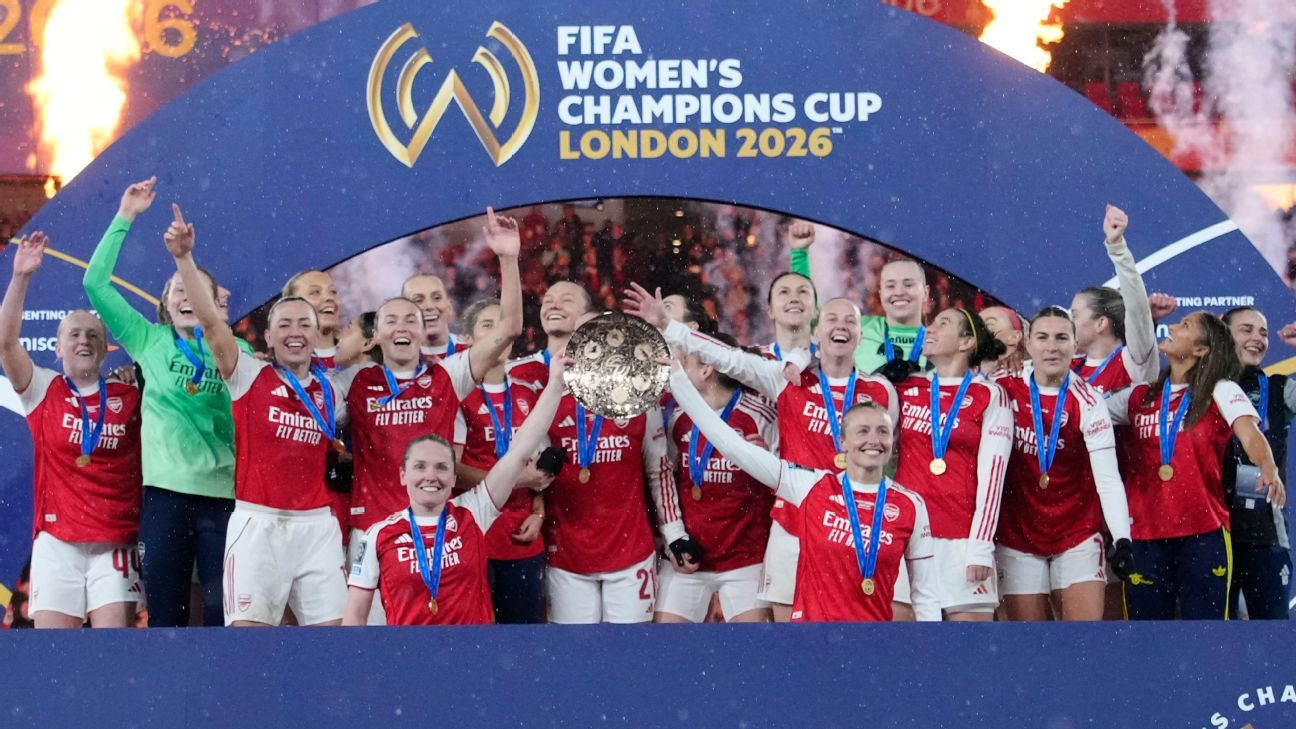
LONDON, England — On Sunday, Arsenal etched their name in history as the inaugural champions of the FIFA Women’s Champions Cup, emerging victorious against Copa Libertadores winners Corinthians with a score of 3-2, thus earning the title of the world’s best club. However, the first installment of this six-team tournament fell short of accurately determining what constitutes the pinnacle of women’s football.
This competition was touted as a showdown of the top clubs from each of the six football confederations; however, only four teams reached the semifinals held in London. The Champions Cup was introduced following the postponement of the Women’s Club World Cup to 2028, intended to provide a meaningful comparison among the continental Champions League winners and showcase the strengths of leagues worldwide.
Nevertheless, establishing a perfectly fair judgment of the best club in the world will always be a challenge. With leagues operating on different schedules and no neutral ground that benefits all teams equally, the Champions Cup inevitably faced obstacles that undermined its potential, offering no level playing field for all participants.
In this inaugural tournament, two teams were actively competing in their leagues, while two others were in the off-season; one club enjoyed the home advantage, and two teams had to travel for over six hours. Reports of unequal access to training facilities added to the disparities. Arsenal had an advantage before the match even started—nevertheless, they had to fight for their victory.
The Gunners had to overcome multiple setbacks against Corinthians, allowing the determined South American champions to level the score twice before securing the win in extra time. A defensive lapse from Corinthians allowed Stina Blackstenius‘s shot to set up Olivia Smith, whose powerful volley found the net after a deflection.
However, the lead was quickly erased when 40-year-old captain Gabi Zanotti capitalized on a scramble in the box to head the ball into the net, bringing Corinthians level again. Arsenal regained the lead with Lotte Wubben-Moy‘s header, but a controversial penalty awarded to Corinthians, following a foul by Gisela Robledo, pushed the game into extra time.
Ultimately, a strong challenge from Frida Maanum on the halfway line set up Caitlin Foord for a low strike past the goalkeeper, clinching another trophy for Arsenal, potentially their only silverware this season.
In truth, the circumstances surrounding the tournament favored Arsenal from the outset, from the venue to the facilities and the timing of the games, rendering the comparisons among the clubs and their respective leagues ineffective.
The competition was moved from the west coast of the United States to London at Arsenal’s request, who wished to avoid the fatigue of extensive travel ahead of crucial title race matches—having recently defeated Chelsea 2-0, they were looking ahead to a clash against league leaders Manchester City next week. Hence, the event was relocated to their home venue.
Host venues were only announced in December, just a month before the competition commenced. Due to the last-minute arrangements, options were limited due to scheduling conflicts with men’s Champions League matches and several London clubs playing at home during the same weekend as the final. As a result, the two sparsely attended semifinals were held at Brentford, while Arsenal’s home stadium, the Emirates, hosted the final, providing the hosts an additional advantage.
Training facilities were also an area of inequity, with Arsenal enjoying access to their top-notch complex in Hertfordshire, while the other teams were scattered around the city, facing challenges in access compared to what Arsenal routinely experience.
Additionally, Arsenal were in-season, adding to their advantage, while Gotham FC and Corinthians were just preparing for the upcoming season. The difference in competitive readiness may have impacted performance; despite Gotham’s month-long training in Europe, they struggled, losing 1-0 to Corinthians.
Supporters from Brazil passionately matched the home fans’ energy throughout the semifinals and the final, viewing this tournament as a pivotal moment in Corinthians’ history—an opportunity for the domestic powerhouses to measure themselves against the world’s best.
Despite the competition’s challenges and the result not being as desired, Corinthians proved their mettle by defeating Gotham and showcasing the resilience indicative of South American football.
Even though Arsenal’s Champions Cup victory positions them as the top club globally, their current 13-point deficit behind WSL leaders Manchester City—albeit with a game in hand—and their inability to progress past the Champions League group stage raises questions about their true standing.
Perhaps the Club World Cup in 2028 will offer a more accurate measure of which club truly deserves to be considered the best in the world.