



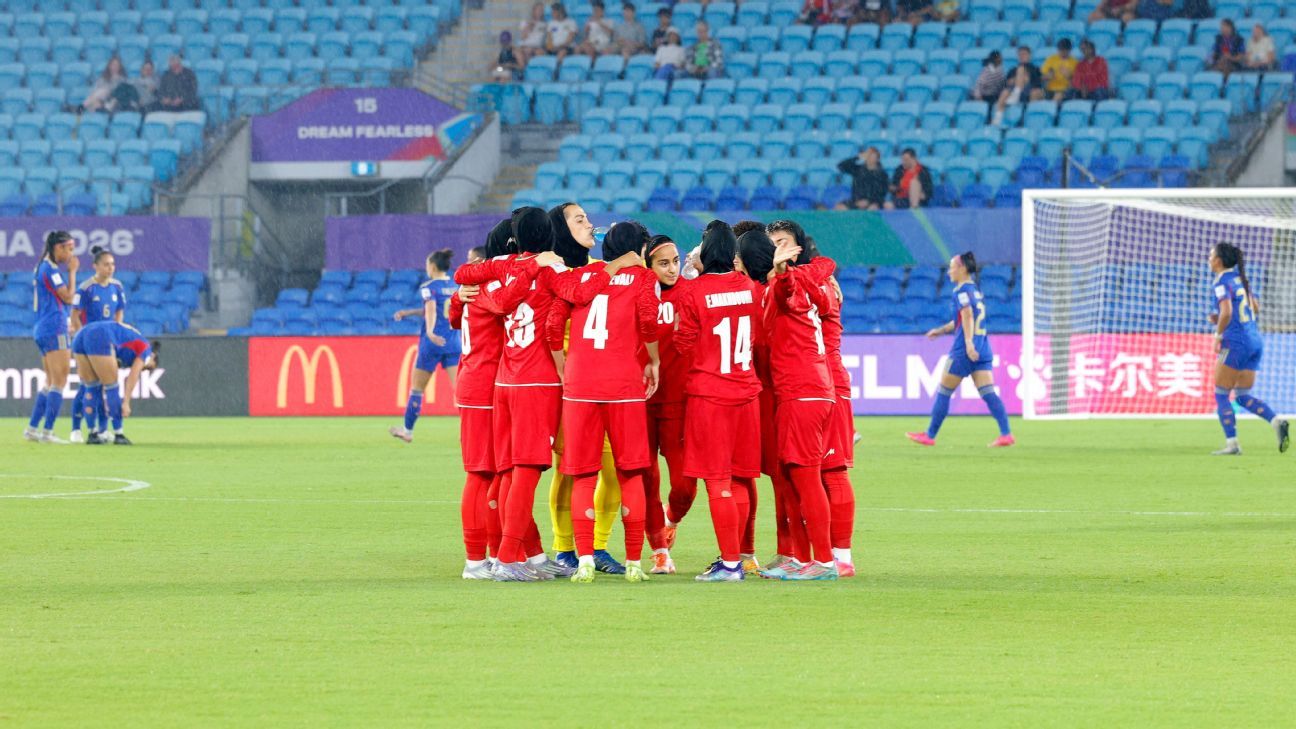
Australia has granted asylum to five members of the Iranian women’s soccer team, who were in the country for the Asian Cup when conflict erupted in Iran, as confirmed by Australia’s Home Affairs Minister Tony Burke on Tuesday.
This decision came after significant pressure from Iranian communities in Australia and calls from U.S. President Donald Trump for the Australian government to assist the players, who had not publicly expressed a desire to seek asylum. The team garnered attention and speculation in Australia when they chose not to sing the Iranian anthem prior to their first match.
On Tuesday morning local time, Australian federal police moved five of the women from their hotel in Gold Coast to a secure location after they requested asylum. There, they met with Burke, and the finalization of their humanitarian visas took place, as he informed reporters in Brisbane later that day.
“I can’t begin to imagine how challenging this decision must have been for each of these women, but last night there was joy and relief,” Burke shared, posting photos on social media of the women smiling and cheering as he signed the asylum documents. “They were thrilled to start a new life in Australia.”
The women were comfortable with their names and images being shared, Burke noted, adding they wanted to clarify that they are “not political activists.”
After their applications were approved, the atmosphere turned celebratory with chants of “Aussie, Aussie, Aussie, oi, oi, oi,” Burke stated. “These women are exceptional athletes and individuals, and they will feel very much at home here in Australia.”
The remainder of the team was still with their Iranian staff, he mentioned.
The Iranian team had come to Australia for the Women’s Asian Cup last month, just before the onset of the war in Iran. They were eliminated from the tournament over the weekend, facing the unsettling possibility of returning to a war-torn nation. Iran’s head coach, Marziyeh Jafari, mentioned on Sunday that the players “want to return to Iran as soon as possible,” according to the Australian news agency AAP.
A roster included 26 players, along with Jafari and other coaching personnel. Burke indicated that the asylum offer extended to the entire team.
“These women are incredibly beloved in Australia, and we understand they are facing a very tough decision,” said Burke. “The opportunity remains for them to engage with Australian officials if they choose to.”
The timeline for the remaining players’ departure from Australia remains unclear.
Burke refrained from detailing the dangers the players might face upon returning to Iran. While the team has been largely silent on their situation during the tournament, Iran forward Sara Didar became emotional in a press conference on Wednesday, expressing concerns for her relatives, friends, and all Iranians amidst the conflict.
The Iranian team’s actions received considerable media attention in Australia, particularly after the players’ silence during the anthem before their opening match against South Korea, which some interpreted as a sign of defiance, while others viewed it as a moment of mourning. The team later sang and performed a salute during the anthem in their subsequent matches.
“Australians have been touched by the struggles of these courageous women,” Prime Minister Anthony Albanese told reporters on Tuesday. “They are safe here and should feel welcomed.”
Albanese mentioned that Australian authorities had made their offers of support “explicit” to the athletes.
“They had to weigh their options carefully to prevent any danger to themselves or their loved ones back home in Iran,” he said.
The announcement from Australia followed Trump’s call on Monday for the Asian Cup host nation to provide asylum to any player interested. Trump criticized Australia on social media that day, arguing that it was “making a serious humanitarian error by forcing the … team back to Iran, where they would likely face fatal consequences.” He urged Australia to grant asylum, adding: “The U.S. will take them if you do not.”
Shortly afterward, in another post, Trump commended Australian Prime Minister Anthony Albanese, saying, “He’s on it! Five have already been taken care of, and the rest are on their way.”
Trump’s asylum offer marks a shift in his administration’s stance, which had generally sought to limit asylum for political reasons.
Albanese revealed that Trump had reached out for “a very positive conversation” regarding the issue. The Australian leader explained “the actions we had undertaken over the previous 48 hours” to support the women.
He also praised Australian media outlets for their discretion in not disclosing earlier developments regarding the situation.
Before Australia decided to grant asylum, advocates had been urging officials to engage with the team to ensure their safety, especially after some players were seen making what seemed to be an SOS signal on Sunday night, following their last Asian Cup match.
As they departed the final match on Sunday, at least one of the women appeared to signal for help through the team bus window by displaying an open palm, crossing her thumb over it and folding her fingers down.
Protesters surrounded the bus, and the women seemed to document the crowd from inside.
Information from The Associated Press and AAP contributed to this story.