



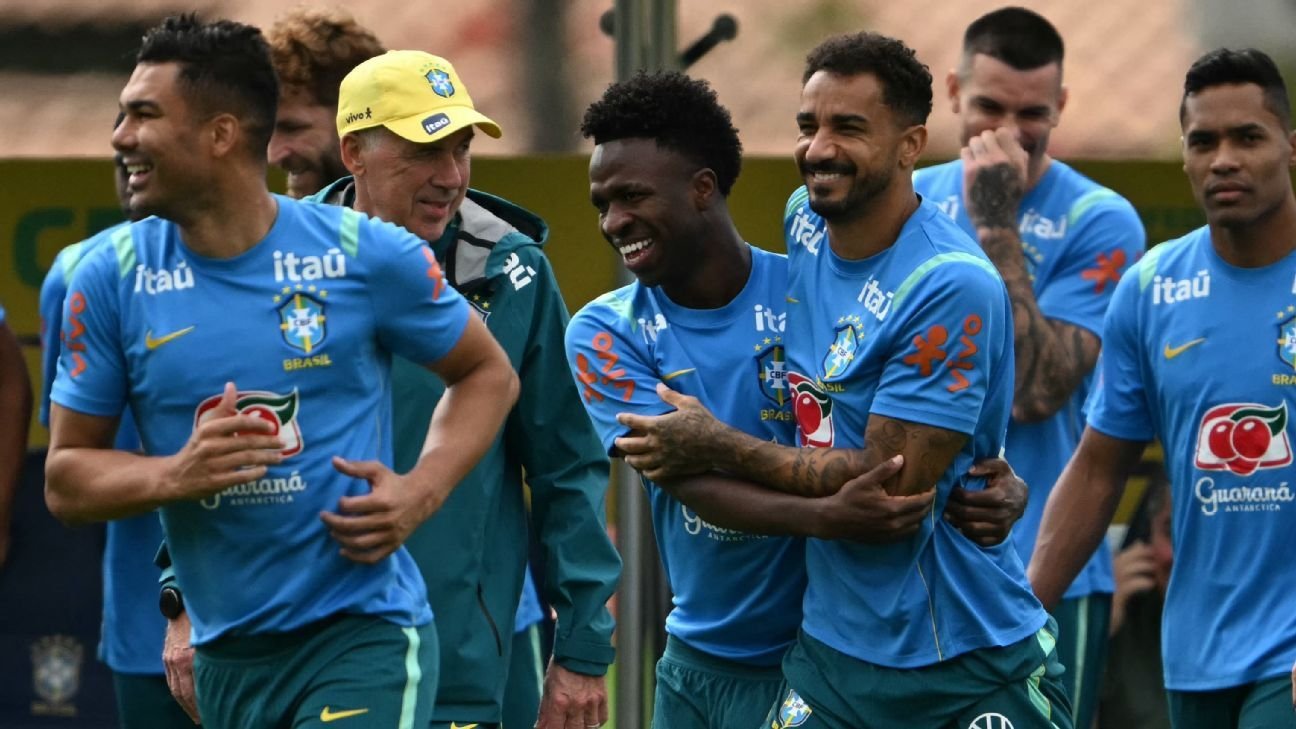
Two members of Brazil’s national team weren’t even born when the country last claimed the FIFA World Cup title in 2002. A whole generation of Brazilian adults has grown up without witnessing their nation lift the trophy, making it feel as if a piece of their identity has been lost.
It’s been 24 years since that glorious win, which interestingly is the same gap between Brazil’s third title in 1970 and its fourth in 1994, yet this current drought feels weightier.
In Brazil, soccer transcends mere results. It’s not only about achieving victory but also about how it’s accomplished. Traditionally, Brazil’s style has embodied flair, confidence, and a vibrant celebration of life’s possibilities.
Those who experienced Brazil’s enchanting play can’t forget it. While fans returned home disappointed, they did so with their team’s glamour and international respect seemingly intact.
However, that sentiment has shifted. Today, Brazil remains a formidable team and the only nation to have won the World Cup five times, but the exclusive claim to artistry is gone. The world no longer looks to Brazil as the ultimate symbol of the beautiful game.
This creates a heightened sense of urgency for the upcoming 2026 World Cup, where the primary goal back home is to secure a championship.
While it may be unrealistic to expect the magical soccer of 1970 or 1982 from the current squad, Brazil has key strengths in several positions, backed by a formidable lineup of attacking players.
The journey toward a sixth World Cup victory has been arduous, but with the accomplished Italian coach Carlo Ancelotti at the helm, Brazil has a capable leader. Understanding the stakes, he has signed on through the 2030 World Cup. For him, success means winning the tournament; anything less is deemed failure.
Should Brazil triumph on July 19, they will have navigated an unconventional path. Ancelotti stands composed amid a tumultuous preparation phase, some of the chaos stemming from his own choices.
However, much of the turmoil predates Ancelotti’s arrival. Brazil squandered significant time—nearly all 18 qualifying matches and a Copa América—under two domestic coaches who were clearly outmatched. Ancelotti took charge a year before the tournament, but like coaches of national teams, he faces a steep time constraint. In his typically relaxed manner, he rarely voices complaints.
Complicating matters, injuries struck before the squad announcement, sidelining three potential starters: attackers Rodrygo and Estêvão, along with defender Éder Militão, who would likely have played right back.
The farewell match against Panama at Maracanã stadium was another headache. Their 6-2 victory seemed promising but revealed deeper issues.
The starting lineup struggled in the first half, improving significantly after 10 substitutions at halftime. Ancelotti’s preferred strategy of deploying four attackers—leveraging the wingers and allowing Vinícius Júnior to roam free up front—left the midfield exposed with only two players, one being the 34-year-old Casemiro.
In that game, Brazil appeared weak in midfield, allowing Panama to dominate possession and maneuver around Casemiro and Bruno Guimarães. The second half showcased a substantial improvement when Brazil transitioned to a three-player midfield.
Ancelotti expressed that the results raised doubts about his World Cup formation, especially as his 26-man squad included only five midfielders—more would likely be necessary.
In the second warm-up match— a 2-1 win against Egypt in Cleveland—Brazil lost right attacking back Wesley due to a muscle injury. Consequently, Ancelotti shifted his focus to strengthen the midfield by calling up soon-to-be Manchester United signing Éderson, leaving the right back position unaddressed.
With Wesley’s absence, Ancelotti must decide between Danilo or Roger Ibañez to fill in at right back. The feeling is that Brazil is engaged in a game of whack-a-mole: addressing one issue only to create another.
Despite concerns, Brazil can rely on a solid core, boasting players like Alisson in goal, UEFA Champions League finalists Marquinhos and Gabriel Magalhães in central defense, Casemiro and Guimarães in central midfield, and Vinícius and Raphinha providing attacking firepower. However, several uncertainties linger around the edges.
Ancelotti claims to have clarity on the starting XI for Saturday’s opener against Morocco, but local media express concerns. Who will fill the fullback roles? What will the team do down the right flank without Wesley? Will Lucas Paquetá be used as the third midfielder?
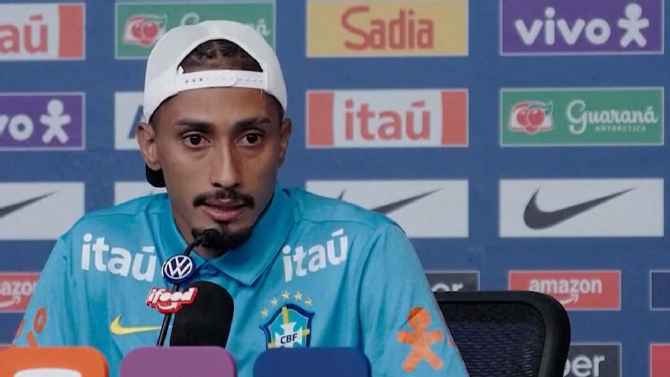
1:33
Raphinha: Brazil is strategizing to exploit Morocco’s vulnerabilities.
Who will ultimately be the center forward? Will it be Matheus Cunha, who can contribute defensively and allow Vinícius space? Or Igor Thiago to provide a focal point? What about Endrick, who has transformed from an outsider to a serious contender after scoring the first goal by a central striker during Ancelotti’s reign in the victory against Egypt?
Ancelotti, however, seems largely unfazed by these questions. Rather than focusing solely on starting the tournament strong, he’s more concerned with finishing it on a high note, leading us to the topic of Neymar.
Ancelotti kept everyone guessing leading up to the May 18 squad announcement, but it now appears he intended to include Neymar all along. Ancelotti views Neymar through the lens of the player he once was—the dependable midfielder who prioritized supporting talent. He has a deep appreciation for stars, which explains his ease in working with them, and he sees great potential in Neymar.
Bringing the 34-year-old Neymar into the mix appears counterintuitive, especially given his mediocre performance with Santos this season. Questions linger about his fitness following a serious knee injury in October 2023.
When the squad was revealed, Ancelotti had hoped Neymar would enhance his fitness before the tournament, which unfortunately hasn’t materialized. Currently, a right calf injury keeps Neymar in recovery, and Ancelotti has made it clear that he won’t take an unfit player to the World Cup.
Why, then, is Ancelotti taking such a risk? It’s likely a reflection of his memories from USA ’94 when he served as assistant coach under Italy’s Arrigo Sacchi. During that tournament, star defender Franco Baresi faced a knee injury and minor surgery early on, leading to doubts about his participation.
Yet, Baresi returned for the final, where he was tasked with neutralizing Brazil’s Romário, a noteworthy challenge that ultimately proved effective in securing a draw, although Italy lost on penalties.
Years later, Ancelotti and Sacchi reflected on Baresi’s surprising success. They concluded that given the high temperatures and fatigue of the tournament, it could be advantageous to utilize an injured player over one who is simply worn out.
Ancelotti may share a similar sentiment. Perhaps he believes that Neymar, in an alternate role, could thrive against fatigued opponents, where his creativity could prove decisive despite not being at full capacity.
With 26 players to choose from, Ancelotti is betting that this gamble is worthwhile. Thus, Neymar has an unlikely opportunity ahead, and for him, it may very well be a make-or-break situation—paralleled by Brazil’s quest to end a 24-year title drought.