



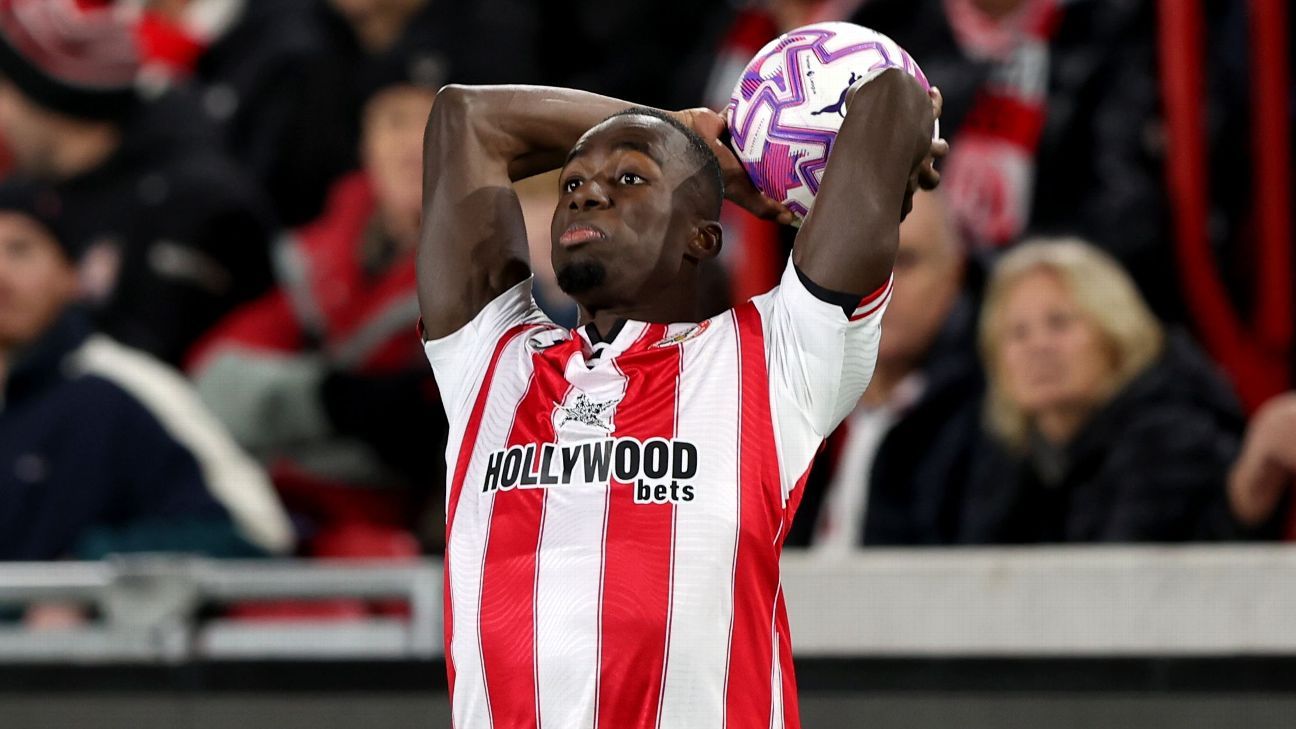
The trend of long throw-ins has made a comeback in the Premier League, reminiscent of its popularity nearly two decades ago. Almost every team is adopting this tactic to varying degrees of effectiveness, as fans are now accustomed to seeing the ball launched into the penalty box from great distances.
Opta defines a “long” throw-in as one exceeding 21.9 yards. As of the 13th matchday, there have been 520 long throw-ins executed this season, resulting in 12 goals (including one own goal). For comparison, last season only saw a total of 14 goals from long throw-ins.
A modern innovator of the long throw-in, midfielder Rory Delap, a former javelin athlete, helped Stoke City leverage this technique for success after their promotion in 2008. Currently, Brentford leads the Premier League with 70 attempts this season, having scored six goals from long throw-ins last year and three already in the current campaign. Meanwhile, Crystal Palace has also achieved three goals this season with 60 attempts.
In total, six different Premier League teams have scored from long throw-in situations during the first 13 matches, matching the total from the entirety of last season. Thomas Grønnemark, a specialized throw-in coach who has collaborated with Brentford, Liverpool, Ajax, Borussia Dortmund, and others, emphasizes that this surge in long throw-in efficiency is no coincidence.
“All clubs are analyzing their data and searching for their next competitive advantage,” he told ESPN. “Teams see Brentford’s success and realize they’re netting many goals and generating significant chances from long throw-ins, so they consider adopting that strategy themselves.”
Grønnemark has been integral to several of football’s long throw-in breakthroughs, having coached FC Midtjylland to 46 long-throw goals over five seasons. At Brentford, he has provided a competitive edge against wealthier and more established teams.
“Football is a low-scoring game,” he argues. “Even a single goal can lead to victory, influencing outcomes over the entire season.”
What distinguishes a skilled long thrower? Grønnemark identifies three crucial physical and technical attributes, as well as foundational techniques.
– A throw is considered “world-class” if it exceeds 37 yards; throws that don’t reach the six-yard box lose effectiveness.
– Teams benefit from multiple elite throwers (both Brentford and Crystal Palace have at least two each).
– At least three proficient touch players (headers and those who can challenge in the box) are essential for capitalizing on throw-in opportunities.
Three Types of Long Throwers
Identifying skilled long throwers can be a challenge. To facilitate this process, a recent social media leak revealed that new Tottenham Hotspur manager Thomas Frank held auditions for long throw capabilities within his squad. As someone who previously collaborated with Grønnemark at Brentford, Frank has described long throws as “a valuable tactic” worth incorporating into his strategy.
Grønnemark categorizes potential long throwers into three principal physical profiles, noting some players may fit multiple types.
Type 1: Tall Players or Those with Long Arms
Much like discus throwers, taller athletes with longer limbs excel in executing long throws.
“Players of this type can launch the ball far because their arm length allows for a greater range of motion during the throw, resulting in more power.”
Prime example: Mikkel Qvist, who played for Danish club AC Horsens in 2016, stands at 6-foot-6 and delivered a throw-in measuring 43.2 yards, covering nearly half the pitch to reach the penalty spot.
Modern example: Nordi Mukiele’s ability to launch the ball into the box has significantly contributed to Sunderland’s strong start in the Premier League, recording the second-highest number of attempts after 13 matches (49).
Type 2: Fast-Twitch Fiber Athletes
Players with a higher proportion of fast-twitch muscle fibers can generate quick bursts of energy, enabling them to execute powerful and explosive movements without necessarily being tall.
“Such players don’t need to have a height advantage; even shorter players can excel.”
Prime example: The legendary Roberto Carlos, renowned for his powerful free kicks, also showcased impressive throwing abilities despite standing at only 5-foot-6. Meanwhile, Gareth Bale, at 6-foot-1, utilized his fast-twitch fibers effectively, famously assisting a goal for Jermain Defoe directly from a launched throw.
Modern example: Bournemouth forward Antoine Semenyo stands out as one of the few forwards in the Premier League capable of reaching the six-yard box with a throw.
Type 3: Flexible Players
Though a football weighs only about 1 pound, the key to long throws is technique rather than sheer strength. Flexibility, especially in the hip and shoulder areas, plays a vital role in effective throw execution.
“Flexible shoulder joints aid in achieving a longer range, similar to the advantage longer arms provide. Many of the top performers I’ve coached possess not only flexibility but also effective technique, regardless of their size or strength.”
Prime example: Rory Delap was not especially tall or physically powerful but, as a former javelin athlete, combined flexibility with throwing technique. His presence posed such a significant threat that Hull City goalkeeper Boaz Myhill once deliberately kicked a ball out for a corner to avoid facing Delap’s throw.
Modern example: Michael Kayode from Brentford is currently the most impressive long thrower in the Premier League, leading the league with 64 throw-in attempts. He exemplifies multiple skill sets, with flexibility as his standout attribute.
Technical Elements
While physical attributes are essential, technical proficiency is equally critical. Grønnemark highlights 30 different parameters he considers when coaching proper throw-in technique, which he groups into three primary categories.
Firstly, the player’s stance at the line is crucial. “I assess the distance between their feet, their hip alignment, how they hold the ball, and its position behind their head at the start,” he explains. “Timing the upper body release correctly is key as well, as it can either be too early or too late.”
Secondly, energy transfer is pivotal. “It’s similar to a javelin throw,” he adds. “This principle applies equally to football throw-ins, involving hip mechanics and timing.”
Lastly, the run-up to the sideline impacts the outcome as well. “Faster or smaller players require a bit more running speed—not sprinting— to effectively channel that energy,” he notes. “I observe the variations in steps taken. Some players prefer short, quick steps, while others might need longer strides or may even take stiff steps out of fear of misaligning their run-up before the throw line.”
“Some players introduce jumps into their running style; this can work if the energy transfer is correct, but it may hinder their positioning just before the throw,” he comments.
Practice Makes Perfect
Integrating all these elements effectively can lead to outstanding long throwers. However, persistence is key. According to Grønnemark, even the most naturally talented player can extend their throwing distance by nearly nine yards through training, while those without remarkable ability can also become effective after proper coaching.
Grønnemark cites Andy Robertson as a prime example of the difference targeted practice can make.
“When I started at Liverpool, Robertson’s throw covered only 21.6 yards, but he improved it to 29.5 yards,” he recounts. “While this distance may not meet the world-class standard (37 yards or more), it still significantly expanded the area influenced by his throw-in, effectively enhancing Liverpool’s counter-attack opportunities.”
“Robinson learned to identify when to execute a fast throw versus exercising patience, becoming adept at reading spaces.
A longer throw enables a team to counter swiftly, as there are no offside restrictions with throw-ins. Moreover, a longer throw increases the throwing area, allowing for more passing options to teammates.”
Drawbacks of Long Throw-Ins
Not all teams excel at long throw-ins. Despite the trend following Brentford’s success last season, most Premier League teams have yet to match their threat level, often leading to mistakes during execution.
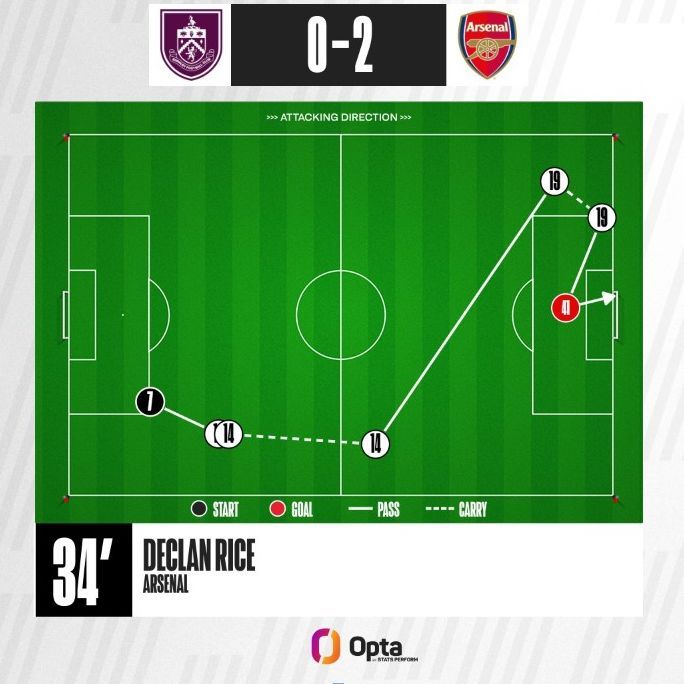
This season, some goals have been scored on counterattacks resulting from poorly executed long throws. An example is Arsenal’s second goal against Burnley in November, where the Clarets failed to capitalize on a long throw, losing possession and conceding just moments later.
Another significant concern is the potential dilution of entertainment.
Executing long throws can be time-consuming, often taking 30-40 seconds due to the necessary preparations. The thrower may have to travel across the pitch and dry the ball, while defenders position themselves into the opponent’s penalty box.
For fans of teams like Brentford, Crystal Palace, and Sunderland—who have effective long throw strategies—the wait may be worthwhile, but for supporters of many other clubs, it could be less satisfying.
Grønnemark shares this concern as well. “If we witness a proliferation of low-quality long throw-ins, we will have longer wait times, diminishing the entertainment value for fans,” he notes. “It appears many Premier League teams are simply copying a strategy without understanding its effective execution.”