



The league stage of the 2025-26 UEFA Champions League has concluded! Following an exhilarating final matchweek, we now know the 24 teams that remain in Europe’s premier club competition.
This means that the draw for the knockout playoff round is just around the corner. But who will be involved in this draw, and what can we expect?
Here’s everything you need to know about this upcoming key event on the Champions League timeline.
When is the draw for the knockout playoff round?
The draw is scheduled for Friday, January 30, at 6 a.m. ET (11 a.m. GMT) and will be held at the House of European Football in Nyon, Switzerland.
Which clubs are participating in the draw?
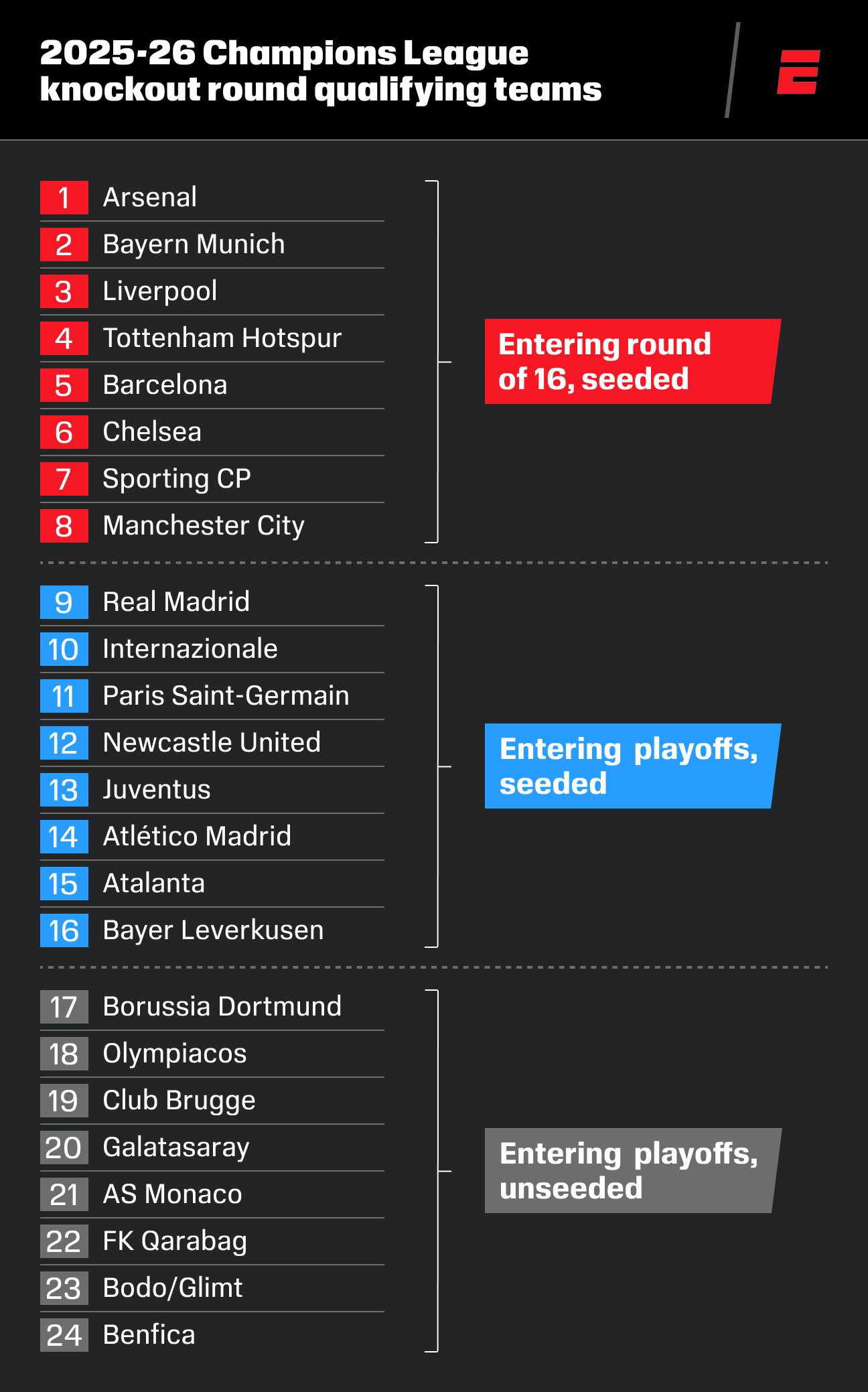
A total of 16 teams will be included. The teams that ranked ninth through sixteenth in the league phase are seeded for the draw, while those finishing in positions seventeenth through twenty-fourth are unseeded.
The top eight teams from the league phase will advance automatically to the round of 16, and clubs that finished in positions twenty-fifth to thirty-sixth have been eliminated.
What is the purpose of the seeding system?
The seeding system established for the 2024-25 season ensures that higher-ranked teams from the league phase do not face each other in the knockout playoff round, thereby creating a more balanced bracket.
The 16 teams participating in Friday’s draw are matched according to their final standings in the league phase. For example, ninth-seed Real Madrid will be matched with tenth-seed Internazionale, and eleventh-seed Paris Saint-Germain will face twelfth-seed Newcastle United, forming eight team pairings.
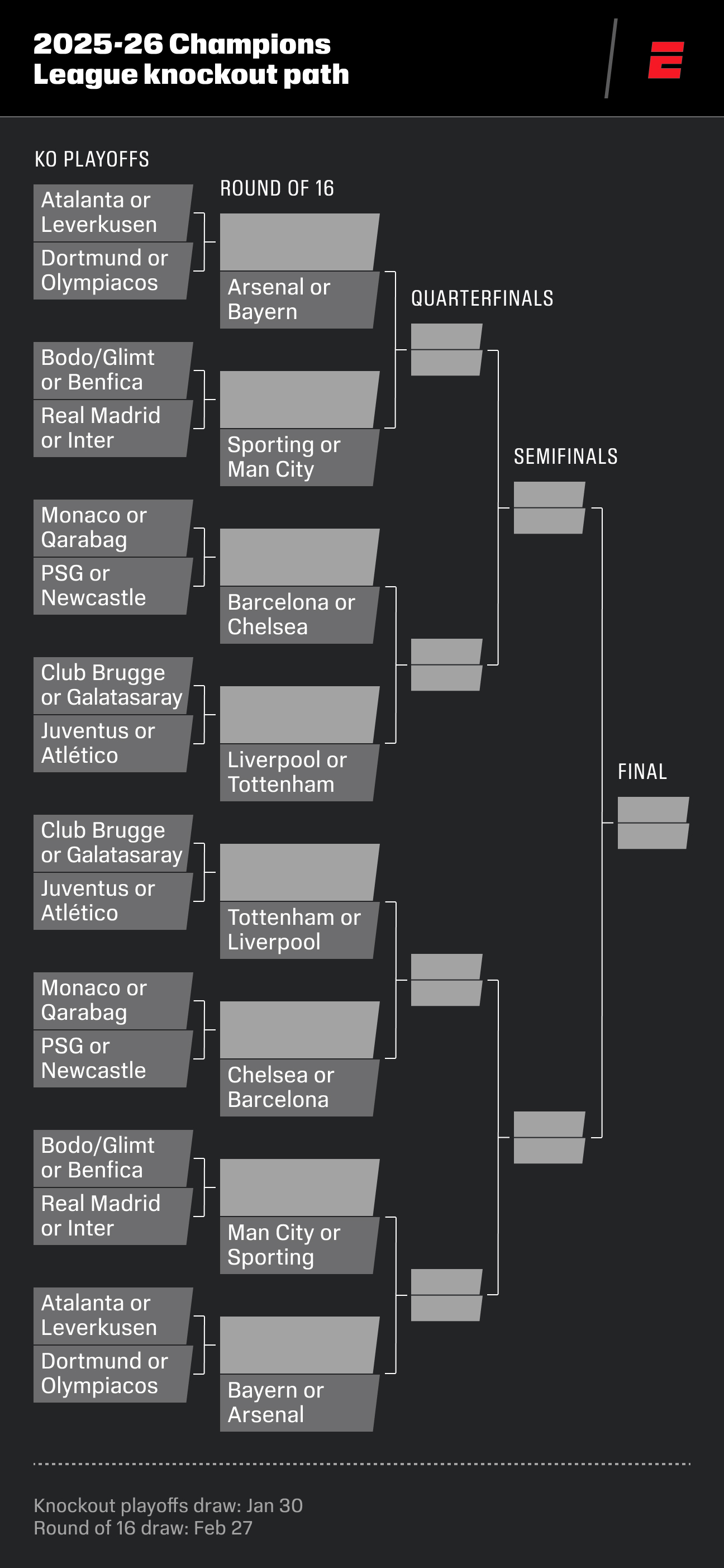
Dynamically, each pairing will be separated during the draw, positioning them on opposite sides of the bracket.
How will the draw proceed?
The eight unseeded teams will be drawn first into bracket positions. The first team drawn will occupy the first section of the bracket, while their counterpart will go into the second section.
Next, the seeded teams will be drawn in a similar manner: the first team selected will be allocated to the first half of the bracket, and the second team will fill the opposite half. This creates matchups between seeded and unseeded teams.
Notably, the seeded clubs will host the second leg of their fixtures.
Here’s what the bracket looks like going into the draw.
Did team standings in the table have an impact?
Yes, it can make a significant difference. Last season highlighted how this system can affect outcomes. Manchester City had to compete in the knockout playoff round after finishing 22nd, facing off against seeded Real Madrid as an unseeded team, resulting in a 6-3 aggregate defeat over two legs.
Contrastingly, PSG managed to advance seamlessly through the playoffs and continued on to clinch the title despite facing the additional round of matches.
This year, PSG, along with Inter Milan (their opponent in last year’s final) and Real Madrid, are again positioned outside the top eight, especially after Real Madrid’s surprising 4-2 loss to Benfica in the last matchweek.
Is there country protection in the draw?
No, clubs from the same country may compete against each other starting from the knockout playoff round onwards.
Additionally, teams may encounter opponents they faced during the league phase.
What happens after the draw?
Following the draw, the teams will compete in a two-legged knockout playoff round in February.
After that, the draw for the round of 16 will take place on February 27, determining the matchups for the next stages of the knockout rounds.
What are the key remaining dates in this season’s Champions League?
Knockout playoff round: February 17-18, February 24-25
Round of 16/quarterfinal/semifinal draw: February 27
Round of 16: March 10-11, March 17-18
Quarterfinals: April 7-8, April 14-15
Semifinals: April 28-29, May 5-6
Final: May 30 (Budapest)