



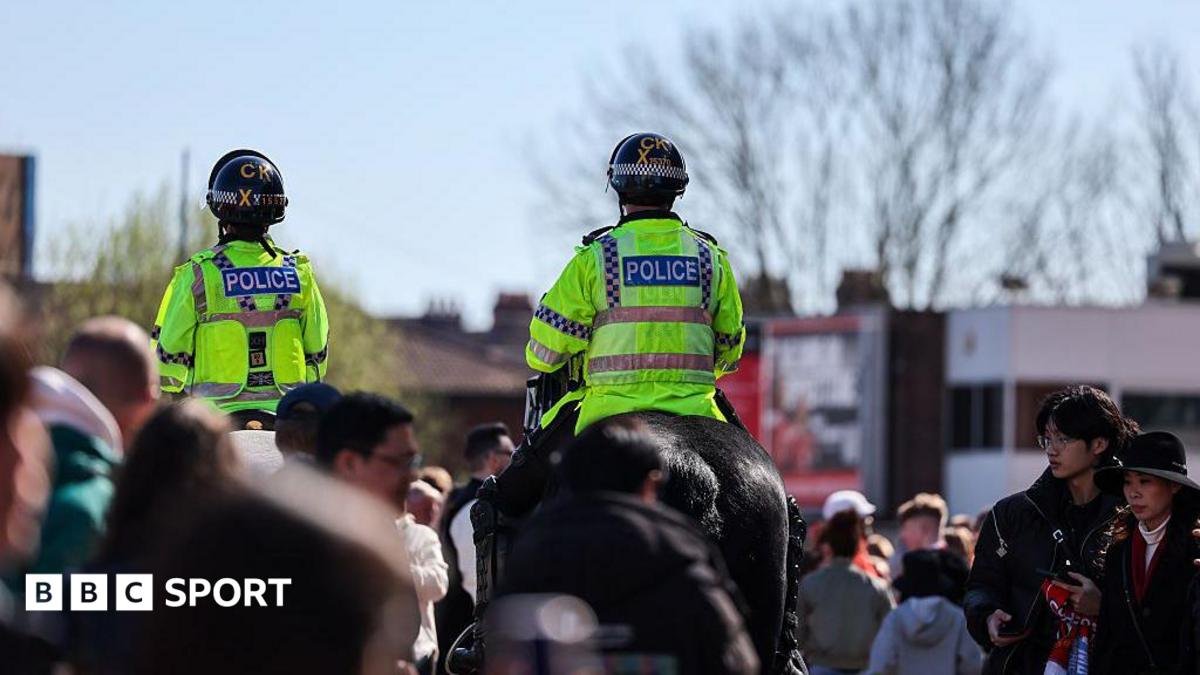
Police chiefs are calling on football clubs to shoulder a greater share of match-day policing costs to reduce the burden on taxpayers.
Chief Constable Mark Roberts, the UK’s lead for football policing, says the current approach—where clubs are not charged for policing outside stadiums—can no longer continue.
Home Office figures published on Thursday, external show incidents were recorded at 1,644 matches across England and Wales last season—the highest total since the UK Football Policing Unit began compiling the data in 2017-18.
Roberts estimates taxpayers funded £70m of policing at football last season and argues the funding model is failing.
He notes that disorder linked to matches often occurs beyond the turnstiles, yet clubs with vast revenues are not billed for operations outside their grounds, leaving the public purse to pick up the tab.
He says this situation is unsustainable and needs reform.
The call comes alongside a rise in what police classify as “high severity” incidents at fixtures last season.
There were 159 such incidents, up from 106 the year before.
Geoff Pearson, a law professor at the University of Manchester and an expert in crowd behaviour, says the increase is not cause for alarm.
He highlights that incident reports differ from arrests and other police interventions—of which there were 1,963 last season, a reduction on the previous campaign.
Pearson suggests improved club reporting systems and devices may be contributing to the higher incident count.
He also points to a 17% year-on-year drop in violent disorder as a sign of effective policing, saying the UK’s approach is widely respected internationally.
Violent disorder cases fell from 444 to 368, making up 19% of all football-related police incidents in 2025-26, down from 22% in 2024-25.
Pearson argues that if severe incidents had surged dramatically, violent disorder would likely have risen too, rather than decreased.
He credits police for continuing to refine tactics during and after lockdown, including measures such as safe standing, and says the latest data reflects those efforts paying off.
When supporters returned after the Covid-19 shutdown in 2021-22, there were 2,198 football-related arrests, with similar levels over the next two seasons.
Arrests then dropped to 2,004 in 2024-25 and fell by a further 40 last season.
Pearson says the decline in arrests, despite a longer-term rise in recorded offences, further underscores the effectiveness of policing strategies.
New legislation made unauthorised entry to matches a criminal offence in March, and from 2024 possession of class A drugs was added to football-related arrest categories.
A Premier League spokesperson said the league and its clubs work closely with police nationally and locally to create safe, welcoming match environments.
They added that more than £90m per season is being invested in stewarding, security, community crime prevention, and technology pilots in collaboration with several forces and the UKFPU.
According to the spokesperson, this partnership aims to reduce the need for policing around games, with arrest numbers having trended downward over the past decade.