



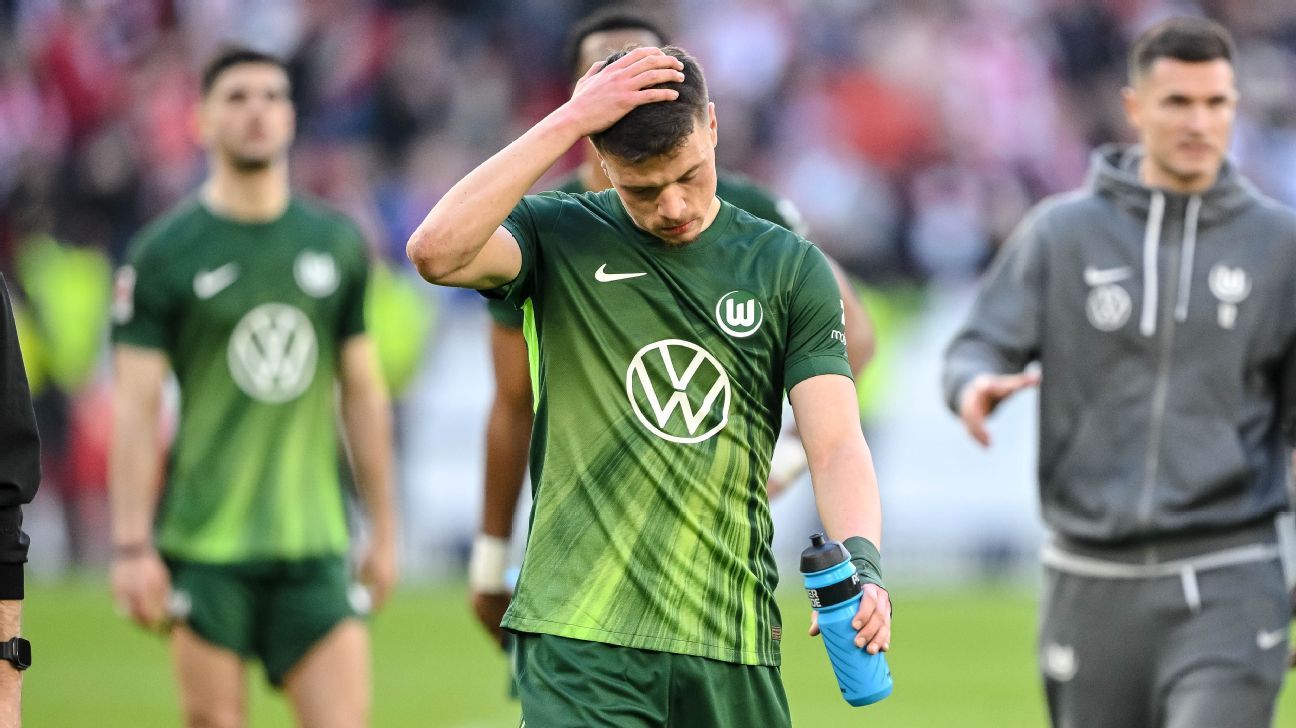
Wolfsburg, known as Germany’s own Autostadt, owes its very existence to Volkswagen and the automotive industry. Yet, this city in Niedersachsen, often overlooked in Northern Germany, faces a real threat of relegation from the top tier of the Bundesliga.
VfL Wolfsburg (short for Verein für Leibesübungen, meaning “club for body exercise”) earned its place in the Oberhaus (first division) in 1997 and has since become a stable competitor in the league. Only Bayern Munich, Borussia Dortmund, and Bayer Leverkusen have maintained their presence in the Bundesliga longer than die Wölfe (the Wolves).
The club famously clinched the league title in 2009 under coach Felix Magath, during a time when stars like Edin Dzeko and Grafite dazzled fans across Germany. In 2015, Wolfsburg achieved their first-ever DFB-Pokal victory, and as recently as 2016, they almost upset Real Madrid in the UEFA Champions League quarterfinals. However, after leading 2-0 from the first leg, they faltered with a 0-3 loss at the Santiago Bernabéu, marking the beginning of years marred by mediocrity.
– Kane, Yamal lead ESPN’s Players of the Month for February
– Kane sets sights on Lewandowski: Tracking goal and assist records in Europe
– The top teams in Europe now: Barcelona and Bayern reign supreme
The next season, Wolfsburg found themselves fighting perilously close to relegation, finishing 16th and narrowly avoiding the drop thanks to a tense two-legged playoff victory against local rivals Eintracht Braunschweig. Since then, there has been a lingering feeling that Wolfsburg exists in a sort of no-man’s-land, even during Oliver Glasner’s commendable stint where he led them back into Königsklasse (Champions League) before departing amidst internal disagreements with sporting director Jörg Schmadtke.
Despite their Bundesliga stature, Wolfsburg has often been overlooked by the wider German fanbase, mainly due to the 50+1 exemptions that benefit a club owned by the Volkswagen group. This season, the club’s struggles have sparked a sense of Schadenfreude among fans of rival teams. Currently, they sit second from the bottom, with only 20 points from 24 matches—marking their worst campaign since their promotion in 1997.
Under significant pressure is the club’s managing director for sport, Peter Christiansen, who came from FC Copenhagen in 2024. Christiansen has heavily invested in player acquisitions but has cycled through two coaches—Ralph Hasenhüttl and Paul Simonis—while the internally promoted former youth coach, Daniel Bauer, may be next in line.
Bauer publicly expressed concerns this week, stating that the club’s atmosphere and culture are not bundesligatauglich (suitable for the Bundesliga). Whether he will be the next to face the consequences remains to be seen.
This weekend’s Nordduell against Hamburger SV (Saturday, 9:20 a.m. ET, ESPN+) feels crucial for both Bauer and Wolfsburg. Hamburg, returning to the Bundesliga after a long absence, have been performing decently but are also fighting to avoid relegation after their recent loss to Leverkusen.
The relegation battle this season engulfs nearly half the Bundesliga. It would be surprising if Union Berlin, currently six points clear of the relegation playoff spot, falls into the fray. A home win against Werder Bremen could significantly elevate their chances of safety.
Bremen, now guided by Daniel Thopune, managed an important 2-0 victory over bottom-table Heidenheim, who appear destined for relegation after a surprising yet brief three-year tenure in the Bundesliga.
Meanwhile, St. Pauli and Mainz have shown signs of improvement. Urs Fischer has made a noticeable impact since taking the helm at Mainz, and it would be surprising if they falter significantly again while still competing in European play.
For Köln and Borussia Mönchengladbach, the rise of these teams causes concern. Köln’s coach, Lukas Kwasniok, received a show of confidence from management this week, but the club’s precarious situation suggests that each week could bring new challenges. The upcoming Rheinderby against Gladbach may carry added significance based on both teams’ performance leading up to the match.
Finishing 16th is not typically a cause for panic in the Bundesliga, as history favors the playoff representative over the third-place team from the 2. Bundesliga. However, being in Wolfsburg’s current position at 17th, unable to avoid the Notbremse (emergency brake), is undeniably troubling.