



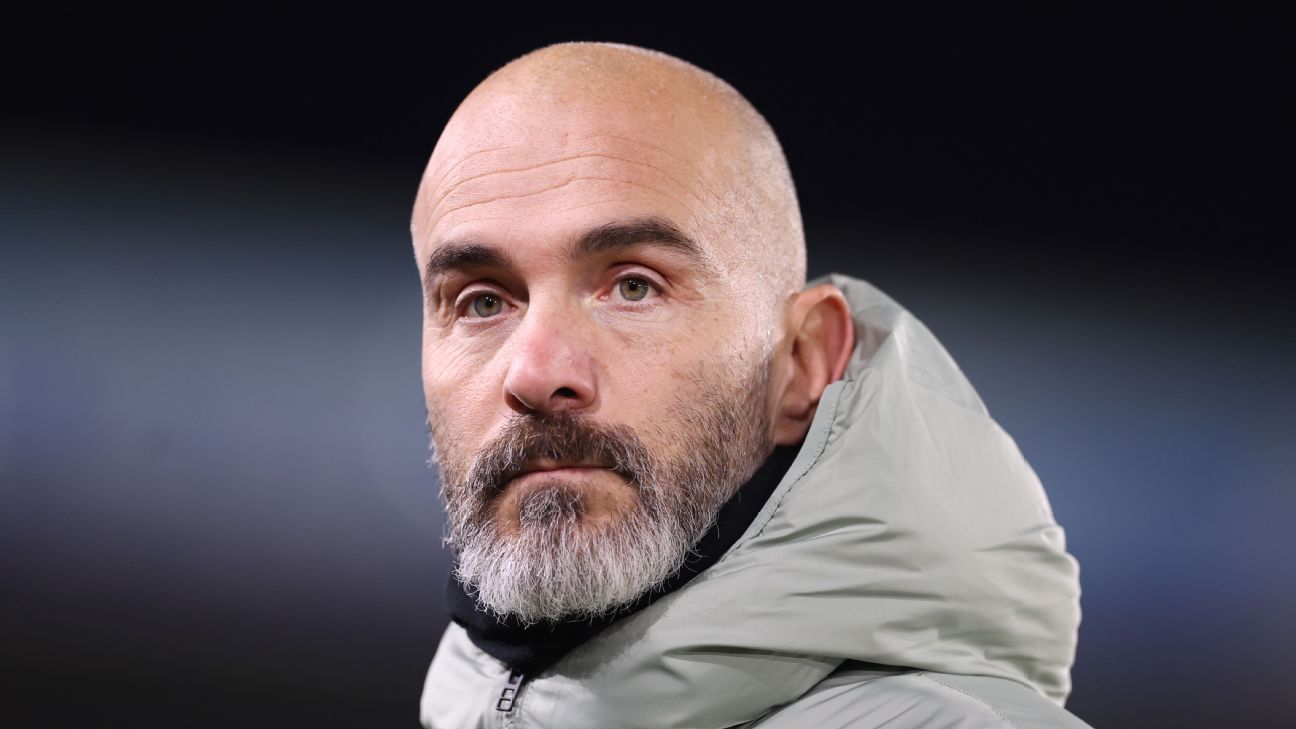
Being the head coach of Chelsea is a formidable role in football. Although the club, as their fans proudly chant, has achieved unparalleled success, top-tier managerial experience isn’t necessarily a requirement. Thus, it’s unlikely that a renowned manager will step in to succeed Enzo Maresca. Many Chelsea supporters are perplexed by this shift—however, it’s emblematic of the “new” Chelsea under the leadership of Todd Boehly and Behdad Eghbali’s Clearlake Capital.
Consequently, it’s not surprising that Liam Rosenior, the former Hull City manager now coaching Chelsea’s Ligue 1 affiliate, Strasbourg, is a prominent candidate to lead at Stamford Bridge. While Rosenior is a talented coach, his recent dismissal from Hull might make his potential hiring unpopular among Chelsea fans, mirroring the subdued reaction to Maresca when he was appointed back in 2024.
Maresca’s departure from Chelsea on New Year’s Day came after a year and a half at the club. Despite achieving success in last season’s UEFA Conference League and the FIFA Club World Cup, as well as securing a spot in the UEFA Champions League through a fourth-place finish in the Premier League, winning is no longer the sole focus for the club. The current ownership emphasizes fitting into a specific vision, which prioritizes young, promising coaches alongside the recruitment of emerging talent globally.
The club operates under a dual ownership structure and features two sporting directors, Paul Winstanley and Laurence Stewart, along with several prominent figures in its so-called “integrated football leadership structure,” including former Liverpool director of scouting and recruitment, Dave Fallows, along with talent scouts Sam Jewell and Joe Shields. Moreover, the head coach is expected to closely collaborate with medical staff rather than simply considering their advice. This expectation might deter seasoned managers from pursuing the role, opting instead for more traditional coaching environments.
However, such is the current state of Chelsea, and whether this approach is effective remains under scrutiny. The definition of success has evolved at the club, contributing to Maresca’s departure.
For nearly two decades, during Roman Abramovich’s tenure, Chelsea was synonymous with significant investment and ambition, employing illustrious coaches such as José Mourinho, Carlo Ancelotti, Antonio Conte, and Thomas Tuchel. Abramovich’s uncompromising demand for success led to considerable achievements, including two Champions League titles and five Premier League trophies, until government sanctions necessitated the club’s sale in May 2022.
Maresca’s hiring marked a significant departure from Abramovich’s era, illustrating a new phase at the club. When appointed, the 45-year-old had less than 18 months of head coaching experience, including a brief stint with Parma in Serie B, where he was dismissed for failing to secure promotion, followed by a successful season with Leicester City, guiding them to an EFL Championship title and a return to the Premier League.
With Maresca’s hiring, Boehly and Clearlake aimed to continue their vision of nurturing bright, young managers who could cultivate a similarly ambitious squad. Their initial efforts with Graham Potter, who succeeded Tuchel just seven games into the new ownership’s inaugural season, ended quickly, while Mauricio Pochettino lasted only a year before departing amid disagreements over player recruitment.
The decision to appoint Maresca, after considering the similarly inexperienced Kieran McKenna from Ipswich Town, reinforced the club’s commitment to this vision. A coach from the Abramovich period would have resisted the constraints of the integrated football leadership structure, demanding the resources necessary for competitive success. Instead, by selecting a young coach who might feel honored to manage such a prestigious club, the intention was that he would willingly accept the collaborative directives of the ownership.
However, this approach has limits. Perhaps buoyed by past successes, Maresca sought more autonomy in the player acquisitions essential for title contention, a demand that contributed to Pochettino’s exit. This pattern reflects a trend where established managers face pushback and may choose to step away from the evolving structure.
In conclusion, as Chelsea searches for a new coach, the focus will remain on finding a young, adaptable candidate. The era of hiring top-tier managerial talent appears to be squarely behind the club.