



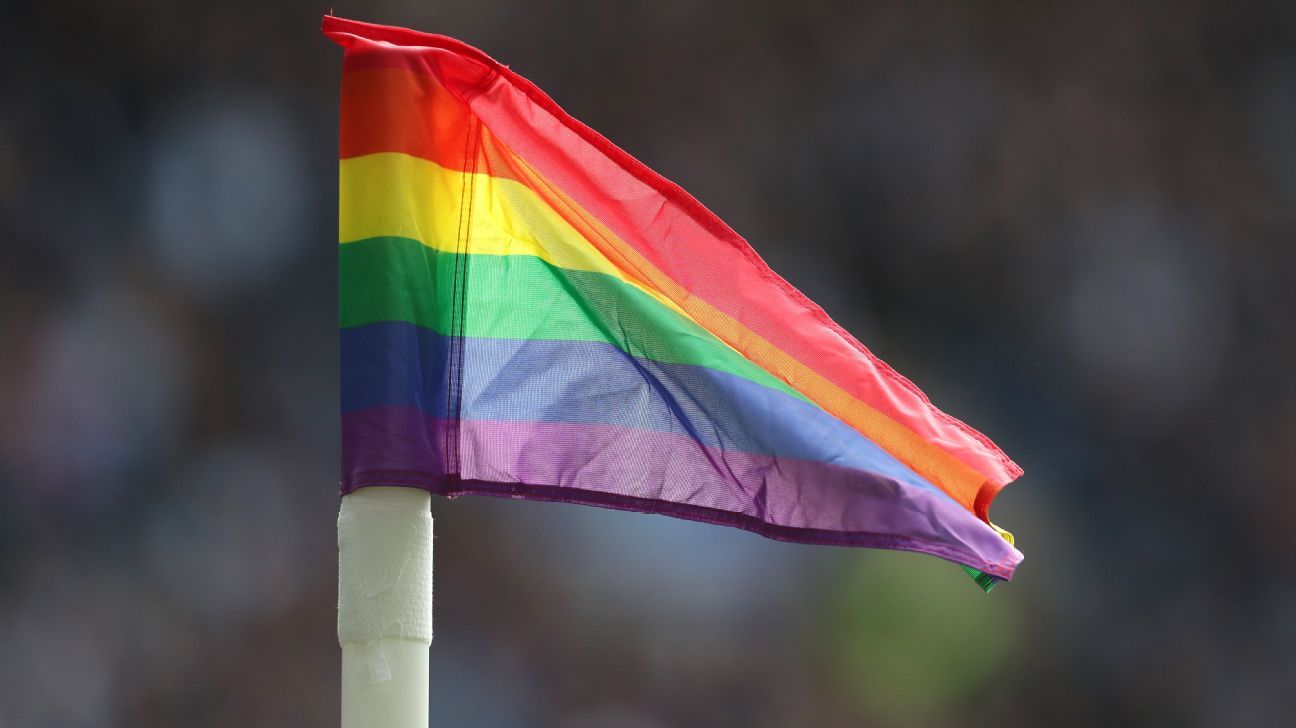
Both Egypt and Iran have lodged complaints with FIFA regarding a scheduled World Cup match in Seattle, which aims to honor LGBTQ+ Pride.
The leaders of both countries’ football federations have publicly criticized the decision to hold the match on June 26 at Seattle Stadium. Local organizers promote the event as a unique opportunity to highlight and celebrate LGBTQIA+ communities in Washington.
The Egyptian football federation released a statement on Tuesday, affirming that they had sent a letter to FIFA “categorically rejecting any activities related to supporting homosexuality during the match.”
Seattle PrideFest has been organized since 2007 by a nonprofit, which designated this game for celebration prior to FIFA’s World Cup draw last Friday.
FIFA selected Seattle for the Egypt-Iran match over Vancouver, where Belgium and New Zealand, the group rivals, will play simultaneously.
Organizers in Seattle have already begun promoting an art contest for the event, including a whimsical entry featuring a rainbow-flagged sun rising over Mount Rainier, where a crab goalie attempts to catch a soccer ball while holding coffee in its claws.
Seattle’s mayor-elect, Kate Wilson, expressed excitement on social media, stating, “With matches on Juneteenth and Pride, we get to show the world that in Seattle, everyone is welcome. What an incredible honor!”
FIFA’s role is limited to overseeing stadiums and official fan zones in World Cup host cities and does not extend to community events such as Seattle PrideFest.
FIFA did not provide any comments to the Associated Press on Tuesday and did not respond to inquiries about potentially moving the Belgium-New Zealand match to Seattle.
In Iran, where LGBTQ+ individuals can face the death penalty, Football Federation President Mehdi Taj criticized the match’s scheduling during an interview aired on state television late Monday. He mentioned that Iran would address the issue in an upcoming FIFA Council meeting in Qatar. The council includes Egypt’s Hany Abo Rida, the longest-serving member.
Taj stated, “Both Egypt and we have objected, as this is an unreasonable and illogical move signaling support for a particular group, and we must address this point.” State television confirmed that a formal complaint would be submitted to FIFA.
The Egyptian federation, led by Abo Rida, described the pride celebration as “completely rejecting such activities that directly contradict the cultural, religious, and social values in the region, especially in Arab and Islamic societies.” They called for FIFA to halt the celebrations to “prevent actions that may provoke cultural and religious sensitivities between the spectators from both countries.”
Iran had previously threatened to boycott the World Cup draw held in Washington, D.C., due to visa issues impacting some members of its delegation, including Taj.
The U.S. travel ban imposed during Donald Trump’s presidency has complicated matters for Iranians, leading to visa denials for individuals associated with Iran’s paramilitary Revolutionary Guard, like Taj. Ultimately, Iran sent a smaller delegation including their coach.
Tensions between Tehran and Washington remain high, especially regarding Iran’s nuclear program, following U.S. military actions against atomic sites during Israel’s recent conflict with the country. Unlike the previous World Cup, Iran will not face the U.S. in the tournament’s opening matches.
In response to the complaint, Seattle’s organizing committee maintained that they are “moving forward as planned with our community programming outside the stadium during Pride weekend and throughout the tournament.” Spokesperson Hana Tadesse emphasized the region’s rich tapestry of communities. “We are dedicated to ensuring that all residents and visitors experience the warmth, respect, and dignity that defines our region.”
While homosexuality is not technically outlawed in Egypt, authorities frequently prosecute LGBTQ+ individuals on charges related to “debauchery” or “violating public decency.”
Iran has actively targeted its LGBTQ+ community, and since the 1979 Islamic Revolution, its regime has reportedly executed thousands for their sexual orientation. Former hard-line President Mahmoud Ahmadinejad notably claimed during a 2007 visit to the U.S. that “We don’t have homosexuals like in your country,” a statement met with laughter at Columbia University.
If FIFA were to side with the federations of Egypt and Iran over Seattle, it risks being accused of applying a double standard, especially after defending cultural norms during the 2022 World Cup in Qatar.
During that tournament, a group of European football federations aimed to have team captains wear “One Love” armbands featuring rainbow colors symbolizing human rights and diversity. FIFA and Qatari officials viewed this as a critique of the emirate’s criminalization of same-sex relationships, resulting in incidents where some Wales fans had their rainbow hats confiscated at the stadium entrance.
Qatar is also scheduled to play in Seattle during the World Cup on June 24 against a European opponent, potentially Italy or Wales.