



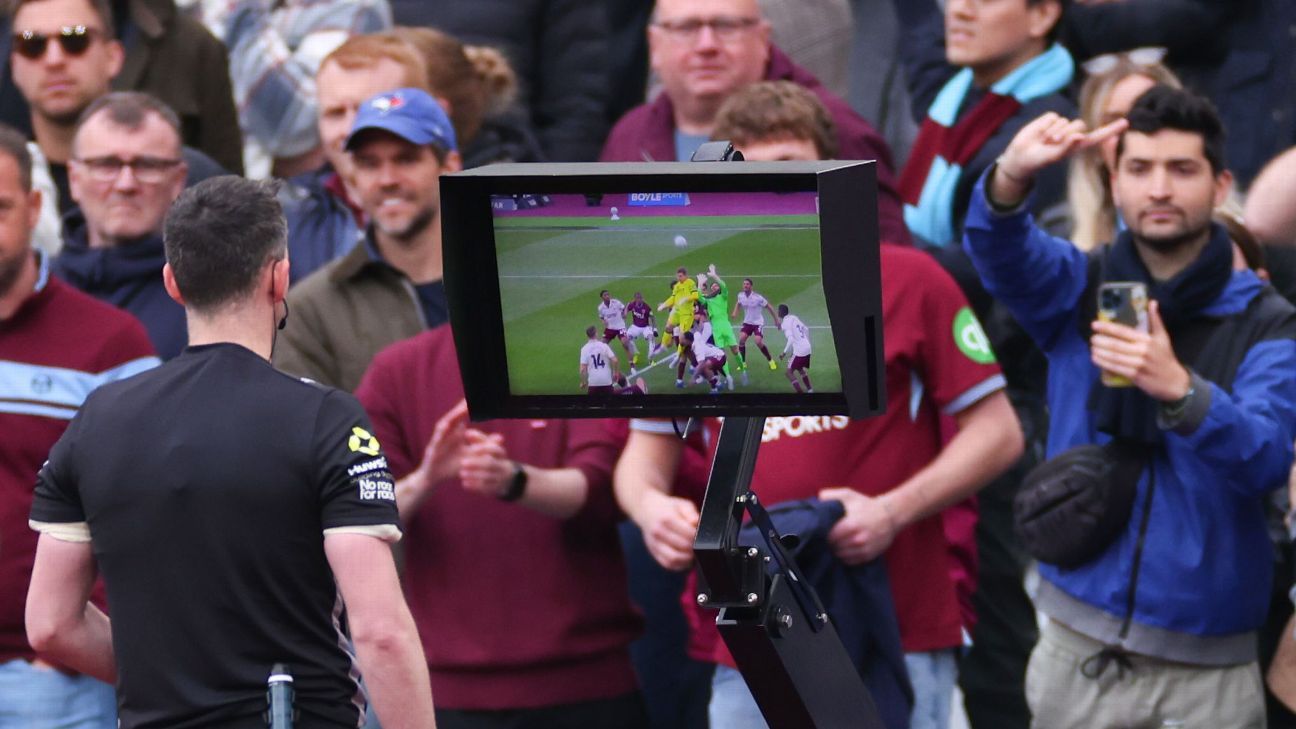
The issue with VAR is clear: it’s praised when it benefits your team, but when the decision goes against you, it’s seen as ruining the game, further fueling the belief that football is now governed by unfeeling technology.
Take Arsenal manager Mikel Arteta, who embodies this dilemma. One moment he is irate about a VAR decision, and the next he celebrates when the video assistant referee intervenes to award a foul against goalkeeper David Raya during Arsenal’s 1-0 victory over West Ham United. That decision brought his team closer to the Premier League title.
If you need a reflection of VAR’s inconsistency—a system that has been in place for almost ten years not to eliminate controversy but to ensure critical decisions are correct—Arteta is the perfect example of football’s double standards.
Just under two weeks ago, Arteta was “incredibly fuming” over referee Danny Makkelie’s decision to reverse a penalty award during Arsenal’s UEFA Champions League semifinal match against Atlético Madrid. After a VAR review, Makkelie decided that Atlético’s defender Dávid Hancko did not foul Eberechi Eze in the penalty area.
The slow-motion replays demonstrated that there was no contact by Hancko, with Eze falling in anticipation of a foul. Arteta expressed his frustration with Makkelie, particularly since the referee reviewed the incident “13 times” before finalizing his call.
Ultimately, Makkelie reached the right conclusion after a lengthy review process that lasted three minutes and 20 seconds. This was a crucial match, with immense implications for both teams—making a Champions League final can define careers for players and coaches, and VAR played a vital role in ensuring the correct decision.
The same scenario unfolded at the London Stadium on Sunday, though you’ll find no West Ham fan who agrees with it. In the sixth minute of stoppage time, while Arsenal led 1-0, Callum Wilson scored a goal after a chaotic sequence in the box that seemed to give West Ham a crucial equalizer in their relegation battle, potentially derailing Arsenal’s title quest.
However, with every goal now subject to VAR scrutiny, the initially awarded goal was overturned after VAR official Darren England called for an on-field review, suspecting a foul on Arsenal goalkeeper Raya by West Ham forward Pablo.
Pablo had his left arm across Raya’s chest and was gripping the keeper’s wrist. As a result, after a four-minute and 11-second review, Kavanagh made the right decision to disallow the goal.
Yet, despite expressing his displeasure over the time taken for the correct decision during the Atlético penalty incident, Arteta congratulated Kavanagh after the game, acknowledging the challenge faced by officials in making significant calls.
West Ham captain Jarrod Bowen, however, held a contrasting opinion: “When you look at the screen for five minutes, you’ll find something—there’s lots of grappling and holding. Do I think it’s the right decision? No.”
Amid various opinions from former players and managers, ex-Manchester United and England captain Wayne Rooney offered a neutral perspective on his podcast, “The Wayne Rooney Show,” stating: “It’s a clear foul. It’s one instance where I genuinely believe VAR has done a commendable job in such an important match.”
The dilemma with VAR is evident: when applied correctly, it nearly always renders accurate decisions by adhering to the regulations. Before VAR, the penalty awarded to Arsenal against Atlético would have been upheld, and Wilson’s goal would have stood, surviving Saturday’s match. In both cases, the outcomes would have been erroneous.
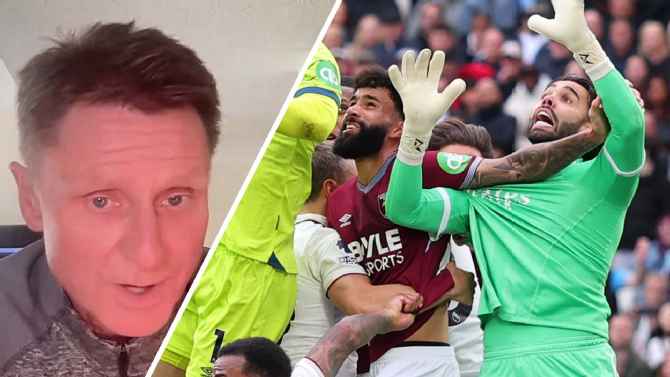
1:12
‘No question about it!’ – Michallik backs West Ham-Arsenal VAR decision
Janusz Michallik reacts to the decision to overturn Callum Wilson’s equaliser for West Ham vs. Arsenal.
However, the reality is that football has evolved into a multi-billion-pound industry where the burden of responsibility cannot rest solely on a referee and two assistants.
Take Diego Maradona’s ‘Hand of God’ goal for Argentina against England during the 1986 World Cup—arguably the most notorious example of referee error. Such mistakes are now unlikely to occur because of VAR, as would Thierry Henry’s blatant handball that was pivotal in France’s World Cup playoff victory over Republic of Ireland in 2009.
FIFA introduced VAR in 2018 to eliminate these glaring errors, and while that objective has largely been achieved, football is still grappling with the implications of the law being strictly enforced on decisions.
Of course, the subjective nature of human judgment means that certain incidents will be reviewed while others might not. Mistakes can still occur because different VAR officials have varying thresholds for intervention.
For example, VAR Paul Tierney opted against recommending an on-field review during the opening weekend of the season when Manchester United goalkeeper Altay Bayindir seemed to be fouled by Arsenal’s William Saliba when left back Riccardo Calafiori scored the only goal of the game in a 1-0 victory for Manchester United at Old Trafford.
Tierney may have erred on that occasion—resulting in a subjective interpretation—but the calls made on Sunday were accurate. And though the decision ultimately disadvantaged a relegation-threatened West Ham and title-challenging Manchester City, it served the primary purpose of VAR: to identify infringements leading to goals.
Thus, when an official makes an error, feel free to voice your concerns. But when VAR facilitates the correct decision, isn’t that exactly what everyone wanted from the outset?