



-

Anthony Olivieri
Multiple Authors
In one World Cup host city, parking exceeds $200, and surprisingly, it’s not located at the stadium. A train ride in another city costs four times the normal fare, while hotels charge nearly $700 per night in the most expensive area. One fan group has described FIFA’s ticket prices as “extortionate.”
As the countdown to the World Cup accelerates, frustrations about rising costs and inconveniences are mounting for fans in the 11 host cities across the United States, with Canada and Mexico also hosting matches yet facing fewer complaints.
FIFA representative Adam Geigerman stated in an interview with ESPN that ticket revenues are reinvested in the “global development of football,” emphasizing that FIFA operates as a not-for-profit organization, unlike commercial ticket marketplaces. The organization is expected to generate at least $11 billion from the tournament.
But fans are left wondering what benefits they receive amid so many frustrations from spending their hard-earned money.
FIFA responded, saying the tournament “will attract millions of fans and have a significant economic impact.”
For many, the potential long-term advantages are overshadowed by complex ticketing structures, complicated transportation instructions, and daunting logistics as the matches draw closer. Recent delays in visa processing and U.S. travel regulations are also hampering some fans’ plans.
An estimated one million international visitors are expected to arrive in the U.S. for matches from June 12 in Inglewood, California, to the final on July 19 in East Rutherford, New Jersey.
Andrew Giuliani, leading the White House’s World Cup task force, compared the tournament to hosting 78 Super Bowls within 39 days, emphasizing federal efforts to ensure security and accessibility with significant financial investments in transit and safety leading up to the event.
However, Giuliani pointed out how challenging public transportation can be, highlighting that trips from New York airports to East Rutherford involve navigating multiple train lines over less than 30 miles, even complicating matters for native English speakers. “If there’s a language barrier, it’s very challenging,” he added, noting efforts to inform international fans through U.S. ambassadors and embassies.
FANS WHO ASPIRE to see Argentina defend its title will first travel to Kansas City on June 16 before making a more than 500-mile trek to Arlington, Texas, for a June 22 match. They’ll also incur additional living expenses before Argentina’s next group stage game on June 27.
“The travel distances are incredibly long,” expressed Rodrigo Lipara, a 52-year-old fan from Buenos Aires who has opted not to attend. “With the added costs of stadium tickets, food, and hotels, it greatly deters many Argentinians who aren’t financially affluent.”
Public transportation, which is reliable in major Argentine cities and throughout Europe, may be less dependable when reaching more remote stadiums.
Thiago Deya, a commercial executive for Somos Argentina, the national team’s official travel agency, mentioned the need to arrange buses and vans to get to Arrowhead Stadium, which is not centrally located, thereby increasing costs further.
These additional expenses don’t even account for ticket prices, which range across four main categories. As of September, FIFA offered group stage tickets starting at $60, climbing to $6,730 for the final, but the dynamic pricing policy means these figures can fluctuate.
The fan group Football Supporters Europe has condemned the ticket prices as a “monumental betrayal” by FIFA, branding them “extortionate.” FIFA responded by releasing the $60 tickets during a third ticketing phase in December, receiving 5 million requests within the first 24 hours.
However, as of early April, FIFA introduced more expensive “front categories,” intensifying fans’ anger regarding the value they receive for their expenses.
“The organizers of the World Cup are driven by profit rather than people,” stated Michael Collins, a Scottish supporter and director of the social justice group Play Fair ATL, as he confirmed his attendance at Scotland’s matches in Foxborough, Massachusetts despite the high costs.
Yvonne David, a Dutch soccer fan from the same group, said that prohibitive prices create a barrier for fans based on their income. “I refuse to pay that much,” she stated as to why she won’t follow her team to Dallas, Houston, or Kansas City.
FIFA’s resale marketplace has displayed tickets for the final at MetLife Stadium priced at $2.3 million, with some in the last row of the third deck listed for $138,000. Quarterfinal ticket prices have hit the four figures, while semifinal tickets in Arlington are well into the five figures.
Finding accommodation adds another layer of expense, with average hotel prices for a single matchday ranging from $254 in San Francisco and $264 in Houston to $662 in Boston, according to Lighthouse’s hotel rate data.
“From my discussions with hotels, they seem surprised that bookings haven’t been filling up more,” remarked Rep. Josh Harder of San Francisco. “This likely indicates that ticket prices have been much higher than anticipated.”
Overall, hotels have decreased rates since late November, including a 20% cut in New York City prices. A Lighthouse representative suggested hotel fees were initially set too high for the busy December season, necessitating adjustments downward.
TRANSPORTATION COSTS to stadiums are another point of contention for fans and officials alike. NJ Transit is charging ticket holders $150 for a round trip from Penn Station in New York City to MetLife Stadium, a ride that usually costs $12.90.
“New Jersey residents shouldn’t be forced to shoulder that expense while FIFA profits by $11 billion,” New Jersey Governor Mikie Sherrill commented on social media. She noted that the increased fare was due to NJ Transit needing to accommodate an expected surge of ticket holders, resulting in a $48 million financial burden.
FIFA disputed Sherrill’s assertion that they ought to subsidize fan transit, stating, “FIFA is not aware of any other major event previously held at NY/NJ Stadium where organizers were required to pay for transportation for fans.”
On Thursday, Sherrill announced a $45 reduction in roundtrip fares, emphasizing the importance of showcasing New Jersey to the world. She urged private sponsors and other entities to step in and help cut costs, noted Kris Kolluri, CEO of NJ Transit, who expressed satisfaction over the reduction to $105 per ticket.
Heimo Schirgi, FIFA’s chief events operations officer for World Cup 2026, warned that the high transit prices could deter fans from using public transportation, worsening traffic congestion.
During a March friendly, local officials reported that trains successfully operated on time from Boston to Foxborough. However, fan attendance could increase significantly during the World Cup, with the same hourlong journey costing $80, quadruple the price for regular New England Patriots games. An express bus ticket is projected to be $95.
In other cities like Philadelphia, Houston, and Atlanta, round-trip fares remain under $5.
In Miami, where around 600,000 fans are expected, some ticket holders will benefit from complimentary transportation to Hard Rock Stadium. “Considering the global significance of this event, we want to make transportation accessible for our working community,” said Roger Borges, a Miami-Dade County transportation official. The 2024 chaos at the venue served as a reminder of the importance of these logistics, prompting more robust security measures for 2026.
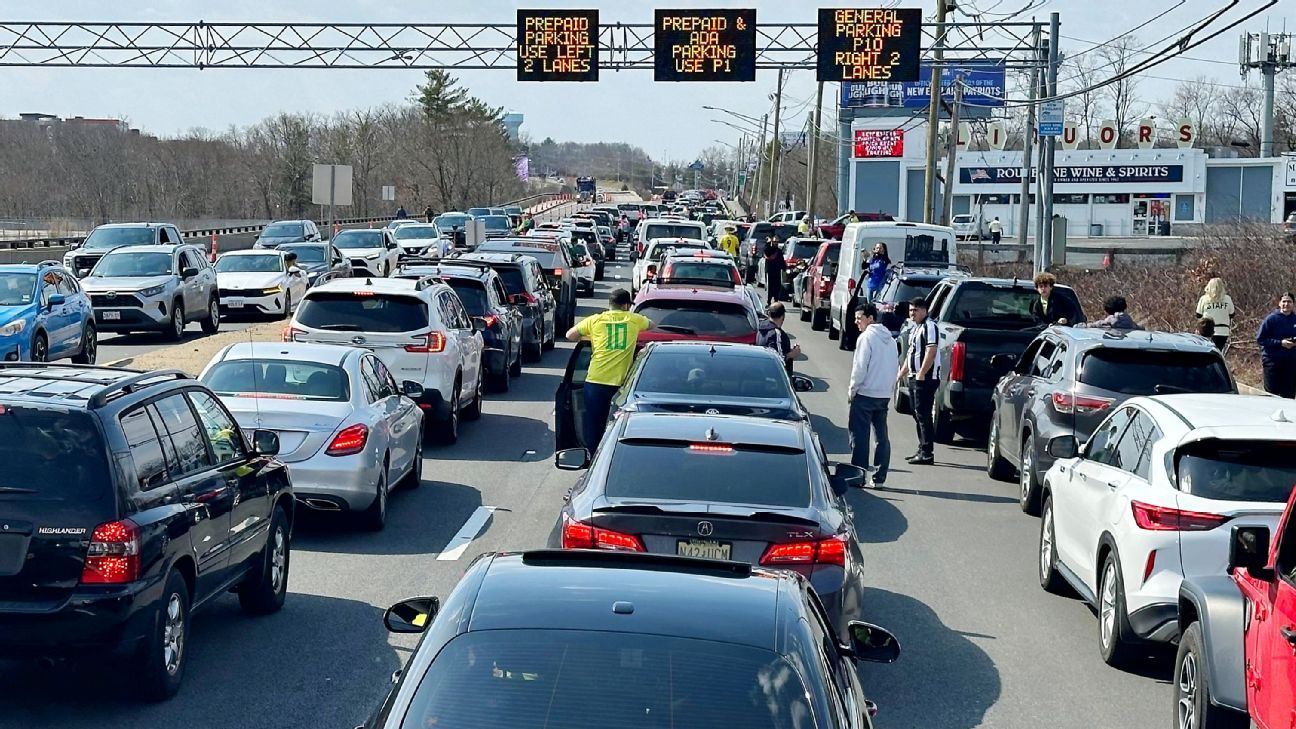
Fans considering driving to the games may want to rethink their plans. Gillette Stadium will offer only 5,000 parking spots for the World Cup, a reduction of 15,000 from the norm. During March’s Brazil-France match, 7,000 fans caused severe traffic backups, leading some to miss their entrances to the venue, according to Foxborough Police Chief Michael Grace.
There is no general parking at MetLife Stadium, although the nearby American Dream Mall offers limited parking for $225, which is already sold out for the final match. Local officials have cautioned against walking on Interstate 95 to reach the game.
Parking prices are similar at SoFi Stadium in Inglewood, where costs can reach as high as $300, with the lowest prices in Atlanta still at $99.99 for a spot.
Fan festivals have also been a source of confusion. Last October, Seattle planned to host 500,000 fans at the Seattle Center before shifting to multiple locations.
New York-New Jersey canceled a major event at Jersey City’s Liberty State Park, opting instead for various activities across the region, including free events in each of New York’s five boroughs.
Across the globe, many fans share stories akin to that of Hazel Stewart, representing Tartan Army, fervent Scottish supporters. Stewart expressed her financial struggles preventing her attendance at the 1998 tournament in France.
Following Scotland’s qualification after a 30-year absence from the World Cup, she purchased a $6,000 ticket package for three games (two in Foxborough, one in Miami), funding it with bonuses from her job in a London investment firm. She estimates her total expenses could reach $20,000 to support her team in the United States.
“How can a regular worker from Scotland afford that?” Stewart questioned.
Due to the high costs in Boston, Stewart and 10,000 fellow fans are redirecting plans to Providence, Rhode Island, where they aim to march through the streets with bagpipes. Local pubs are bracing for celebrations with Scottish bands performing and advice to stock up on beer.
The Providence group, about 1,000 fans, plans to take 21 yellow school buses to their first match against Haiti, leaving at least four hours early with an escort from local Rhode Island police.