



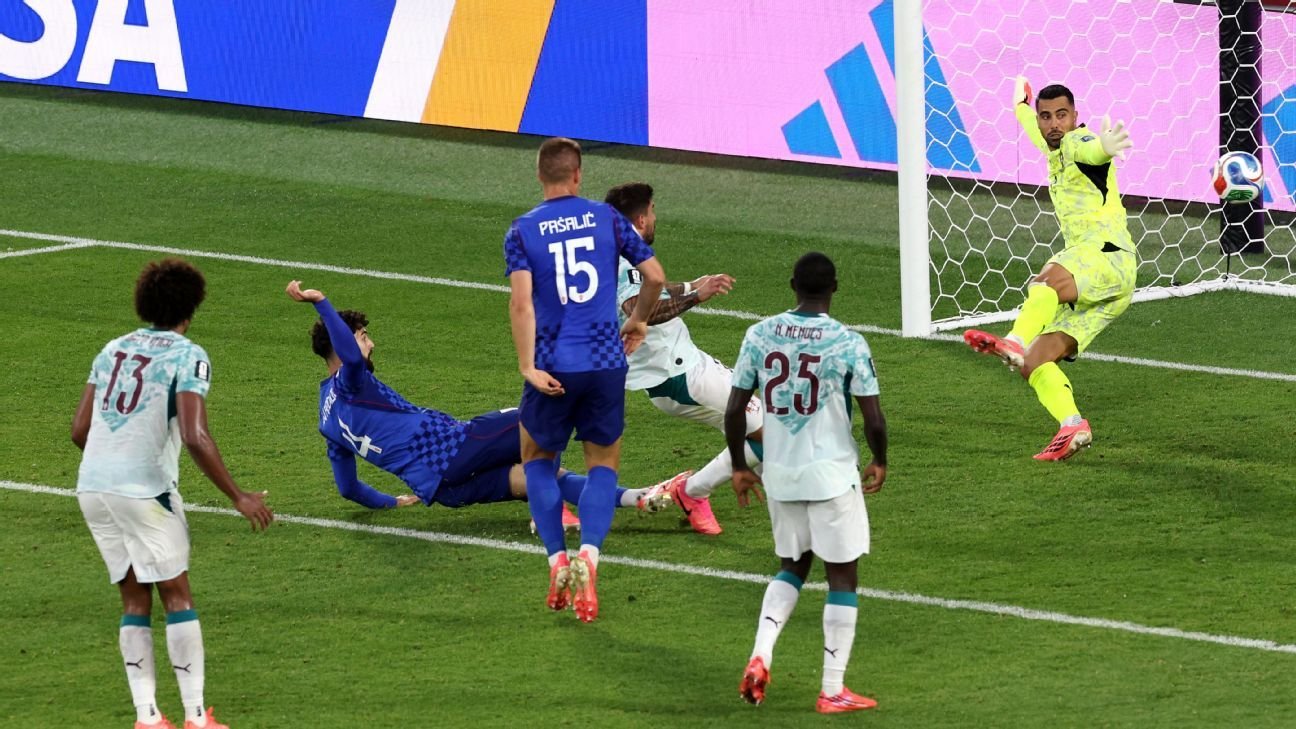
FIFA has officially confirmed that Croatia’s equalizer against Portugal was rightfully disallowed for offside, thanks to technology embedded in the World Cup ball.
In the fourth minute of added time, Gonçalo Ramos‘ header had put Portugal ahead 2-1. However, Josko Gvardiol seemed to secure a dramatic equalizer for Croatia just nine minutes later.
The play began with Ivan Perisic delivering a cross that deflected off Renato Veiga and into the path of Mario Pasalic. His setup allowed Gvardiol to slide the ball home.
The goal was initially accepted on the field. TV replays suggested that Croatia’s Igor Matanovic had missed his header attempt, potentially making Pasalic onside before assisting Gvardiol.
However, referee Espen Eskas was called to the VAR monitor, and FIFA’s technology inside the Adidas Trionda ball—comparable to ‘Snicko’ in cricket—revealed that Matanovic did make slight contact. This confirmed Pasalic was offside in the build-up.
The replays included a graphic indicating a small spike at the moment Matanovic was near the ball, ultimately quashing Croatia’s World Cup ambitions and allowing Portugal to advance to the Round of 16.
The graphic used by FIFA operates in a similar fashion to technology in cricket that detects when a batter has edged the ball; however, the ‘Connected Ball Technology’ in the World Cup ball is powered by a chip situated within.
– World Cup VAR review: Why Croatia’s equalizer was ruled out due to technology in the ball?
– Portugal snatches victory, but should Ramos replace Ronaldo?
– Modrić leaves the World Cup after a heartbreaking loss for Croatia
FIFA elaborated on the decision via a post on X, stating: “According to data from the Connected Ball Technology embedded in the @adidasfootball Trionda, the official match ball of the @FIFAWorldCup, it was confirmed that Croatia’s #20 Igor Matanovic made contact during the build-up to the goal against Portugal. This allowed the referee to correctly assess an offside situation and disallow the goal.
“IMU sensors within the Trionda ball can detect any minor contact, presented to viewers as a ‘heartbeat graphic,’ providing officials with an unparalleled level of data for rapid and precise decision-making.”