



-

Tisha Thompson
Multiple Authors
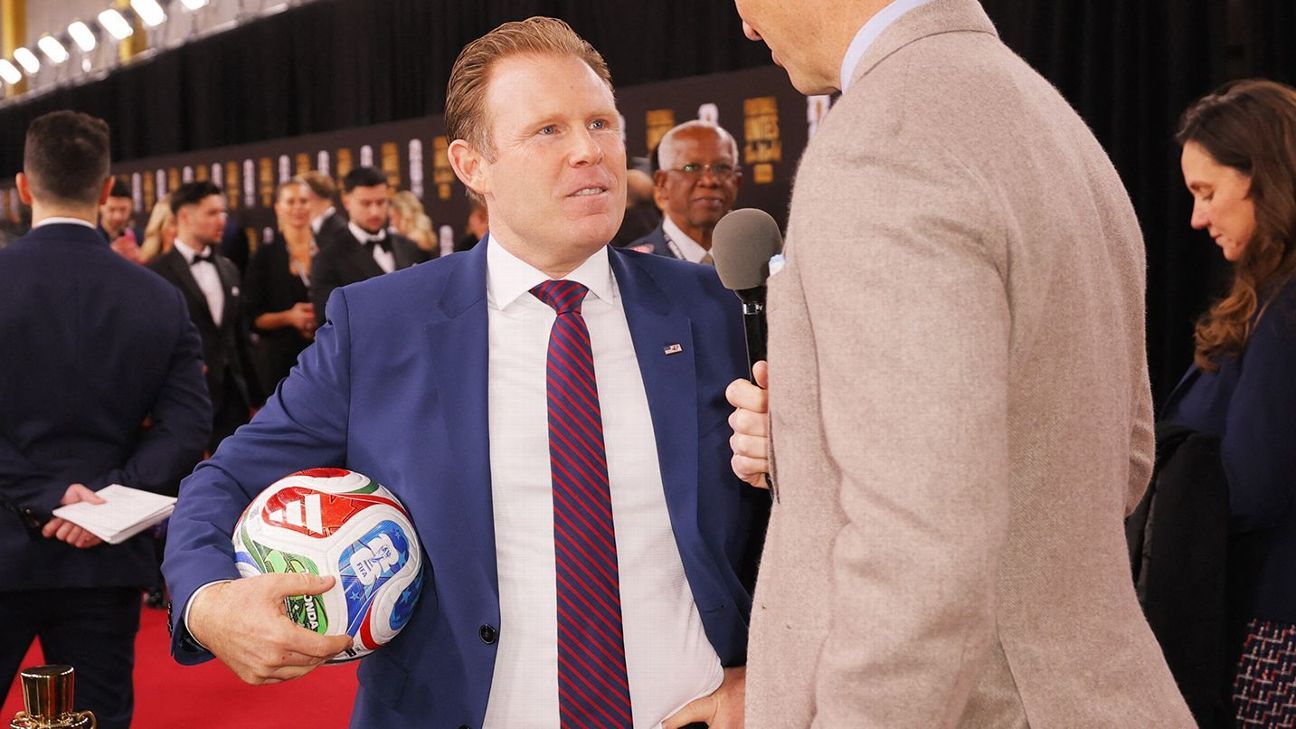
WHEN ANDREW GIULIANI first learned of the opportunity, he reached out to the West Wing.
Within a week, he was pitching President Donald Trump on his qualifications to lead the federal preparations for the World Cup. He argued, despite lacking law enforcement experience, that he should lead a coalition involving cabinet secretaries and key agencies such as the FBI, NSA, and Department of Homeland Security.
Giuliani remains tight-lipped about the specifics of his pitch. “Some of that I want to keep between the president and myself,” he told ESPN. “But I mentioned that showcasing America’s greatness during this 40-day event, coinciding with our 250th birthday, is a tremendous opportunity.”
According to Giuliani, Trump expressed that he would “think about it.” Following interviews with the Secretary of Homeland Security and others in the West Wing, Giuliani was informed he would serve as the executive director of the White House FIFA World Cup 2026 Task Force.
“I was thrilled for a moment, but then the weight of responsibility kicked in,” he remarked.
Though Giuliani lacks extensive experience, he compensates with a direct connection to Trump, claiming an understanding of the president’s desires. As the tournament kicks off Thursday, he is aware that the stakes are high, with success evaluated in stark terms over the next six weeks.
“We have a zero-fail mission,” he stated. “Our focus is ensuring nothing goes awry.”
GIULIANI, 40, HAS known Trump—who he describes as “like an uncle”—for most of his life, largely due to his father Rudy, who was mayor of New York in the 1990s while Trump was a real estate tycoon. Their bond deepened during Saturdays spent playing golf, Andrew recalls.
“Building that rapport and learning from him over 30 years has been invaluable in addressing challenges and understanding the president’s perspective,” he said.
His connection with Trump, he believes, is an asset in his current role. Although he sometimes goes weeks without speaking to Trump—”he’s occupied with pressing matters”—he feels that a lifetime of experience enables him to gauge the president’s viewpoint.
“That’s been a significant strength in this role—maintaining a grasp of where the president stands,” he explained.
When Trump announced Giuliani’s appointment in May 2025, he humorously told the cameras, “This is a big post. You better perform well, Andrew.”
The White House declined to comment when ESPN inquired about the president’s thoughts on Giuliani’s pitch.
For guidance on forming his team, Giuliani turned to his father, who emphasized the right mindset for the role.
“It’s about perseverance and making sure to explore every possible avenue,” Andrew mentioned. “Assumptions have no place here.”
Recently, he traveled to South Florida to see his father, who was hospitalized in May due to severe pneumonia, which Giuliani characterized as a “very near-death health scare.” Upon arriving to find his father unconscious, he was relieved when Rudy awoke the following day.
“After a brief conversation, he looked at me and said, ‘What are you doing here? Get back to D.C.,’” Giuliani recounted.
Having grown up under intense media scrutiny, Giuliani was humorously parodied by comedian Chris Farley on “Saturday Night Live” at just 7 years old, during his father’s swearing-in ceremony.
After graduating from Duke, where he unsuccessfully sued the school over being ejected from the golf team, he briefly pursued a professional golf career, winning the Metropolitan Open in 2009 with a prize of $27,500. He considered it “a significant first step,” but his professional golf aspirations dwindled, and by 2016 he had shifted his focus to finance or real estate.
A year later, after Trump’s first election, Giuliani assumed the role of associate director for the Office of Public Liaison at the White House. In this capacity, he facilitated White House visits and assisted leagues in resuming competition amid the COVID-19 pandemic. In 2020, both Trump and Giuliani took credit for aiding the Big Ten’s return to the field during the pandemic. However, a 2020 Washington Post article cited several Big Ten officials who either didn’t recognize Giuliani or were unaware of his involvement in the resumption of competition.
The Atlantic also reported during Trump’s presidency that the former chief of staff, John Kelly, had revoked Giuliani’s West Wing access due to what was described as political infighting and jealousy stemming from his relationship with the president. In 2022, Giuliani unsuccessfully campaigned for governor of New York and resurfaced in the media two years later while assisting his father in arguing against surrendering four New York Yankees World Series rings as part of a $148 million defamation case against Rudy.
He acknowledges why some might label him as the ultimate privileged child, receiving a prestigious position solely due to his famous surname and the connections afforded to him by his father.
“Criticism is an inevitable aspect of life, especially when you’ve been in the public eye since age 7,” he noted. “For me, the most effective approach is to, like any good athlete, block out the distractions.”
“The results will speak for themselves. We’ll see on July 20.”
EACH WEEK, GIULIANI convenes a conference call with the 11 host committee CEOs to share updates, address concerns, and ask questions.
“The task force has proven beneficial,” stated Meg Kane, CEO of Philadelphia’s host committee. “It provides an opportunity for cities to pose questions, share feedback, and report on both positive and negative developments.”
The task force is tasked with coordinating efforts among host cities, local and state governments, over 400 law enforcement agencies, and various private companies and security firms. The potential challenges are extensive, encompassing security threats like unauthorized drones and bomb threats, visa issues for incoming foreign fans and teams, travel constraints affecting the Iranian team competing in the U.S. amid geopolitical tensions, collaboration with FIFA and co-hosts Mexico and Canada, logistical challenges, and the risk of infectious diseases like norovirus and Ebola, along with weather-related disruptions.
“It is essential to have a team capable of navigating the bureaucratic hurdles that may arise at all levels of government,” he stated.
Giuliani emphasized his desire to build a team with experience in both Super Bowls and Olympics while recognizing the unique nature of this event due to its vast scale and the inclusion of three host countries. This World Cup will be the largest and longest in history, spanning 39 days across 16 host cities—11 in the U.S.—with 48 base camps.
He has made it a priority to personally visit all 11 U.S. host cities, equating the security of each match to that of a Super Bowl. Philadelphia police chief inspector John Przepiorka shared with ESPN that he met with Giuliani during last summer’s Club World Cup.
“We had a face-to-face discussion,” Przepiorka recalled. “He was receptive to our concerns, and the White House has increased support for safety and security in Philadelphia and other host cities.”
Alongside his regular meetings with host committee CEOs, the task force conducts daily and weekly briefings with federal liaisons at each team base camp and federal coordination teams in all 11 host cities, Giuliani explained.
“There’s never a moment where you feel you can’t reach out to them,” Kane conveyed.
Kathryn Schloessman, CEO of the Los Angeles host committee, echoed this sentiment. “He participates in all the calls. He’s visited every city. He asks insightful questions and listens actively,” she stated. “They have assembled capable, knowledgeable individuals who are committed to facilitating collaboration among the cities.”
One illustrative success Giuliani mentioned involved reducing the cost of shuttle bus service from Manhattan to MetLife Stadium in East Rutherford, New Jersey. Transportation expenses to the stadium had garnered attention earlier this spring, with round-trip train fares exceeding $100 and bus tickets costing $80. Giuliani noted that his team noticed these reports and “realized we needed to take action.” Discussions with the Department of Transportation and Secretary Sean Duffy ensued regarding the financial impact.
“We highlight various issues that require improvement,” he noted. “This caught the Secretary’s notice.”
In May, New York Gov. Kathy Hochul announced a reduction in the bus fare from $80 to $20. A spokesperson for Hochul remarked that upon learning about the exorbitant shuttle bus prices, the governor recognized it was untenable. She intervened, resulting in a lowered fare, increased bus capacity, and a 20% reservation of tickets exclusively for New Yorkers.
The federal government has pledged to allocate over a billion dollars in taxpayer funds under Giuliani’s oversight, including $100 million for transportation enhancements, $500 million dedicated to counter-drone initiatives, and $625 million for security measures. Giuliani mentioned that the task force conducted multiple rounds of calls with state agencies to clarify the counter-drone funding process.
Additionally, the task force communicates with FIFA daily, an influential organization known for advocating strongly for its interests. Giuliani described his relationship with FIFA as “good,” clarifying that “this doesn’t mean we always see eye to eye on every issue.”
“I would liken our relationship to penalty shooters. We probably align about 66% of the time and miss the mark roughly 33% of the time,” he quipped.
When asked about the nature of their disagreements, Giuliani hesitated but cited the connection between Trump and FIFA President Gianni Infantino as pivotal in achieving consensus.
“Both of these individuals are committed to ensuring this is the finest sporting event in history. Our responsibility is to make that vision a reality,” he stated.
“Washington, D.C. can indeed be a challenging environment regarding politics,” he added, laughing. “There may be even more political maneuvering in soccer than in D.C. itself.”
His focus, he emphasized, remains on addressing any overlooked aspects. “That’s crucial,” he remarked. “By continually revisiting these matters on a daily and hourly basis, we aim to resolve questions and minimize uncertainties.”
In the forthcoming six weeks, Giuliani anticipates living on coffee. He recognizes that the less public visibility there is surrounding him during the tournament, the more successful he and the task force will have been in their mission to ensure safety. On July 20, he hopes discussions will revolve around the final match instead of security concerns.
And he is optimistic regarding the outcome of that final.
“Maybe I’m being overly hopeful, but let’s go, USA.”