



When the FIFA World Cup arrived in the United States in 1994, it catalyzed the formation of Major League Soccer (MLS). Now, following this summer’s tournament, significant changes are anticipated for the league.
After the current season concludes, MLS will begin a transition to a summer-to-spring schedule, aligning itself with the majority of international leagues. Discussions are also underway regarding potential adjustments to roster rules and the salary cap to enhance the league’s competitiveness on the world stage.
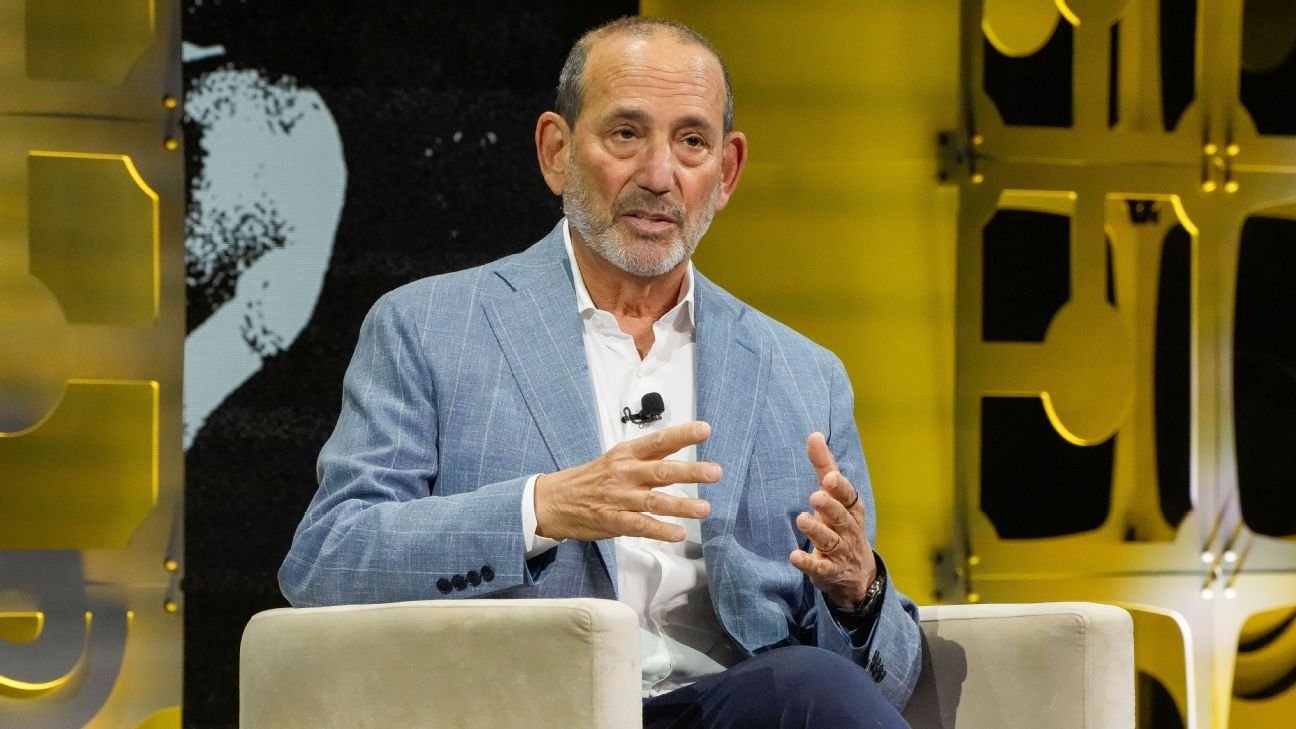
Additionally, MLS is poised for a transition as Commissioner Don Garber, who has guided the league through a period of substantial growth since his appointment in 1999, plans to step down.
MLS has already begun to experience the predicted “World Cup boost,” with ticket sales rising by 58% over the 40 days surrounding the tournament compared to the previous period, according to league reports. The league has also attracted international stars like Robert Lewandowski, who signed with the Chicago Fire, and Antoine Griezmann, now a member of Orlando City, further enhancing this surge.
“Reflecting on the World Cup, I see it as an eight-year journey that fulfilled all of our expectations during the tournament. Now, it’s our responsibility to sustain that momentum, attracting more fans to our teams, encouraging players to choose MLS as their preferred league, and fostering talent through our MLS Next program and academies,” Garber said in an interview with The Associated Press ahead of the MLS All-Star Game on Wednesday night.
This also represents a full-circle moment for Garber, who attended his first soccer game during the 1994 World Cup and subsequently attended 15 matches during the recent tournament.
Garber highlights the league’s achievements during the event, noting that 45 MLS players were on national team rosters while 43 participants were developed within the league’s academies. Notably, Inter Miami’s Lionel Messi, recognized as one of the world’s greatest players, guided Argentina to the final.
“The true measure will be how MLS evolves in the next five to ten years. Will our league gain more popularity? Will we achieve greater cultural engagement? Will our teams appreciate in value? Will we receive increased media attention? And will we be recognized as a more competitive league on the field? These metrics will take time to unfold,” Garber explained.
The focus on youth development and the league’s academy system has become a source of pride for Garber, particularly in light of the recent scrutiny of youth soccer following the U.S. exit from the World Cup.
All 30 teams in the league operate academies that have produced notable players, including U.S. national team striker Ricardo Pepi, currently with a Dutch club in the Eredivisie, fellow American Tyler Adams, who currently plays for Bournemouth in the Premier League, and Canadian Alphonso Davies, who is now with Bayern Munich.
Recently, Chelsea secured a deal with FC Dallas academy standout Benji Flowers, and prior to that, Manchester City signed Cavan Sullivan from the Philadelphia Union academy. Both players exemplify the trust Premier League clubs are placing in MLS for player development.
As for the league’s calendar, following the current season, MLS will implement a shortened 14-game season at the beginning of 2027 before officially switching to its new schedule.
The comprehensive 2027-28 season is set to commence in July, with playoffs and the league championship scheduled for May 2028.
“MLS continues to strengthen its connection to the global soccer community through players, sporting directors, media partnerships, and global distribution on platforms like Apple (TV),” Garber noted. “While we are the North American iteration of the global game, we are approaching a unified way of playing the game that’s consistent across more than 200 countries.”
Garber indicated that promotion and relegation might not be on the horizon in the near future, but he is eager to align the league’s transfer windows with those of the global community and to schedule playoffs during a less congested calendar. He emphasized the importance of hosting crucial matches outside FIFA breaks and engaging in soccer as it is played worldwide.
Looking toward the future, Garber stated his intention to remain involved with the league throughout his contract, which extends to 2027, as MLS embarks on the search for a new commissioner.
The MLS succession committee is actively refining its list of candidates, and an announcement regarding Garber’s successor could be expected as soon as next week.
“I hope and expect the next commissioner will share a belief in the future potential of our league and clubs and recognize our role in advancing the game and serving as responsible guardians of it, while also fostering value for every stakeholder invested in their local clubs,” Garber concluded.