



-

Tisha Thompson
Multiple Authors
This summer’s World Cup presents an unparalleled security challenge, given its extensive scale. Andrew Giuliani, the executive director of the White House FIFA World Cup 2026 Task Force, emphasized to ESPN that law enforcement agencies nationwide are “leaning in” to address these concerns.
“The entire police force across the country is focused on this,” Giuliani stated. “Considering the local law enforcement’s responsibilities during this 40-day event, it’s an extraordinary challenge.” He added, “We are committed to ensuring nothing goes awry.”
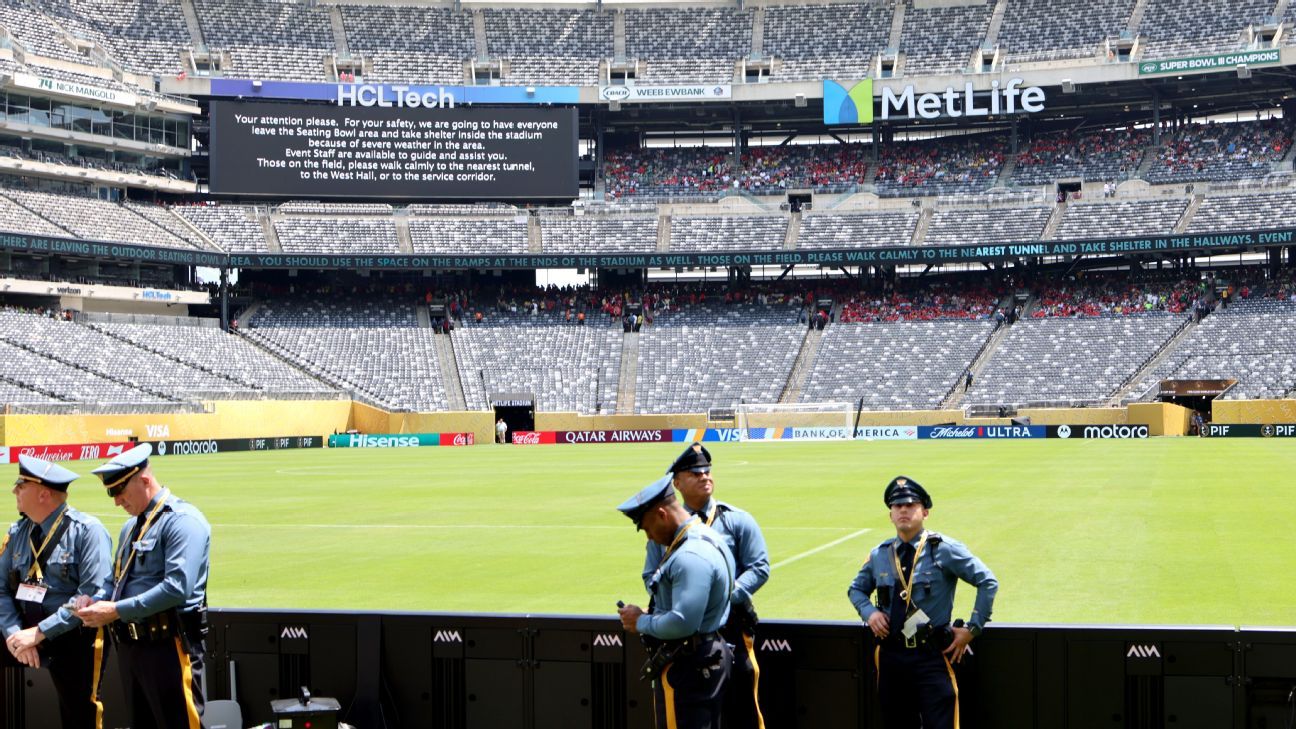
Over 400 law enforcement agencies are collaborating with federal officials and private security firms to secure stadiums, fan festivals, hotels, and training camps for the record 48 teams that will compete in 78 matches over 39 days across 11 U.S. cities, with an additional 26 matches in Canada and Mexico. In comparison, the last World Cup in Qatar only involved 32 teams in a country smaller than Connecticut.
Editor’s Picks
2 Related
Due to the tournament’s vast scope, the federal government lacks the resources to manage security as comprehensively as it would for a presidential inauguration or the Olympics. Instead, Giuliani explained, the focus is on coordination with local and state authorities to ensure information sharing across different cities.
“We aim to provide the necessary coordination to recognize trends that might emerge in cities like Miami that could affect others, such as New York or Houston,” he said.
Giuliani noted that security planners had been operating with “one hand tied behind our back” due to a brief government shutdown at the Department of Homeland Security earlier this year.
“We’ve identified some gaps and have addressed many of them, although a few remain. However, we have made significant strides,” he commented, refraining from disclosing specific details.
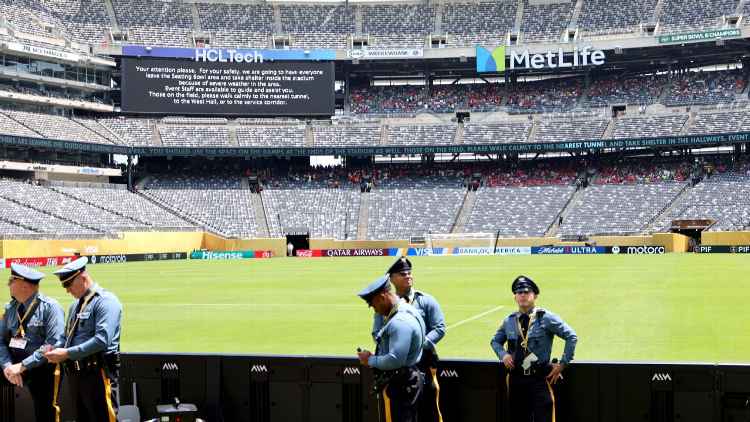
To accommodate the influx of international fans, security planners are studying the unique behaviors associated with various fan bases. “What could seem like a riot to a local officer might simply be normal behavior for fans from certain countries,” Giuliani noted.
FIFA plays a crucial role by providing threat assessments based on the backgrounds of participating teams and sharing relevant information with local security planners. JP Hayslip, security director for the Philadelphia Eagles, explained how different teams might have distinctive behaviors related to fan activities.
“For instance, some teams are known for using fireworks while others may have different traditions,” said John Przepiorka, Philadelphia’s police chief inspector overseeing the Tactical Support Bureau. Officers proficient in the languages of the teams will be deployed to assist during fan marches and in major fan zones. Special translation technology embedded in body cameras will also equip Philadelphia police to communicate in over 50 languages, according to Police Commissioner Kevin Bethel.
Security planners are determined to avoid the chaos experienced during the 2024 Copa America final in Miami, where ticketless fans overwhelming attempted to storm the stadium gates, resulting in injuries. To mitigate the risk, FIFA has established a “last mile” security perimeter around stadiums, fencing off parking lots and requiring fans to exhibit their tickets for entry.
“Our objective is to prevent anyone without a ticket from accessing our premises,” Hayslip confirmed.
While the stadiums will likely be the safest spots during match days, there is still a pressing need to secure softer targets like hotels, team base camps, restaurants, fan festivals, and block parties.
FBI Deputy Director Christopher Raia expressed concern about potential threats from homegrown extremists, referencing a recent ISIS-inspired attack where a man drove a truck into Bourbon Street in New Orleans.
STREAM ESPN FC DAILY ON ESPN+
Join Dan Thomas, Craig Burley, Shaka Hislop, and others for highlights and discussion of top stories. Stream on ESPN+ (U.S. only).

“These incidents are particularly challenging to both identify and prevent,” he stated. “In contrast, larger-scale attacks, similar to those on 9/11, are somewhat easier to detect due to our existing resources. It’s the smaller-scale assaults, particularly done by individuals radicalized online, that pose a significant challenge.”
Bethel noted that Philadelphia plans to deploy sanitation vehicles at specific intersections to avert such attacks.
Although host cities have received $625 million in federal funding to help cover additional security expenses, many teams and fans will reside in smaller municipalities that may lack similar financial resources.
“I am particularly concerned about these less populous areas,” said John Cohen, executive director of the Center for Internet Security, who has been working with host jurisdictions. “These smaller regions may lack the personnel and funding needed to enhance their security effectively.”

This will be the first World Cup occurring while a host nation is in conflict with a participating country. Giuliani conveyed he directly communicated with the West Wing regarding security protocols as the Iranian team prepares to enter the U.S. for group stage matches in Los Angeles and Seattle.
Federal agencies are also prioritizing the capability to counter unauthorized drone activity during the World Cup. The DHS allocated over $250 million to assist host cities in acquiring anti-drone technologies, and 60 officers from 30 jurisdictions have undergone training in drone mitigation at the FBI’s Redstone facility in Huntsville, Alabama.
“The thought of an unauthorized drone with the potential to harm individuals is what keeps us vigilant,” stated Devin Kowalski, assistant director of the FBI’s Critical Incident Response Group.
Notably, a suspected white supremacist in Nashville revealed plans to attack the local power grid using a drone loaded with explosives. Earlier this year, the FBI alerted Californian law enforcement about a potential retaliation drone threat from Iran, and French officials faced over 400 unauthorized drone incursions during the 2024 Olympics in Paris.
Mike Torphy, an assistant section chief of the FBI’s Critical Incident Response Group, assured ESPN that the team is ready to intercept unauthorized drones and ensure games proceed without disruptions.
Experts emphasize that transportation systems remain vulnerable targets. Anarchist groups have previously sabotaged Italy’s rail network, while arsonists attacked France’s high-speed rail system ahead of the Paris Olympics.
Cohen noted, “Rail systems are tough to secure, allowing attackers to achieve their objectives without having to bypass stringent security measures.”
According to Cohen, many law enforcement agencies in the U.S. are contending with a surge of fake bomb threats, predominantly from overseas sources, including some generated by artificial intelligence to create disruptions rather than causing harm.
The intent often aims to create chaos as well as to embarrass the U.S. internationally, as Leon Panetta, a former CIA director and defense secretary, articulated: “It’s about creating disorder and tarnishing America’s reputation by suggesting they can’t maintain control during major events.”
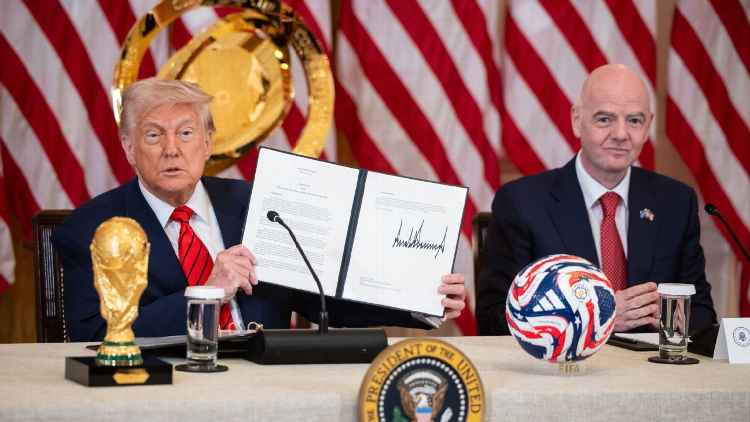
Giuliani conveyed to ESPN that he is anticipating cyberattacks relating to FIFA events. “We fully expect these threats, whether they involve ticket hacks or issues with QR codes—and even attempts to sabotage stadium displays,” he remarked.
On April 7, federal agencies released a joint alert regarding an “urgent and ongoing Iranian-affiliated cybersecurity threat” targeted at critical infrastructure by entities believed to be linked to the Islamic Revolutionary Guard Corps.
Cybersecurity experts voiced concerns regarding the federal government’s capability to manage these threats amidst recent cuts to federal agencies. Nikita Shah, a cybersecurity expert with the Center for Strategic and International Studies, noted that the U.S. Cybersecurity and Infrastructure Security Agency is functioning at roughly two-thirds of its capacity compared to previous administrations.
Group Stage Challenge
Predict the final standings in every group. Win a share of $10,000 in prizes. Make Your Picks

Shah remarked, “The U.S. was already vulnerable in terms of cybersecurity. On top of that, recent policy decisions have further weakened governmental efforts in this area.”
Giuliani, however, expressed confidence that CISA is “more efficient than ever” and adequately prepared to counter anticipated cyber threats.
The primary responsibility for fan protection will rest with local police departments, which have been facing significant personnel losses following the COVID-19 pandemic and the events surrounding George Floyd’s protests in 2020. “Departments are experiencing high rates of resignations and retirements, with fewer recruits,” said Chuck Wexler, executive director of the Police Executive Research Forum, which aids local police in World Cup preparations. “These departments are stretched quite thin.”
Roosevelt Poplar, a 36-year veteran of the Philadelphia police department and president of the Fraternal Order of Police Lodge 5, mentioned that Philadelphia has over 1,000 job vacancies and will have “all hands on deck” during match days. The department anticipates enforcing both voluntary and mandatory overtime during the tournament.
“We are focused on ensuring our officers are mentally prepared for the demanding 39 days ahead,” Poplar noted.
The Atlanta Police Department has also committed over 200 extra officers on duty on match days, with officers instructed to anticipate 12-hour shifts and no vacation time during the tournament.
Giuliani stated that a portion of the $625 million in federal security funding for host cities will be allocated for covering overtime costs. For instance, the Los Angeles Sheriff’s Department estimates overtime expenses to reach $2.7 million, with an additional $5.7 million earmarked for the Inglewood Police Department along with local fire and EMS services, as indicated in documents obtained by ESPN.
Raia acknowledged the lengthy tournament duration but affirmed that the FBI possesses adequate resources, personnel, and funding to confront the challenges effectively. “We have measures in place to ensure our workforce remains refreshed, receiving breaks and time off, ensuring they are at their best on duty,” he stated.
Giuliani articulated his vision of success for both the World Cup experience and its security aspects.
“If, on July 20, ESPN is covering an exhilarating World Cup final, perhaps with the U.S. taking the title in a thrilling penalty shootout—though I may be optimistic—then we have done our job. However, if the conversation pivots to safety and security issues, then we know we haven’t succeeded,” he concluded.
Report contributed by ESPN’s Michael Rothstein.