



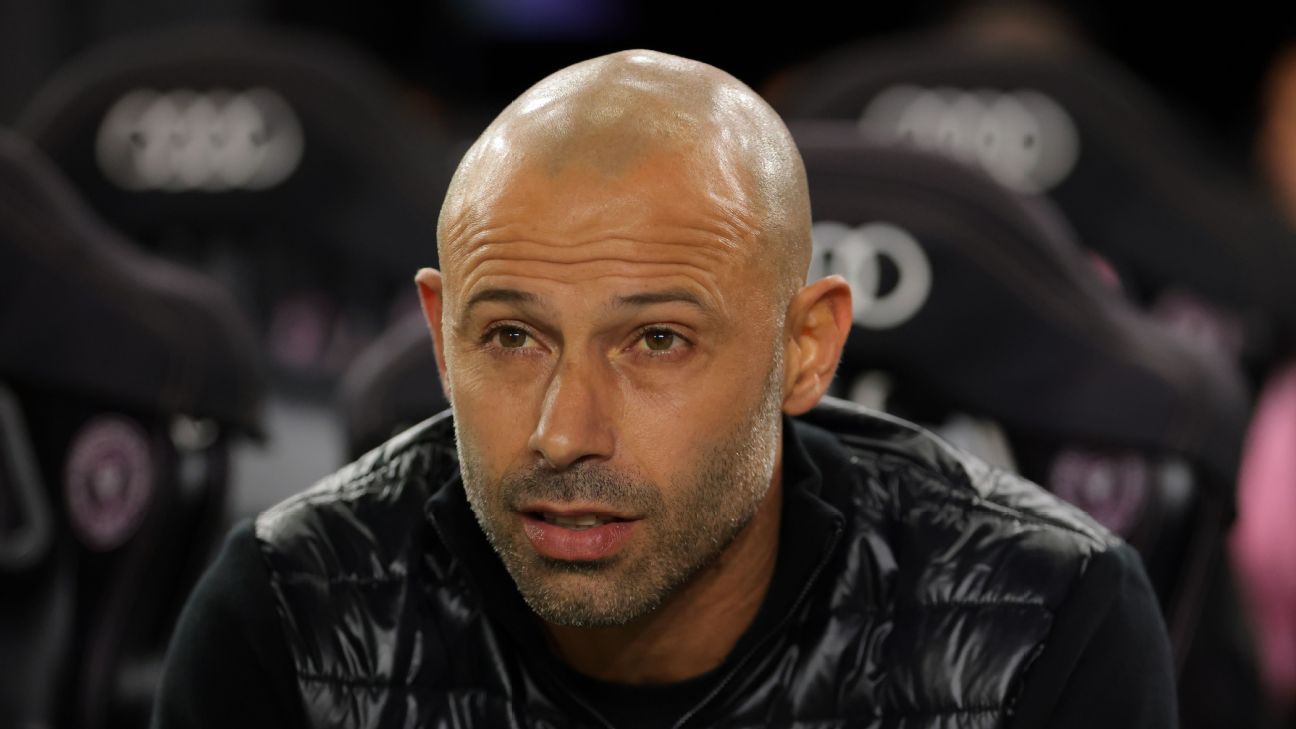
When Inter Miami appointed Javier Mascherano as their manager in November 2024, many were left questioning the decision.
What made him suitable for the role? The 40-year-old Mascherano had never coached at a senior level and his limited coaching background included only the U20 and U23 teams of Argentina.
His predecessor, Gerardo “Tata” Martino, had a rich history with teams like Barcelona, Argentina, and Mexico, culminating in an MLS Cup victory with Atlanta United. If Martino couldn’t secure the league’s top honor, what chance did someone with Mascherano’s inexperience stand?
Could his long-standing relationship with Inter’s superstar Lionel Messi — forged over 13 years on the pitch together for both Argentina and Barcelona — have played a role in his hiring?
Inter Miami co-owner Jorge Mas addressed the skepticism head-on.
“Why Mascherano?” he posed during the manager’s introductory press conference. “He offers the unique experience of working with both young talents and the elite players of this club.”
Mascherano acknowledged the concerns and welcomed the scrutiny.
“I realize criticism isn’t always personal; it’s more about the role you’re in,” he shared with ESPN in preparation for the 2026 season. “I don’t see myself as a victim. I tried to grasp the context. It’s natural for there to be doubts about a new, young coach succeeding a seasoned one like Martino when expectations weren’t met with the Argentine youth teams.”
“This kind of skepticism can encourage personal growth as a professional. Doubt motivates you to prove yourself and gain trust,” he added.
Mascherano went on to do just that, guiding the Herons to an MLS Cup victory against the Vancouver Whitecaps in December, a remarkable turnaround for a season many deemed unlikely just months prior.
However, his early tenure did little to mitigate criticism.
Inter Miami was eliminated from the Concacaf Champions Cup in the semifinals and started with a mediocre 6-5-3 record in MLS, struggling through a stretch where they won just one out of eight matches while conceding 23 goals.
Despite the shaky start, the club’s front office remained steadfastly behind him. A source revealed to ESPN that inquiries regarding the potential availability of the coaching position were met with a resolute “no.”
The players also rallied around Mascherano from the outset, intrigued by his authenticity and ability to relate to them through his past experiences as a player.
“As a coach, I believe the message has to be consistent internally first,” Mascherano stated. “I won’t convey a different message to the media than to the team because I would lose my credibility. Players are perceptive; they can tell if you’re being disingenuous. Authenticity about our strengths and weaknesses is essential.”
“Having been a player, I believe deeply in them. As a coach, I often bear the burden of responsibility, and I’ve resolved to embrace that. My belief is that, in time, players will recognize that commitment.”
The squad quickly adapted to his vision but more importantly felt reassured that player welfare was a priority under his leadership.
“He’s absolutely a players’ coach,” remarked left back Noah Allen. “He’s a young coach, very attuned to modern football. You can tell his ideas are solid and his mindset is clear. He’s the right fit, and we trust him.”
As the second half of 2025 unfolded, performances improved, despite setbacks such as losing the Leagues Cup final and finishing third in the Supporters’ Shield standings. Mascherano remained focused on his self-development and refining the team’s winning formula.
He began to shift his emphasis from strategies and statistics to managing players and game situations. Recognizing the increased demands from an extended match schedule, he understood that nurturing his squad was paramount.
“When you start, as a young coach, it’s easy to fixate on the game—tactics and strategy,” Mascherano explained. “But over time, you realize managing personalities and emotions is equally critical. Nowadays, clubs have players from diverse backgrounds and ages, so understanding that is vital. The main takeaway was our persistence and unwavering faith in the team and our approach.”
The team adopted the motto: We need everyone, not just the 11 starting the game.
This was crucial in the postseason when Luis Suárez was suspended after an incident involving Nashville SC‘s Andy Nájar in their Round 1 Game 2 matchup. Without their star forward, Inter Miami secured a decisive 4-0 victory, advancing into the conference semifinals.
Now, Mascherano confronted a significant dilemma: acknowledge the team’s capacity to thrive without Suárez or reinstate the former Uruguay international despite Miami’s success in his absence. This was a pivotal decision that all managers face.
Ultimately, Mascherano chose to keep Suárez on the bench for the next round against FC Cincinnati, leading to another commanding 4-0 win, followed by a 5-1 triumph over New York City FC in the Eastern Conference final.
Showing bravery in decision-making and orchestrating crucial wins, Mascherano began to gain the trust of skeptics.
“When we hired Mascherano a year and a couple of days ago, it was his first significant coaching role,” Mas stated in December. “Coaching this team has its own challenges—not just the personalities involved but the mix of seasoned stars and emerging talent. Yet, that’s one of the reasons we chose him. The pressure is intense… The transformation from the start of the season to now, making it to the Concacaf semifinals, progressing to the Club World Cup, reaching the Leagues Cup final, has been incredible. And some of his tough choices, tactically, have shown that the team’s recent form is among the best I’ve seen since our inception.”
He silenced critics and proved Mas right. Just over a year into his role, the inexperienced coach achieved what no other manager at Inter Miami had.
Entering 2026, Mascherano faces fresh hurdles, increased expectations, and mounting pressure. He must navigate a newly assembled roster without key veterans Sergio Busquets and Jordi Alba while aiming to qualify for the next Club World Cup by winning the Concacaf Champions Cup.

1:14
DC United vs. Inter Miami CF – Game Highlights
DC United vs. Inter Miami CF – Game Highlights
This will not be an easy task, especially considering that the Seattle Sounders are the only MLS club to have triumphed in the competition since its format changed in 2008. Martino, reflecting on the league’s struggles in the continental tournament after Miami’s loss to Monterrey in the quarterfinals of the 2024 tournament, pointed out the challenges.
“I mentioned earlier that unless MLS relaxes its roster rules for deeper squads, particularly regarding injuries and suspensions, Liga MX will maintain its edge,” he stated. “MLS still struggles to match Liga MX on equal footing due to these roster constraints.”
Despite these stringent rules, Inter Miami approaches the 2026 competition with sufficient squad depth, having dedicated the offseason to acquiring quality players across various positions rather than relying on a single marquee signing.
With a bolstered bench and the backing of the front office to prioritize the tournament, Mascherano and his team are better equipped than before. Their campaign kicks off on Wednesday against Nashville.
Winning the MLS Cup just three months ago will not lessen the expectations placed upon Mascherano by Inter Miami’s management, but he can be confident that he is entering this new challenge with greater preparedness.
“I’ve matured significantly in terms of decision-making and supporting the team,” he said. “It’s essential for the coach and the staff to aid players in reaching their peak performance, recognizing that football ultimately belongs to them.”
“To be honest, I’ve grown into a completely different coach now.”