



-

Graham Hunter
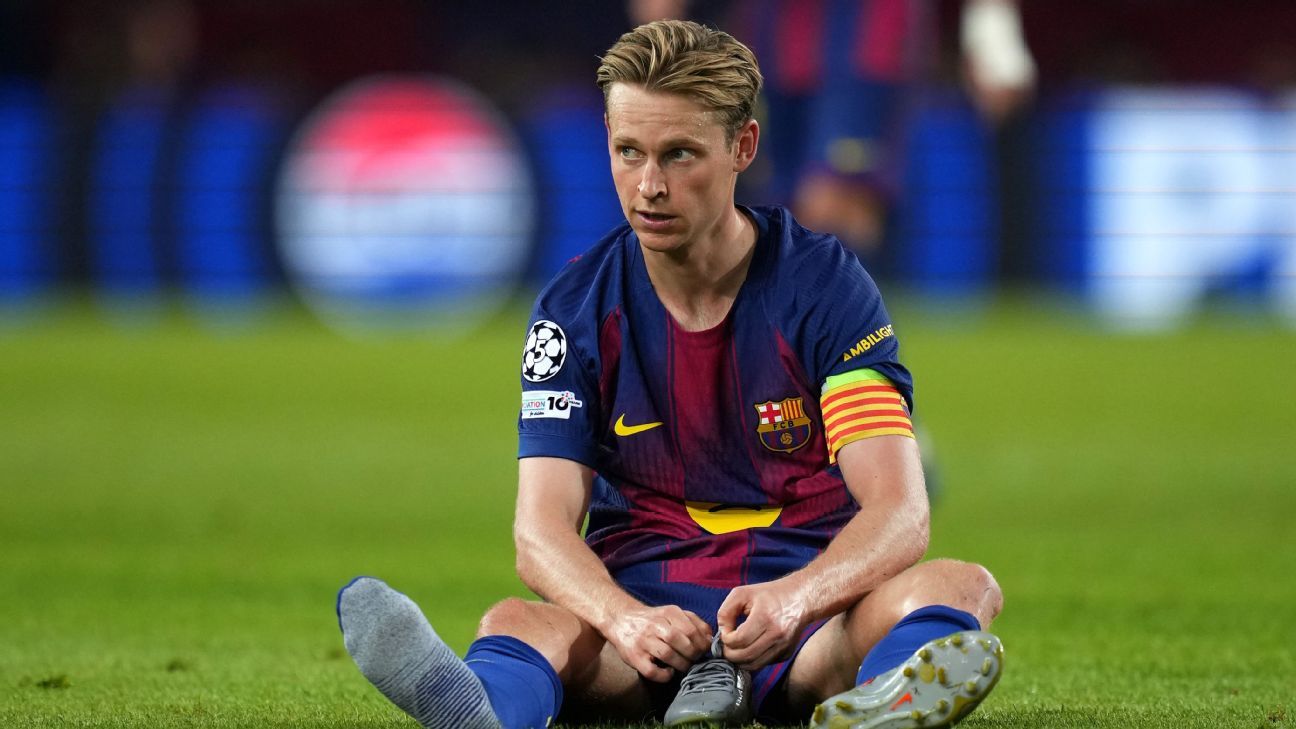
The absence of Pedri due to injury could not have come at a more inconvenient time for Barcelona and Spain. However, for those who have been questioning the club’s and national team’s reliance on their brilliant midfield tactician, it presents an opportunity to evaluate other candidates for his role. It’s also a crucial period for coaches Hansi Flick and Luis De La Fuente to strategize while Pedri recovers from a thigh injury.
Here’s the pressing reality: Barcelona is currently five points adrift of LaLiga leaders Real Madrid and sits outside the top eight in the Champions League standings. This means that they could face a playoff if they do not improve their position by the end of the league phase. They must also contest away matches against Celta Vigo, Real Betis, Club Brugge, and FIFA Club World Cup champions Chelsea without their standout player this season, who has arguably been the best midfielder in Europe.
Spain, with Pedri having been named man of the match in their last two victories, requires strong performances in their upcoming games against Georgia away and Turkey at home to secure their position at the top of Group E and qualify directly for the 2026 FIFA World Cup. A draw or loss in Tbilisi, coupled with Turkey winning their next two matches, including a fixture against Spain in Seville later this month, could see La Roja falling to second place in the group, leading to potential complications in March against other runners-up.
While this scenario seems unlikely, it becomes much more feasible in the absence of Pedri.
– Yamal faced consequences for his outburst while others let him down
– Barça’s Yamal becomes the youngest honoree in FIFPRO World XI
– Flick urges Rashford to capitalize better on opportunities
Those who have been following the exhilarating play of the talented 22-year-old from the Canary Islands understand his unique impact on the game. Pedri is not just a footballer; he’s a problem-solver, a maestro capable of unlocking opposing defenses. He has a special connection with the ball, always seeming to be in the right place to create chances for his teammates. His presence transforms the game, allowing strikers to excel.
This season, with Pedri orchestrating the midfield, Barcelona enjoyed an impressive 71% ball possession in their 3-0 victory against Getafe and maintained a remarkable 72% possession in their 6-0 triumph over Valencia, their biggest win of the season. Even during a defeat to a stronger Madrid side in the Clásico, Barcelona still held nearly 69% of possession at the Bernabéu, which partly explains why Madrid scored only twice despite an overwhelming threat. After all, possession is crucial for creating scoring opportunities.
In Pedri’s absence during the recent home match against newly promoted Elche, Barcelona lost the possession battle, managing only 49% to Elche’s 51%. This shift dramatically impacted the game; Elche not only scored but also hit the woodwork twice, ultimately losing 3-1 (watch a replay on ESPN+ in the U.S.). Elche’s match report noted that “Pedri’s absence forced Frenkie De Jong to ‘multiply himself,’ and when he fatigued towards the end, Barcelona struggled to maintain ball control and create consistent threats.” Their adversaries are undoubtedly aware of this dependency.
According to LaLiga statistics, Pedri has made the most passes this season (893), despite missing the previous game. Moreover, a publication highlights him as third in LaLiga for successful possession recoveries (65), trailing behind Álvaro Carreras and Luis Milla, who have played an additional match. In UEFA’s Champions League stats, Pedri ranks just outside the top five midfielders for successful passes (193), boasting a higher pass accuracy (94.3%) compared to those who have completed more passes than him. This underscores his exceptional efficiency; while others may have played more, Pedri remains the most effective and accurate midfielder in this season’s Champions League.
Fans of Barcelona surely recall the struggles during Xavi’s last season in charge when the team attempted to defend the LaLiga title without Pedri. He experienced three lengthy injury spells throughout the 2023-24 season, leading to 131 days and 25 matches lost for both club and country. Barcelona lost both Clásicos that season—one during his injury absence and another when he had just returned but was not match-fit.
Indeed, the points lost during Pedri’s absences or when he played limited minutes perfectly matches the margin by which Carlo Ancelotti’s Madrid won the title (10). Interestingly, the only two matches that coach De La Fuente lost in the regular time as the Spain manager occurred when Pedri was sidelined due to injury: a Euro 2024 qualifier against Scotland and a friendly against Colombia.
Coincidence? It’s up to you to decide.
While Pedri recuperates, Marc Casadó is poised to step in as a natural partner for De Jong. You might remember him from his remarkable assists for Robert Lewandowski and Raphinha against Real Madrid and Bayern Munich last season, along with an impressive debut for Spain in a 3-2 win against Switzerland in Tenerife.
This 22-year-old Catalan presents a contrasting style compared to Pedri. Casadó usually operates as a deeper-lying midfielder, handling fewer touches but excelling in defensive organization. His quick distribution and tenacious tackling make him an exciting player to watch, embodying the passionate spirit of the club.
When Casadó features in the starting XI, he has the potential to free De Jong, or even Dani Olmo, Fermín López, or Marc Bernal, all of whom can play in the No. 8 position, to advance, break lines, and connect with strikers. This is a prime opportunity for Casadó, one he’s eagerly awaited, and for which he sought the assistance of a sports psychologist to help him remain patient as he waited for his chance.
Casadó expressed to Mundo Deportivo: “I’m very ambitious, which can sometimes work against me. I get frustrated and anxious when playing time doesn’t come as I wish. My family and friends help me keep grounded, and working with a sports psychologist was invaluable when I felt that I was giving my all but still not getting the chance to play. It was frustrating to feel that I was putting in effort but still hearing a nagging voice in my head telling me I could do more!”
“Working with professionals helped me stay composed because not everything is within your control. It is possible to be at your best while the coach might not rely on you. It’s all about staying focused on your work and continuing to push through.”
While I firmly believe that Pedri is a unique creative talent and potentially the world’s best midfielder on his day, Casadó is undeniably impressive in his own right. He’s intelligent, quick, resilient, skilled, and fiercely competitive—attributes that many clubs would covet.
The question of whether Casadó can firmly establish himself in the Spain national team depends on the fitness and availability of seasoned players like Fabián Ruiz and Rodri, given their recent struggles. Other players like Mikel Merino and Martín Zubimendi also rank higher in the hierarchy, along with Olmo and the now-fit Fermín, who remain De La Fuente’s preferences.
The opportunities are opening up for several players while concurrently creating a wave of uncertainty for both Barcelona and Spain. It’s imperative for the club and national team to demonstrate that they can thrive without being overly reliant on Pedri.