



-

Ryan O’Hanlon
Multiple Authors
With each passing year, the details of events from 16, 20, or even 28 years ago often slip from our memory.
In a decade or two, will we still recall Türkiye’s baffling ability to dominate shots yet exit after just two matches? How about Portugal’s surprising draw with Congo DR? France’s dismal start against Senegal? Or Harry Kane’s impressive comeback brace in the knockout stage? Do we even remember the stunning goal Vinícius Júnior netted for Brazil against Morocco just a month ago?
Eventually, every World Cup is remembered for something specific.
For 2022, that memory is clear: it’s the World Cup where Lionel Messi claimed the trophy. Four years earlier, it was the tournament where Kylian Mbappé burst onto the global stage. When reflecting on 2014, one image stands out: Germany’s shocking 7-1 demolition of Brazil. For 2010, it’s likely the infamous Jabulani ball, which Adidas did not realize was too smooth for competitive play. And of course, 2006 is forever linked to Zinedine Zidane’s head-butt.
What will define the 2026 World Cup?
Following a peculiar final, an expected final four, a subdued yet effective champion lacking a standout superstar, alongside ample off-field drama, no singular image encapsulates the tournament just yet.
Eventually, a defining moment will emerge because it always does. So, what will conversations about the 2026 World Cup entail in 20 years? Let’s evaluate the possibilities, ranked from least to most likely.
9. A New Era for Soccer in America
The 2026 World Cup broke attendance and viewership records. This was partially due to the increased number of matches, but even without additional games, records would have been set.
As an American, this was the first World Cup I remember where it felt like *the* primary conversation nationwide. In restaurants and coffee shops, discussions revolved around Scotland fans celebrating in Boston or Norway fans creating a historically inaccurate boat display in the stands.
While some claim that America’s culture is no longer unified, the World Cup rekindled that sense of connection, driven by…a soccer tournament?
But we’ve been anticipating a moment that signifies soccer’s breakthrough in the U.S. since 1994, and that simply doesn’t occur overnight. There will never be a definitive moment where soccer “makes it” in America unless there’s a drastic shift in popular sports preferences.
Soccer has, in fact, slowly but steadily grown in America year after year. A recent survey by The Economist indicates that about 10% of Americans now consider soccer their favorite sport, placing it as the third most popular sport, behind football and basketball, and ahead of baseball.
This World Cup showcased that millions in America genuinely love the game.
8. The World Cup Where Presidential Influence Converged
Past World Cups, like the ones in 1934 Italy and 1978 Argentina, are often remembered for their authoritarian regimes manipulating tournament outcomes. Both Italy and Argentina emerged victorious.
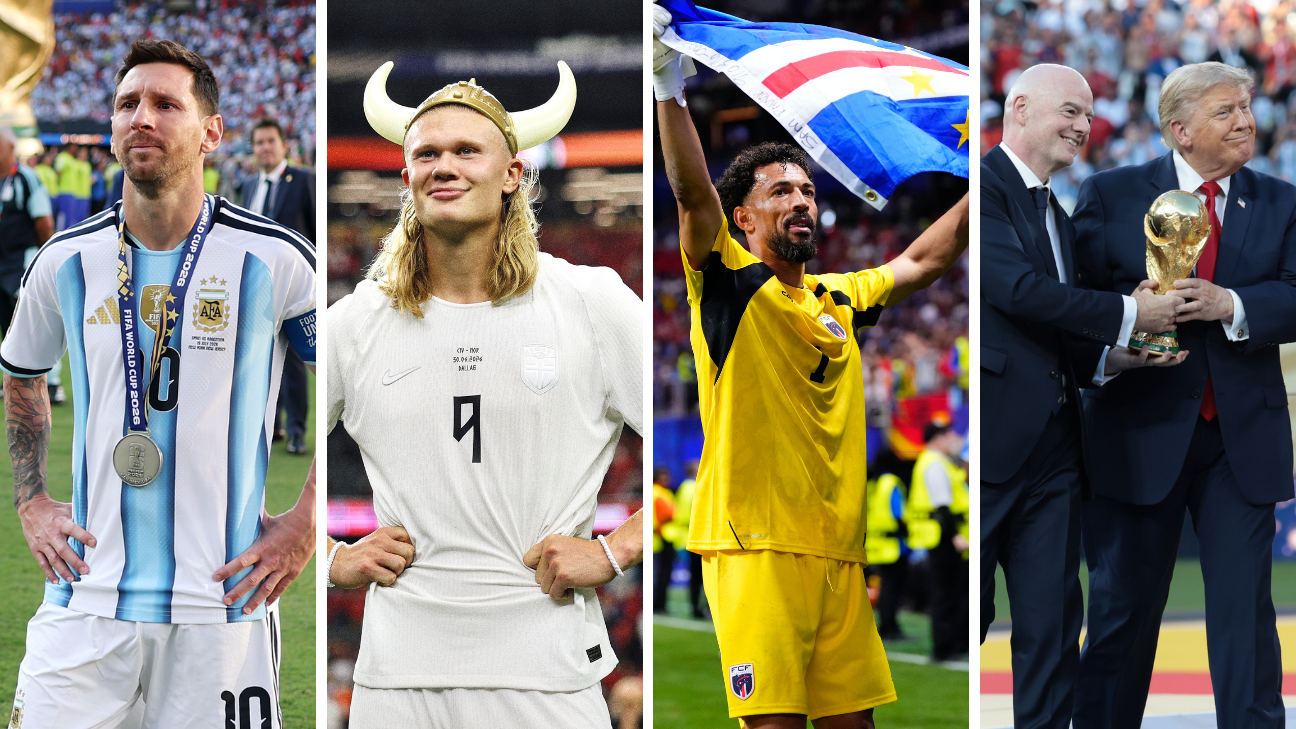
While the U.S. men’s national team did not win the 2026 World Cup and failed to secure a victory following President Trump’s request for FIFA to reconsider Folarin Balogun’s red card after the Bosnia match, the implications of that request lingered.
FIFA did overturn the suspension, but the U.S. team exited in a humiliating loss to Belgium, who mockingly referenced the president during the match.
If the U.S. team had gone far, perhaps this would have been a defining story. However, as it stands, the narrative remains one of disappointment.
7. Cape Verde Makes an Impact
Considering the record-setting sales and attendance, the expanded World Cup proved to be a commercial triumph; its competitive success is still being assessed.
The third-place tiebreaker system might have been confusing for many, but the plethora of matches helped overshadow any less thrilling contests.
Furthermore, teams that typically wouldn’t have made it into the 32-team setup managed to perform admirably. A standout was Cape Verde, a nation with a population of just 550,000, which held Spain to a draw and nearly pushed Argentina to penalties.
While Cape Verde showcased themselves well, their story might fade due to the overwhelming number of matches and narratives competing for attention.
6. VAR Divides Fans
A common sentiment shared by both casual viewers and avid soccer fans about this tournament was dissatisfaction with the Video Assistant Referee (VAR) system.
VAR tends to disrupt the emotional highs of matches, particularly when goals are scored, and it often complicates rules that were never intended to be scrutinized to such minute detail. The essence of sports, after all, is their entertainment value, and any modifications that diminish the fun should be reassessed.
Though I believe VAR should be a defining story of this World Cup, it likely won’t be. Financial investments have already been made into these technologies, and governing bodies might seek solutions for existing issues by developing new technologies.
5. Kylian Mbappé Sets New Scoring Record
This achievement might become more significant in hindsight than it felt in the moment.
Kylian Mbappé concluded this World Cup with 22 career goals, eclipsing the previous record held by Lionel Messi, who did not score in the final. Given Mbappé’s young age, his record may remain unchallenged for quite some time.
Active players such as Harry Kane trail with just 14 goals, and with Mbappé significantly younger, catching up will be a formidable challenge.
Though he made history this summer with a 10-goal and 4-assist performance, the circumstances surrounding this achievement may render it a trivia note rather than a major tournament highlight.
4. Erling Haaland’s Rise to Stardom
While I can’t quantify it, it seems safe to say that Erling Haaland emerged as a household name for many who were previously unaware of him.
With his striking appearance and captivating presence, he exudes the characteristics of an athlete who resonates with American culture—big, fast, and scoring goals effortlessly. He is anything but subtle.
However, I view this narrative as more indicative of American pop culture than the tournament itself. Despite knocking out Brazil, Haaland’s World Cup ended in the round of 16.
3. Lionel Messi’s Final Spectacle
For those who regularly follow soccer, it would be no surprise that Messi once again shone as the tournament’s top player, even at 39.
Yet, witnessing Messi perform at that level again after his extraordinary 2022 World Cup was a remarkable sight. Despite being less impactful in the final, he still showcased an unrivaled presence throughout the tournament.
This will be a personal highlight for me—a final spectacular display by the player who has mastered the sport. However, Argentina’s poor final performance, coupled with the fact that 2022 was already dubbed the “Messi World Cup,” makes it unlikely that 2026 will also carry that name.
2. Spain’s Unmatched Defense
Spain held their ground impressively against major threats like Kylian Mbappé and Lionel Messi, limiting them to a mere four shots during their encounters.
Across the World Cup, Spain’s defense was remarkable, conceding just one goal over eight matches—a record for any World Cup champion.
Moreover, their proactive defensive style sets them apart, demonstrating a level of control that typically eludes international teams.
Thanks to their stellar defense and teamwork, many now regard Spain as potentially the greatest national team in soccer history.
Despite this, it is evident that Spain’s immense talent may not secure its definition in the wider narrative of the tournament.
1. Soccer’s Transformation in America Begins
While Spain’s excellence speaks volumes, it may not shape the overarching narrative of the tournament.
Head coach Luis De La Fuente deserves immense credit for Spain’s achievements; however, his position may not elevate him to an iconic status.
If Lamine Yamal had stood out during the tournament, the narrative might have shifted. Nevertheless, Spain’s resolute teamwork provides a stark contrast to other teams reliant on individual brilliance.
The real uncertainty lies in whether the discussions around this World Cup will focus on Spain’s brilliance or the commercialization of soccer in America. With the enormous financial implications attached to rule changes for greater advertising opportunities, one can only speculate.
Despite numerous concerns beforehand, the 2026 World Cup proved to be a resounding success in many aspects, rekindling the spirit of unity among people from diverse backgrounds during the tournament’s duration—something that is as rare as it is precious.
While the future of the sport and its governance may raise troubling questions, the sport’s essence remains unchanged, ensuring that soccer continues to captivate us all.