



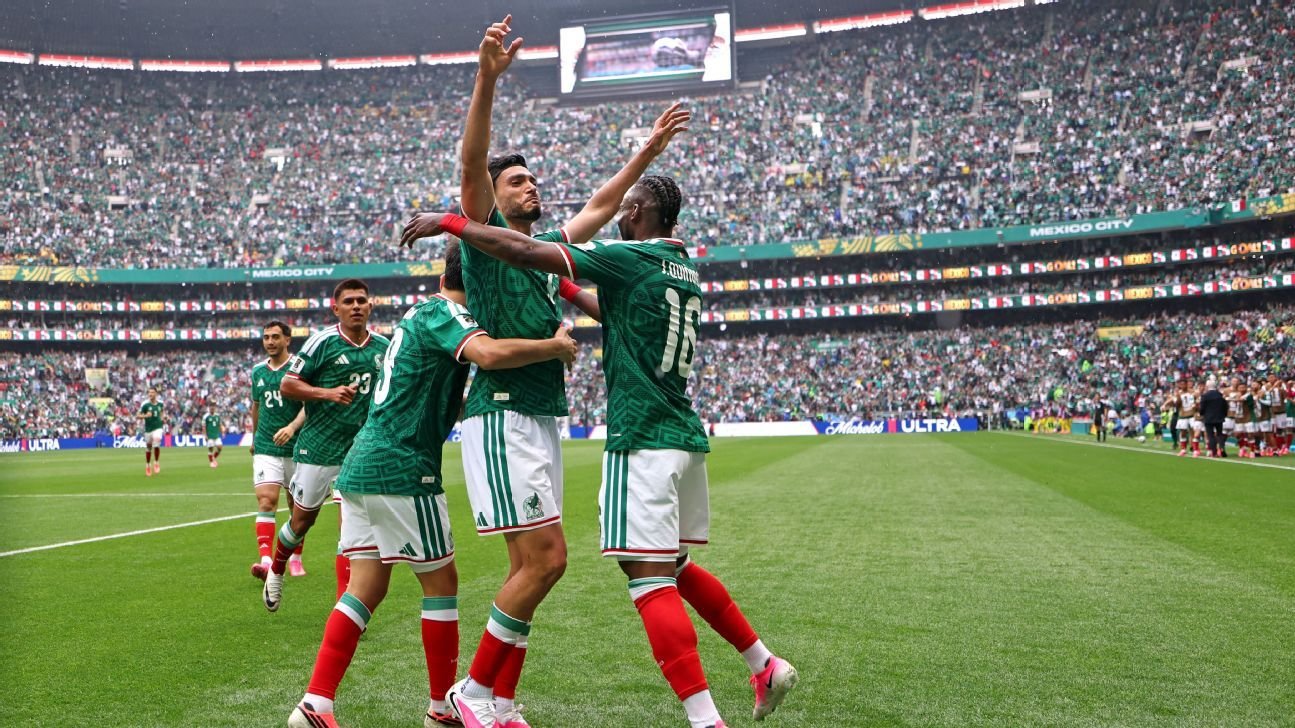
MEXICO CITY — Ahead of the 2026 FIFA World Cup, clips featuring players from Mexico set to Juan Gabriel’s trumpet rendition of the beloved song “Asi Fue” have started to gain momentum. Many captions, translated from Spanish, express sentiments like, “I know we won’t [win it] but what if we do?” This sparked a movement that has given El Tri the boost needed to advance through the group stage.
The players themselves helped amplify the excitement. Forward Santiago Gimenez tweeted “y si si?” (“and if yes?”) just hours prior to the tournament’s opening ceremony.
Online support transformed into a vibrant display of enthusiasm in stadiums and on the streets of Mexico, culminating in gatherings outside the national team’s hotel in Guadalajara. Thousands waited for hours just for a glimpse of their national heroes, hoping to wish them good luck.
México manager Javier Aguirre described the turnout as indescribable, saying, “Mothers, grandmothers, kids, babies, the mariachis.”
Twenty-six players from diverse backgrounds stood united before a country of 134 million, dedicating their efforts to represent Mexico proudly in the green jersey. Chants of “¡Sí se puede, sí se puede, sí se puede!” (“Yes we can!”) resonated throughout the streets, sparking excitement among a fan base yearning for hope.
Recent World Cups have been heartbreakingly disappointing for Mexican fans. They faced the notorious “No Era Penal“ (“It wasn’t a penalty”) elimination in 2014, and only a surprising defeat of South Korea against Germany allowed them to progress to the round of 16 in 2018. In 2022, they faced another early exit. Since 1986, fans have been yearning for Mexico to reach the “quinto partido” (fifth game), but their hopes have yet to be fulfilled.
“The group is very motivated; you can feel the excitement of playing at home,” said César Huerta. “That brings a wonderful responsibility—to step onto the field, enjoy the moment, perform to the best of our abilities, and ensure we represent the fans well.”
More than just music and ambition, this diverse roster has come together to embody the spirit of Mexico.
This year marks the first time that Mexico has five players born outside the country. Dual nationals such as Gimenez (Argentina), Obed Vargas (U.S.), Brian Gutiérrez (U.S.), Julián Quiñones (Colombia), and Álvaro Fidalgo (Spain) have all chosen to represent El Tri despite having other options. Rather than highlighting their differences from fans, this group is committed to representing Mexicans worldwide.
Gutiérrez, hailing from Chicago and born to Mexican parents, proudly embodies the approximately 37.2 million Mexican-Americans living in the U.S., according to Pew Research.
“Kids in Chicago like me, the Mexican-Americans, look up to me, and I’m grateful for the opportunity to be a positive role model,” Gutiérrez shared in 2024. “I strive to make my community and family proud—that’s what matters most to me. It’s an honor to represent this community.”
Regardless of their birthplace—be it Chicago or Chiapas—these players have formed a close bond.
“Incorporating them was seamless; they’ve integrated themselves,” midfielder Mateo Chávez stated. “I believe they’ve embraced Mexican culture for quite some time; they are just like us. They’re part of our team, and we have immense respect for them.”
The Mexican Football Federation adopted a unique training approach for the 2026 World Cup, gathering players before the Liga MX season had concluded. In the weeks leading to the World Cup, players from domestic teams left their clubs behind, prioritizing national duty over any ambitions of a Liguilla title. Once the European-based players joined the rest of the squad, this time together fostered close friendships, creating a family-like atmosphere within the camp. Slowly, these 26 players from five different nations began to unify under the Mexican national team’s banner.
“They call themselves a family,” Aguirre remarked. “And I’m pleased they do so; it makes my job much easier. To say, ‘We are a family’ isn’t a simple thing.”
The bond they share is evident.
“All 26 of us share the same enthusiasm, and [Aguirre] has managed the team in a distinctive way that reflects on and off the field,” said defender Jorge Sánchez after defeating South Korea. “We’re a family, and we must maintain that unity and the determination to progress.”
This sense of unity starkly contrasts with the 2022 World Cup experience.
Mexico had one of the largest fan followings in Qatar, with estimates of around 60,000 to 70,000 supporters traveling to the tournament, but nothing compares to participating in a World Cup on home soil.
“We shielded the players from everything,” former head coach Gerardo Martino reflected. “Other national teams are accustomed to more direct contact. For us, it was vital to isolate ourselves from the external challenges.”
This shielding was necessary due to the wave of criticism surrounding the team, with headlines like “Mexican national team hits rock bottom” and “historic failure” making the rounds back home. This negativity deeply affected supporters, creating a divide between the players and the nation they were meant to represent.
“From my perspective, a somewhat heavy and pessimistic atmosphere surrounding the national team developed,” Héctor Herrera remarked in 2023. “What we experienced in Qatar was marked by numerous injuries and absences, creating an environment that didn’t inspire confidence among the group, the fans, or across Mexico.”
What unfolded four years ago now seems like a distant memory.
The victory against South Africa inspired countless fans to gather at the Angel de La Independencia in Mexico City, but it was the win against South Korea that truly liberated the nation. With fans flocking to local landmarks, more and more embraced the “y si si?” sentiment.
It’s no small task for 26 individuals to effectively represent a country of millions, but this World Cup, Mexico has finally discovered how to do it successfully.