



-

Tom Hamilton
Multiple Authors
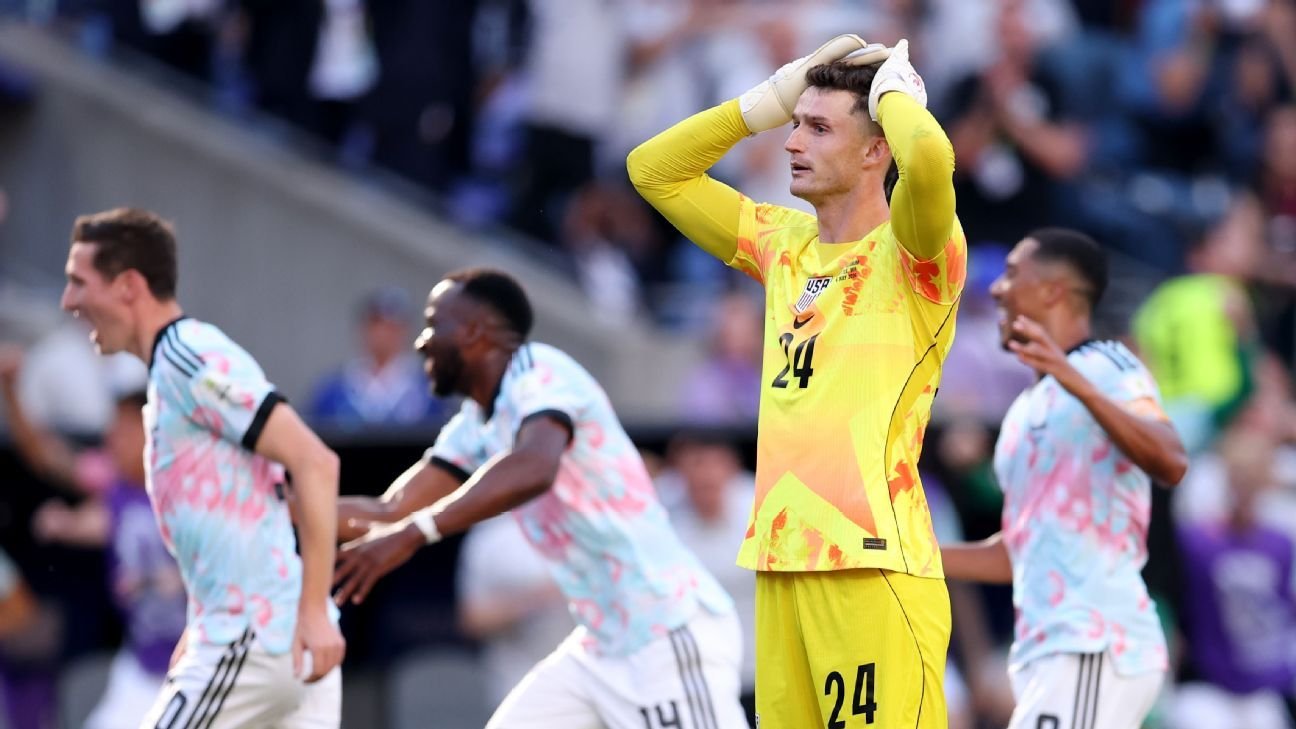
The goalkeeper for the United States, Matt Freese, likely felt profoundly isolated after an error led to Belgium scoring their third goal, pushing the match to a 3-1 scoreline. The camera captured Freese’s expression of despair.
“I’m obviously disappointed with my part in their third goal,” Freese remarked following the 4-1 defeat. “The team worked incredibly hard for this win, and I take pride in them. I really wish that moment had gone differently.”
Freese isn’t the only goalkeeper to experience that crushing sense of embarrassment following a significant mistake. Antonín Kinsky had a similarly disastrous start to his debut with Tottenham Hotspur, lasting only 17 minutes before conceding a third goal against Atletico Madrid in a UEFA Champions League tie. In a moment of helplessness, he collapsed to the ground, overwhelmed. Shortly after, he was substituted by manager Igor Tudor, with teammates offering him faint encouragement as he exited the field, downcast. Spurs ended up losing 5-2.
Support poured in for Kinsky from goalkeepers, past and present. Eventually, he decided to browse through their encouraging messages. “Nobody understands the unique challenges of being a goalkeeper unless they’ve been in that position. Keep your chin up; it will get better,” posted former Spain and Manchester United keeper David de Gea on X. Thibaut Courtois, of Real Madrid, also personally reached out to offer support through Instagram.
According to legendary Netherlands goalkeeper Edwin van der Sar, being a goalkeeper can feel “lonely.” “We wear a different color jersey than our teammates, which makes us stand out,” he explained to ESPN. “We’ve all had our Kinsky moments—support and advice during those times are invaluable.”
That’s the essence of the “goalkeepers’ union” — when a colleague struggles, others rally around to support. “Goalkeepers have a responsibility to look out for each other,” declared Millwall’s and New Zealand’s Max Crocombe. However, this bond isn’t always without its strains; the aspiration to be the primary choice can overshadow that camaraderie at times.
‘Everyone’s made their mistakes’
Both Crocombe, who played every game for New Zealand in the World Cup, and Cieran Slicker, who spent last season on loan from Ipswich at Barnet, have a shared avoidance of social media. But it’s not always easy. “I’ve returned home to my wife asking if I’m okay after hearing online comments about a game she didn’t watch,” Crocombe shared. “I’m like, ‘Yeah, I’m fine. Why? Are people criticising me?'”
Slicker had to have a chat with his mother, Amanda, after she started replying to Facebook comments following a rough performance. “I was just 17, playing for the Scotland under-21 team, and I messed up. I had to tell her, ‘Mum, just leave it alone.'”
They both laugh as they recount their friends’ attempts to be supportive, often leading to unsolicited advice. “Some friends message, ‘Hope you’re good!’ which is nice but it can be overwhelming. If a keeper has a bad game, I usually wait a couple of days before reaching out. It’s a part of what we go through,” Crocombe said.
During a conversation, they reflect on the mental challenges every goalkeeper faces and how they resonate with Kinsky’s experience. “It’s incredible that every keeper has navigated similar mental spaces and errors, making us empathize with him,” Crocombe emphasized. Slicker added, “As I’ve said, everyone makes mistakes.”
1:20
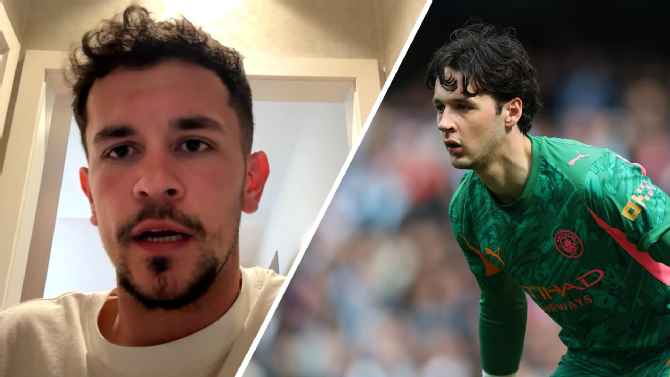
Slicker: James Trafford goes into every game and training with a great mentality
Slicker reminisces about a challenging moment during his Scotland debut. He was initially not slated to play against Iceland, but was called in after injuries to other goalkeepers. Just six minutes into the match, he conceded three goals, with the focus on his mistakes. Following the game, manager Steve Clarke noted he had been thrown into an unprepared situation.
“I switched my phone off for a couple of days to avoid the noise, only peeking at important messages later,” Slicker recalled. Some messages, notably one from his City goalkeeping coach and his Ipswich captain Sam Morsy, encouraged him to turn the setback into motivation. He also received messages of encouragement from fellow goalkeepers.
“The ‘goalkeepers’ union’ concept originated from our shared experiences—whether you play or not. It exists from youth levels, where keepers often share matches. You develop a sense of camaraderie and a wish to support each other, hoping the goodwill returns to you,” Slicker shared.
– Borden: USMNT will look back at 2026 World Cup as a missed opportunity
– Carlisle: Belgium handed USMNT a FIFA World Cup reality check
– Connelly: Ronaldo’s World Cup era is over. Where did each tournament go wrong?
‘You are a bit like a dad to them’
Andy Dibble, a former goalkeeper for Rangers and Manchester City, reminisces about a match in March 1990. In that game, he prepared to clear the ball but was caught off guard by Nottingham Forest’s Gary Crosby, who ended up scoring while Dibble was distracted. “The support I received after that moment continued nonstop until the end of the season,” he recalls.
Richard Lee, who played for Watford and Brentford before becoming an agent with over 130 goalkeeping clients, recalls an incident in March 2007 when Tottenham’s Paul Robinson scored an unlikely goal from nearly 80 yards. Lee felt for Robinson, thinking, “If that had happened to me, how would I have felt?”
The goalkeeper’s isolation was once even more pronounced with teams typically having only one keeper. However, with specialist coaches and tactics evolving, the bond among goalkeepers has strengthened. The shift in the back-pass rule in 1992 fostered greater integration of goalkeepers into the team’s gameplay and led to clubs hiring multiple goalkeepers.
Lee shared that during tough times, it’s often the goalkeeper coach who provides comfort when others may withdraw. “In moments of failure, you find yourself sitting alone, often in silence, as managers and teammates may not offer the support you need. Yet, it’s the goalkeeper coach who usually steps forward with a reassuring presence,” he explained.
Dibble echoed this sentiment: “You sometimes feel like a father figure to them. You’re there to help not only with football issues but personal matters too.”
Modern training environments often see goalkeepers separ…
‘It was the most bizarre thing’
Shaka Hislop, who has played for West Ham, Portsmouth, and Newcastle United, has navigated the complexities of a goalkeeper’s dynamic, both as a backup and a first-choice player. He recalls an instance where a new signing coming in to replace him wouldn’t even acknowledge his presence. “It was incredibly strange. I would say ‘good morning,’ and he’d just ignore me completely. This didn’t help either of us,” he reflected.
In assessing where to place his clients, Lee knows the subtle tensions that can exist, weighing opportunities against team dynamics. “You empathize with fellow keepers, but when there’s an opening, you have to look out for yourself,” he shared.
Both Crocombe and Slicker have faced similar situations to Hislop, although they are not typical. “Sometimes, those who see you as competition resent you,” Crocombe stated. Slicker agreed, observing, “Some keepers might watch every play you make with envy, but I believe in making my own luck.” Crocombe concluded, “My approach always begins with respect and support. If someone else falters, I’m there to help because together we thrive.”
Slicker grew up as friendly rivals with James Trafford at Manchester City’s academy. While Trafford has experienced a successful trajectory, including a recent transfer back to City, Slicker has embraced his role as a supportive presence. “I didn’t expect to be a backup to Donnarumma; it just happened, so I adapt and give it my all each day,” Trafford said.
Slicker applauded Trafford’s mindset, noting, “He’s been exceptional at staying ready. I’ve learned a lot from my experiences training with top keepers. I strive to create a supportive atmosphere for all my colleagues, both during matches and in training.”
During the World Cup, Crocombe was present for New Zealand’s draws and losses, sharing the journey with his fellow keepers. “You want the position not just for being the least worst, but because you’re genuinely the best,” he explained, emphasizing collaborative effort.
‘From dream to nightmare to dream again’
Having experienced it all during his extensive career, van der Sar understands just how vital it is for a goalkeeper to maintain a low profile. “You want to avoid undue attention; your focus should be on keeping your place,” he described. “A lot of your success in goal is contingent upon your defense’s strength. You seek to forge an impervious image, while still honing your individual skills and working harmoniously with the team.”
“Silence can be the highest form of praise for a goalkeeper because you’ll hear if you mess up,” Crocombe noted. “Many young keepers chase acknowledgment and highlights for validation, but often it’s simply the quiet that signifies they are on the right track.”
Concerning the relationship between goalkeepers and media representation, they express frustration over the scant acknowledgment of their craft. They emphasize that a single remark from a well-known pundit can greatly influence opinions surrounding a keeper. Fortunately, in recent years, more former goalkeepers like van der Sar, Lee, and Dibble have begun to make appearances as pundits, offering insight into their experiences.
“It’s been challenging to listen to pundits discussing goalkeeping when they lack a genuine understanding of the experience. Thankfully, things are changing,” stated Lee.
The mutual support among goalkeepers, whether at the training pitch or in the media, can sometimes raise eyebrows with outfield players. “You get used to the comments around the ‘goalkeepers’ union,” van der Sar explained. “It’s not just a saying; it’s how we operate. We genuinely support one another.”
All of them are hopeful for the continued strength of this union. They highlight the pre-penalty ritual where goalkeepers touch gloves, akin to boxers preparing for a match. “It’s just as players shake hands before a game. But it holds deeper significance — it respects your opponent while reinforcing our brotherhood,” Hislop noted.
Following a challenging debut, Kinsky shared on Instagram, expressing gratitude for the support. “From dream to nightmare and back to dream again. See you all soon.” A month later, he returned to goal for Spurs and, despite the team being in a relegation battle, he made a crucial save to help secure a vital victory. As he stood alone, soaking in the applause from relieved fans, he felt the impact of the union behind him.
“This is a grueling profession where the stakes are high, but the support we offer each other is invaluable,” Crocombe remarked.
In time, Freese will also feel that camaraderie. “This current pain stings more deeply than I expected. Yet, I recognize this is merely a step on a longer journey,” Freese reflected.
ESPN’s Jeff Carlisle contributed to this report.