



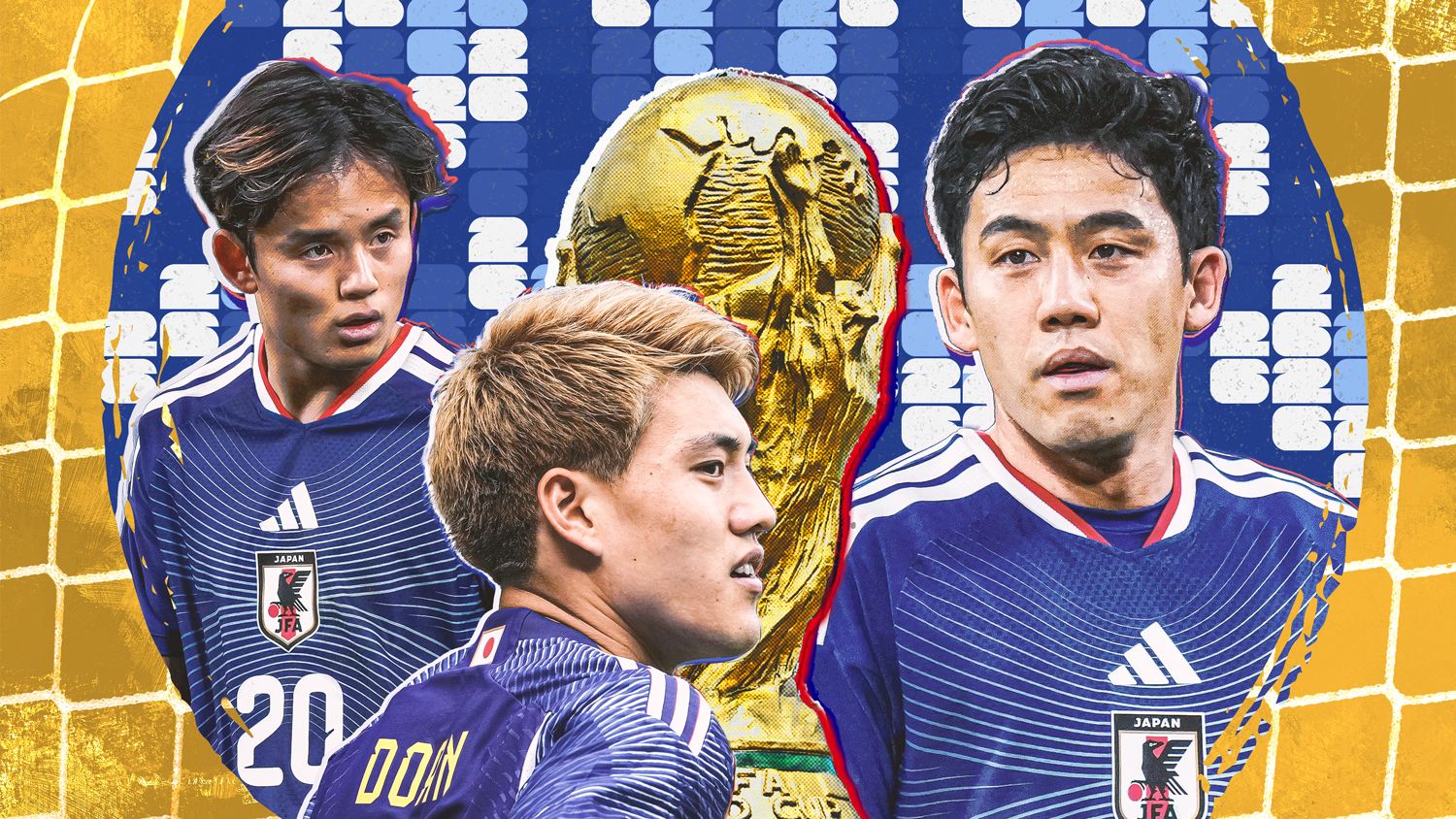
In 1992, long before they first qualified for the FIFA World Cup, Japan was struggling in the football world when they announced their ambitious “100 Year Vision” to win the tournament by 2092.
By 2005, after making two World Cup appearances, the Japan Football Association revised their goal to a much earlier target: 2050.
The Samurai Blue have participated in every World Cup since their debut in 1998, and the upcoming 2026 tournament will mark their eighth consecutive appearance. They have maintained a position in the world’s top 20 rankings since 2023 and could field an entire squad of 26 players based in Europe, with numerous others waiting in the wings.
With all these positive indicators, one must wonder: how far can Japan advance in 2026?
– World Cup squads ranked: Of all 48 nations, who can win this summer?
– Karlsen: Ranking the 21 best U21 players at the 2026 World Cup
– All the 2026 World Cup group-stage kit matchups revealed
It’s important to recognize that, while Japan may not yet be seen as a strong contender, the World Cup often showcases dark horses ready to surprise.
For instance, Croatia finished third in their 1998 debut despite being 19th in the world rankings, and they placed second 20 years later, ranked even lower. Surprise semifinalists Türkiye and South Korea came in 22nd and 40th, respectively, during their runs, while last time around, Morocco was the 22nd-ranked team before reaching the semifinals in Qatar.
Japan’s current ranking should not overshadow their potential for a deep run, even without key players like Kaoru Mitoma and Takumi Minamino.
Envision a starting lineup featuring:
Zion Suzuki (Parma),
Tsuyoshi Watanabe (Feyenoord),
Kō Itakura (Ajax),
Hiroki Itō (Bayern Munich),
Ritsu Dōan (Eintracht Frankfurt),
Wataru Endo (Liverpool),
Ao Tanaka (Leeds United),
Yukinari Sugawara (Werder Bremen),
Takefusa Kubo (Real Sociedad),
Daichi Kamada (Crystal Palace), and
Ayase Ueda (Feyenoord).
This lineup boasts players from Europe’s top seven leagues, many of whom compete in the Champions League and Europa League. It reflects the potential for an impactful national team at the World Cup. Yet, the Samurai Blue have yet to advance past the round of 16.
One of Japan’s greatest challenges may come from within. They have proved capable of competing with elite teams, having secured victories over both Germany and Spain in the last World Cup, missing the quarterfinals only due to a penalty shootout loss to Croatia. In the past seven months, Japan has enjoyed its first friendly wins against Brazil and England.
Criticism often directed at coach Hajime Moriyasu revolves around his cautious strategies during high-pressure moments. Those decisive wins over Germany and Spain were a product of a counterattacking style, which worked well, but he also opted for a conservative approach in the one match where they were clear favorites, resulting in a shocking 1-0 defeat to Costa Rica, marking their only loss in that tournament.
Though it would be unwise for Japan to adopt an all-out offensive strategy against top-tier teams, particularly in their opening Group F match against Netherlands on June 14, they could still pursue a more balanced approach. Aiming for better possession control, even against stronger foes, and taking initiative in crucial matchups against Tunisia and Sweden could lead to improvement.
How Moriyasu prepares his team at the start of the tournament will be telling for their potential success, as it hinges on their self-belief. Striking a balance between realism and ambition is vital.
Perhaps Japan can only claim the World Cup title when they adopt a mindset that they can compete against any team. Their recent performance suggests they are capable of achieving this.
Injuries have hampered their preparations, notably the absence of Mitoma and Minamino, who are significant players capable of changing a game’s outcome.
Nonetheless, their “next man up” philosophy prevails, and these absences won’t be used as an excuse, especially with replacements hailing from the Premier League and Bundesliga.
Upon becoming the first non-co-host team to qualify for the World Cup last March, Japan displayed a determined attitude alongside their joyous celebrations.
Wingback Sugawara, then with Southampton in England’s top league, asserted to ESPN: “Our future is to win the World Cup. That’s the main thing for us.”
Clearly, Japan aims to win the World Cup and they believe it could happen as soon as this year. While vocalizing their aspirations is one thing, translating that belief into on-field performance remains critical.
As they work towards their goal of winning the World Cup by 2050, making progress this summer—such as reaching the quarterfinals for the first time—could be a vital step towards bigger dreams.