



Japan has an intriguing history with World Cup moments decided by fractions of an inch.
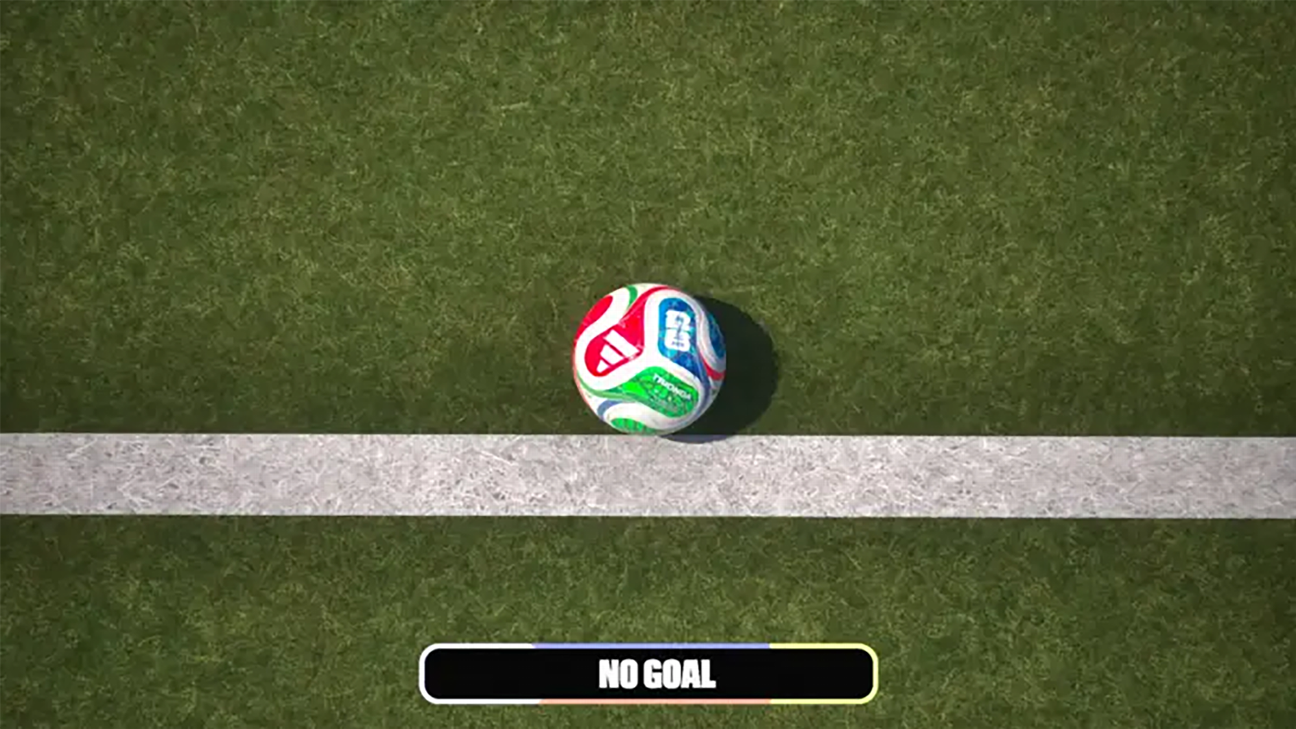
During the 1,000th World Cup match at Monterrey Stadium in Mexico, the Samurai Blue had a goal disallowed against Tunisia due to the slightest margin, thanks to goal-line technology. This incident brings to mind a similar VAR controversy from four years ago that fans might remember. Read more here.
With Japan leading 1-0, Tunisia goalkeeper Aymen Dahmen made a stellar save, deflecting a header from a corner onto the post and close to crossing the line. Goal-line technology confirmed that the ball never fully crossed over.
This time, no VAR intervention was required since the technology, sourced from a chip in the ball, confirmed the outcome, and ultimately, Japan won decisively with a score of 4-0. However, in the 2022 World Cup, Japan was embroiled in a goal-line debate during their 2-1 victory over Spain, which resulted in Germany’s elimination from the tournament. — Jon Molyneux-Carter
What happened in 2022?
Event: Japan thought they had scored a second goal against Spain in the 51st minute when Ao Tanaka found the net after a cut-back from Kaoru Mitoma, but the referee ruled it out as the ball was deemed out of play.
VAR Decision: Goal awarded; ball was in play.
VAR Review: For Mexican VAR official Fernando Guerrero to overturn the assistant’s call, there needed to be concrete evidence indicating that the ball was at least partially on the line. This encompasses not just the ball making contact with the ground but also the curvature of the ball hanging over the line. (FIFA’s tracking tech isn’t utilized to assess whether the ball is in or out of play.)
The decision relied on a goal-line camera image, yet broadcasters were left to speculate about the proof indicating the ball was still in play; FIFA should have provided clarity. A horizontal shot from the goal line appeared to show a small portion of the ball hanging over the line, which could have justified the VAR’s overturning of the on-field decision. Nonetheless, this image was accessible on The Associated Press’ services over an hour after the match concluded. Unfortunately, FIFA did not supply this evidence immediately, underscoring one of VAR’s issues: communication with fans.
Until this point, no definitive proof had presented itself indicating that the ball was indeed touching the line when Mitoma played the ball to Tanaka—despite the goal-line camera having recorded it; the fans were just unaware.
The absence of timely communication from FIFA during the VAR decisions in this tournament has highlighted a significant disconnect between the technology and the viewing public; clarity was consistently lacking. Unlike in the Premier League, where the VAR feed is shared with broadcasters during reviews, FIFA tightly controls the communication. For VAR to gain acceptance, improvements must be made.
Finally, approximately 18 hours after the incident, FIFA tweeted out the goal-line camera angle which informed the decision. Such transparency could have been established in real-time.
Japan’s second goal in their 2-1 victory over Spain was reviewed via VAR to ascertain if the ball had gone out of play.
The video officiating crew employed the goal line camera images to validate whether the ball remained partially on the line or not. pic.twitter.com/RhN8meei6Q
— FIFA.com (@FIFAcom) December 2, 2022
This ultimately resulted in a goal that eliminated Germany from the World Cup. — Dale Johnson