



Jürgen Klopp, currently serving as Red Bull’s head of global soccer, recently acknowledged that he remains realistic about the German perspective on the multinational energy drink company’s involvement in football. However, he, along with his colleagues dedicated to elevating RB Leipzig and its affiliated clubs, is committed to achieving success.
RB Leipzig has intentionally chosen to “return to their roots” this season. Although their history is brief—established in 2009 and joining the Bundesliga in 2016—the principles of early Gegenpressing, introduced by Ralf Rangnick, are back in vogue.
The reward for their summer pivot towards a more intense, emotional style of play, rather than the possession-heavy approach they had adopted, is becoming apparent. Their recent 6-0 demolition of Eintracht Frankfurt is the latest demonstration of their claim to currently be the second-best team in Germany.
A 6-0 defeat to Bayern Munich at the start of the season understandably rattled many fans of RB. This match marked the first league game under new head coach Ole Werner, formerly with Werder Bremen, and some questioned his suitability for the complexities of the RB environment and its politics.
Despite his youthful demeanor and unassuming northern humor, Werner has strategically matched the club’s needs better than many previous coaches. In retrospect, that harsh lesson against Bayern may have been misleading. With star players like Xavi Simons and Loïs Openda exiting the team, the leadership recognized the necessity for a fresh direction and fewer egos.
In the early years of the Bundesliga, RB Leipzig thrived with young, ambitious players eager to establish themselves. Marcel Schäfer and his colleagues recognized the time had come to embrace that youthful energy and reintroduce the Gegenpressing approach.
Now, the squad boasts a promising mix. While veteran leaders like Péter Gulácsi and Willi Orbán provide stability, youth once again takes center stage in the attack. Recent matches have featured a triumvirate of forwards comprising two 20-year-olds and a 19-year-old.
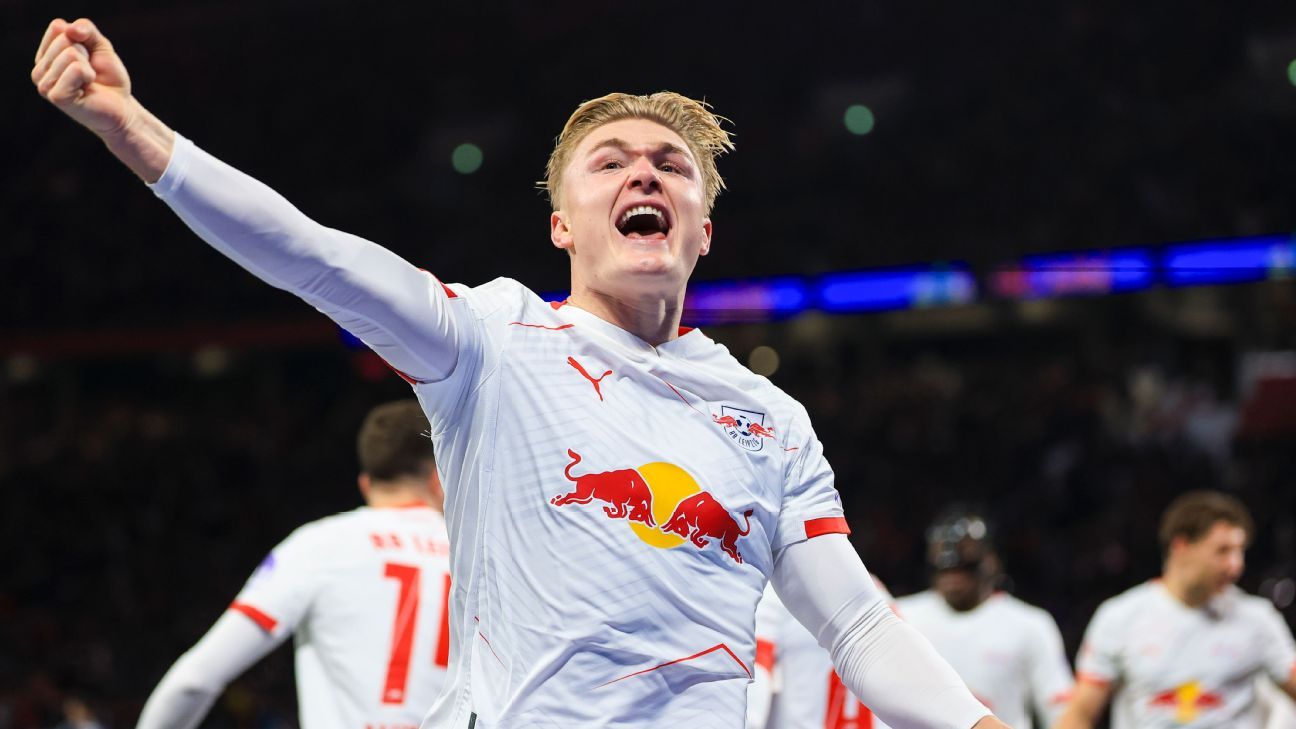
Notably, 19-year-old Yan Diomande has made rapid progress, achieving a second-half Dreierpack (hat trick) with impressive strikes from challenging angles. According to records, Diomande is now the second-youngest player to score a Dreierpack in Bundesliga history.
Leipzig, dubbed the Heldenstadt (the “city of heroes”), is witnessing Diomande emerge as a heroic figure in the Red Bull Arena, especially with his upcoming chance to represent the Ivory Coast against Germany in Toronto on June 20 at the FIFA World Cup.
Additionally, Denmark striker Conrad Harder, another Saturday standout, is making waves. The 20-year-old forward, signed for approximately €24 million from Sporting CP, took time to find his footing in German football, but against Frankfurt, he quickly showcased his potential, scoring just five minutes into the match. His work off the ball is also commendable.
If I were Denmark’s coach Brian Riemer, I would certainly consider how Harder could contribute to Denmark’s success in the upcoming March playoffs leading to the World Cup.
This season, the top outfield performers for Leipzig have been David Raum and Christoph Baumgartner. Raum, now 27, has embraced his role as captain and has been pivotal. Bundestrainer Julian Nagelsmann has compared him to Kaugummi (chewing gum) due to his ability to connect and unify the team. He leads the squad in touches, frequently proving dangerous in open play and from set pieces.
Baumgartner, an Austrian, has stepped out of the shadows left by Xavi and Openda and is making a strong impression this season. His recent goal, which contributed to a 2-0 advantage, marked his sixth league goal of the season. Baumgartner exudes confidence, showcasing a well-rounded game.
RB Leipzig’s defensive strength sets a strong foundation, with Gulácsi aiming to extend his tenure and already boasting seven clean sheets alongside only seven Gegentore (goals conceded) in 12 Bundesliga matches since the defeat to Bayern.
The pressing question is: Can Leipzig maintain this level, solidifying their status as Germany’s second-best team? Currently, the evidence points to a resounding yes.
They benefit from being absent from European competitions, avoiding the Dreifachbelastung (the demands of juggling multiple tournaments).
In the new year, Leipzig’s resilience and true capabilities will face further scrutiny as they take on Bayern both home and away in the Bundesliga and DFB-Pokal. For now, however, the foundation of their revival is being well-nurtured.
Moreover, the upcoming appointment of Tatjana Haenni as the new CEO of RB Leipzig in January—the first woman in German football to assume such a role—demonstrates visionary leadership that traditional clubs should consider emulating.