



-

Emily Keogh
ACCRINGTON, England — Emma Hayes, head coach of the United States women’s national team, has termed the under-23 program as “a lost generation.” However, under her leadership, the initiative to revitalize this key age group is showing promise as the U.S. prepares for the 2027 World Cup.
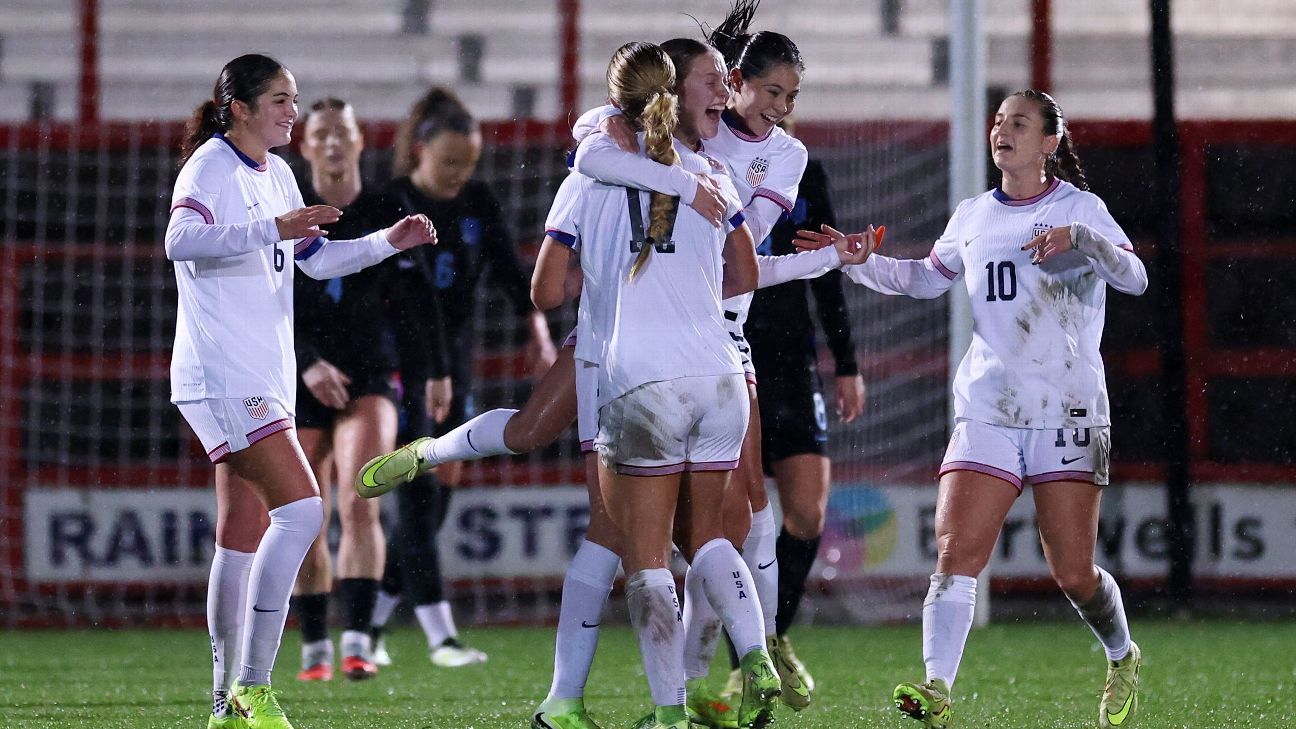
The recent 4-2 victory over England’s U23s highlights this progress. Featuring primarily National Women’s Soccer League (NWSL) talent, the U.S. team showcased their strength with goals from Emeri Adames and Maddie Dahlien in the first half, followed by contributions from Sarah Weber and Ally Sentnor, who is a key figure in the senior squad.
“They posed a significant challenge,” stated Sentnor, who has joined the U23s to gain more playing time and build confidence. “I’m incredibly proud of our team’s resilience after conceding goals, and how we rallied together. It has been a great honor to compete at this level.”
– Hayes sets high bar for USWNT teen Yohannes
– USWNT wraps up 2025 with comfortable win against Italy
– Women’s World Cup 2031: U.S. proposes 14 host stadiums
Hayes has been focused on rejuvenating the U23 program since her appointment, emphasizing the need to address what she sees as a gap in opportunities for players moving from the U20s to the senior level. In an interview with ESPN’s Futbol W show, she revealed that fewer U23 players in the U.S. gain the same level of experience as top countries.
Informed by the success of England’s youth teams, Hayes piloted a U23 program beginning in April 2025. The improvements in performance are already evident.
The Importance of Closing the Gap
England’s manager Sarina Wiegman has also taken steps to revitalize the Lionesses’ U23 setup since her appointment in 2021. By February 2024, the setup thrived, culminating in a joint camp with the U23s and the seniors in Marbella, which fostered valuable experiences for emerging talent.
U23 players in England are now frequently integrated into senior training sessions to assess their readiness and test the main squad with new tactical approaches. This system has effectively doubled the pool of players available to Wiegman, allowing newer call-ups to flourish.
When Emma Hayes assumed the role of USWNT head coach, her primary goal was to enhance the U23 developmental pathway. At a press conference, she pointed out the absence of a robust women’s football development strategy and stressed the necessity for a coherent, achievable approach.
The U.S. U23 program, initially launched in 2008, had seen a decline, with only four matches played in 2019 and just one in 2022. However, following the USWNT’s Olympic victory in Paris, Hayes aimed to establish a “B team” to facilitate a smoother transition to the senior squad.
Taking inspiration from Wiegman, she initiated a Futures Camp in January, followed by a full U23 program in April 2025. The U.S. played four matches at the U23 level this year, and significant behind-the-scenes efforts are being made to define the developmental needs of this age group ahead of the 2027 World Cup.
“This isn’t just a discussion,” stated Heather Dyche, the U23 coach appointed in November, during an interview with ESPN. “The federation has invested in the U23s, providing a platform for players to experiment and refine their skills.”
A Platform for Growth
Kansas City Current midfielder Sentnor has already made her mark with four goals in 13 appearances for the senior team. After a notable NWSL season that earned her 2024 U.S. Soccer Young Player of the Year honors, she continued her development through the U23s to refine her gameplay as she sets her sights on a return to the senior side in the new year.
“Joining the full team provided me an incredible experience, and transitioning back to the U23s has given me the freedom to grow,” she explained. “Learning from top-tier players at the national level has been invaluable, and taking on a leadership role here has bolstered my confidence.”
The exposure to competitive international play has been crucial for Sentnor, who has scored twice in as many U23 matches, enhancing her skills in a way that may not have been possible within the senior squad due to the high level of competition.
Forward Jaedyn Shaw has also benefitted from a mix of experiences in both setups in 2025, enabling her to focus on specific areas of her game under Hayes’ guidance. Similarly, 18-year-old Jordyn Bugg joined the senior USWNT for the first time in June, and Hayes believes that focusing her on the U23 level may serve her long-term development better.
This two-way dynamic allows more experienced players to share their insights with the younger talent, ensuring a smooth transition between teams.
“The core processes remain consistent, from tactics to training drills, regardless of which team we’re on,” Sentnor remarked. “The next generation’s potential is truly exciting.”
Dyche, who collaborates closely with Hayes, believes establishing a seamless movement between the U23 team and the seniors will cultivate a robust player pool for the upcoming World Cup.
“When players like Ally return to the senior squad, they’re even more confident,” she noted. “This is an exceptional system, and it’s empowering to be involved.”
Looking Ahead
2:27
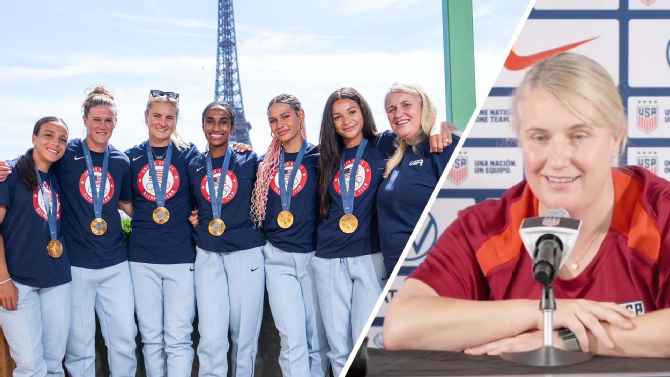
Hayes: First year as USWNT coach better than a dream
Emma Hayes shares her reflections on her inaugural year leading the USWNT.
With the college draft being phased out, more players are opting out of college soccer to pursue professional opportunities, shifts in the U.S. U23 team composition are becoming evident. The progression from college to professional-level talent has become a focal point.
The Futures Camp in January 2025 included 10 college players and 14 professionals, but the current U23 squad comprises entirely professional athletes, with most playing in the NWSL, thus aligning the transition closer to that of the senior team.
Furthermore, the NWSL is considering establishing a second tier similar to England’s WSL structure, providing alternative pathways for players evaluating their college options or trying to break into competitive NWSL rosters. Although this initiative is still years away, it will undoubtedly influence long-term development.
Another pressing issue remains how to maximize the U23 program. In 2023, a European U23 league was initiated, featuring nine national teams, including England, Belgium, France, Italy, the Netherlands, Norway, Portugal, Spain, and Sweden, all of which boast structured youth systems. The U.S. could greatly benefit from participating or expanding this competition.
In 2025, the U.S. U23 team faced both England and Germany in three of their four matches, whereas England’s U23 squad competed eight times. While the U.S. faced Slovakia and won 1-0 thanks to Sentnor’s goal, there is a clear advantage in the competitive environment offered within Europe.
Despite logistical hurdles due to varying league schedules between the NWSL and Europe, securing more fixtures will be essential as preparations ramp up for Brazil 2027.
U.S. Soccer is dedicated to the future of the U23s, and following the victory over England, optimism surrounds the program’s trajectory. To date, Hayes has involved 50 players across her 30 matches, with over 30% under 23. Many of these young players are eager to make their mark ahead of the World Cup.
With clear expectations for a core group leading into the quest for a fifth World Cup title, the forthcoming 18 months are poised to be pivotal for the U23 initiative and the USWNT as a whole.