



-

Beth Lindop
Multiple Authors
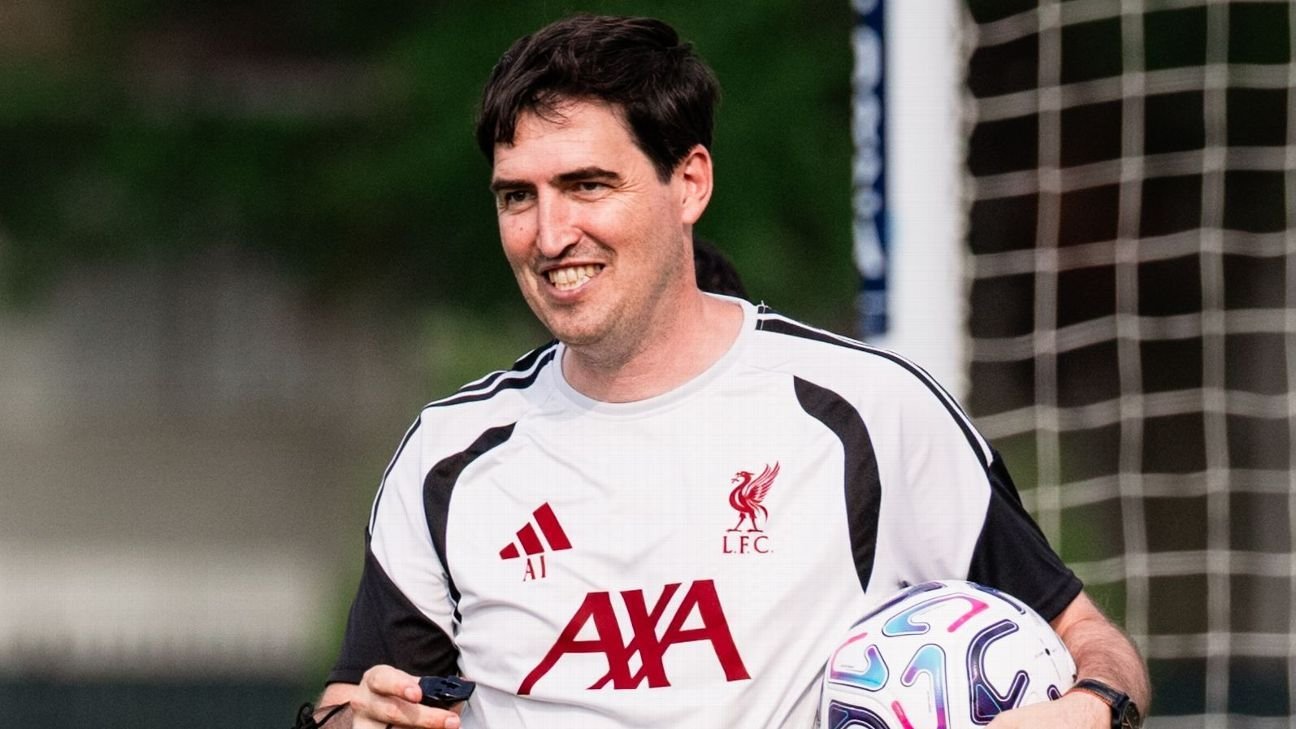
CHICAGO — One of the most revealing moments of Andoni Iraola’s character came during an interview when he chose not to answer a particular question.
In an extensive discussion with various reporters, including from ESPN, the newly appointed Liverpool manager engaged enthusiastically on a variety of subjects—from his early days with Athletic Club to the challenges of revitalizing Liverpool and the changing landscape of managerial recognition. However, there was one instance where he preferred to keep things under wraps.
When questioned about a thank-you letter he wrote to Liverpool after their unsuccessful attempt to recruit him as a player from Athletic Club in 2013, Iraola took a moment, smiled, and replied,
“I’m not sure I want to share this story so early in my career here. I’d prefer to win some matches first. It’s a nice story, but perhaps you can ask me again in a few months.”
As the story goes, that letter explained why he opted to stay with his hometown club, where he made over 500 appearances and eventually served as captain. The thoughtful nature of the letter left a lasting impression on Liverpool’s hierarchy, which likely explains his reluctance to delve into further details more than a decade later.
“I just don’t want to go into it at this stage,” he clarified. “It might come across as if I’m promoting myself. We need time to start winning games.”
This response showcased Iraola’s humility and practicality—traits he displayed throughout our conversation at the Liverpool team hotel in Chicago, where the club is currently in its first week of preseason training.
For the 44-year-old, this marks his inaugural chance to evaluate his squad up close, especially as key players, including notable signings from the previous summer like Alexander Isak and Florian Wirtz, will be part of the Reds’ initial 31-player traveling squad to the United States next week.
Just last year, Iraola was situated in a hotel just a few blocks away, participating in Bournemouth’s preseason preparations. He announced in April his intention to leave Bournemouth after leading them to a club-record sixth-place finish in the Premier League, which marked their first-ever qualification for the Europa League.
His stellar accomplishments during three seasons at Bournemouth and his tenure in Spain with Rayo Vallecano positioned him as a prime candidate for Liverpool’s managerial role following the exit of Arne Slot. Slot, despite securing the Premier League title during his first year in charge at Anfield, left in May amid a challenging second season.
“My experience with Bournemouth was very straightforward,” Iraola said. “I still maintain a solid relationship with everyone there. We both felt it was best to announce it at the right time for both parties, and they were aware of my decision for some time before. I chose not to make any decisions until the season concluded.
“We were competing for European spots and had the Champions League within reach in the final match of the season. I didn’t want to distract myself with other decisions until the season ended. That’s when I started to formulate my plans.”
Despite speculation linking him to various managerial openings at clubs like Chelsea, Crystal Palace, and Bayer Leverkusen, Iraola was appointed Liverpool’s head coach in June. He now faces the challenge of restoring unity to a team that appeared increasingly disjointed throughout the previous season.
The Reds’ lackluster title defense ended with a fifth-place finish, prompting the departure of several seasoned players, including Mohamed Salah, whose public disagreements with Slot added complexity to an already arduous season. Iraola’s arrival presents a moment for a fresh start, with hopes that his background as a player in Bilbao will allow him to resonate with Liverpool’s deep regional identity.
“Athletic Club is truly unique,” Iraola commented, referring to the club’s strict policy of recruiting only players from the Basque Country. “You must maximize every player at your disposal. You can’t frequently buy new talent or sell off key players.
“As a player, you have to give everything. The success of that policy hinges on 100% commitment. This creates a bond, and you see that they succeed and have never faced relegation.
“I see many similarities with Liverpool in that sense—this feeling of belonging and the unique culture. The connection to academy players and the atmosphere at Anfield is palpable. Liverpool is among the world’s elite clubs, and perhaps comparing it to Athletic Club isn’t entirely fair, but I do see common threads.”
Iraola is part of a remarkable era for Spanish coaching, with current holders of the World Cup, European Championship, Champions League, Europa League, Premier League, FA Cup, and Carabao Cup all being won under Spanish managerial guidance.
Next season in the Premier League, Iraola will compete against Arsenal‘s Mikel Arteta and Chelsea’s new manager Xabi Alonso, both of whom he has known since childhood. When asked what he believes is driving this Spanish coaching revolution, he said:
“People often ask me why so many Basque managers are reaching this level and why Spanish teams are enjoying success. I believe a collective mindset is crucial. Spain has never produced the best individual athletes. If you analyze sports like swimming or track and field, we don’t typically win many medals. However, in team sports, we excel. In football, basketball, handball, and hockey, we tend to perform well. The emphasis has always been on teamwork first.
“Take someone like [Manchester City midfielder and Spain captain] Rodri. He might not have scored or assisted, but he was integral to the team’s World Cup victory and was named the tournament’s best player. Team-first mentality has always been embedded in our upbringing.”
This team-centric philosophy is at the core of Iraola’s coaching strategy. He credits former Athletic Club coach Ernesto Valverde—who was also a candidate to succeed Jürgen Klopp at Liverpool in 2024—for shaping his management style.
“I had him during my academy years, and he was the one who gave me my debut with the first team,” Iraola recounted. “I also worked under him at the tail end of my time at Athletic Club. I learned immensely from him.
“His practicality stood out. He never made issues bigger than they were. He understood the players well. He maintained a firm stance on what he believed in. His treatment of players, whether they were getting minutes or not, resonated with me.”
Similar to his predecessor, Iraola’s unassuming demeanor contrasts sharply with Klopp’s charismatic presence, which still resonates with Liverpool fans. Unlike many of his contemporaries, Iraola doesn’t present himself as a football fanatic, often choosing to spend his free time cycling and with his family. Yet, he carries an air of quiet assurance, albeit somewhat perplexed by growing attention.
“It’s a strange situation for me because I’ve always believed that football revolves around the players,” he said. “When I first arrived in England, I remember the first few matches I didn’t join the players in acknowledging the fans [post-game], which was something [assistant coaches] Tommy [Elphick] and Shaun [Cooper] encouraged me to do.
2:31
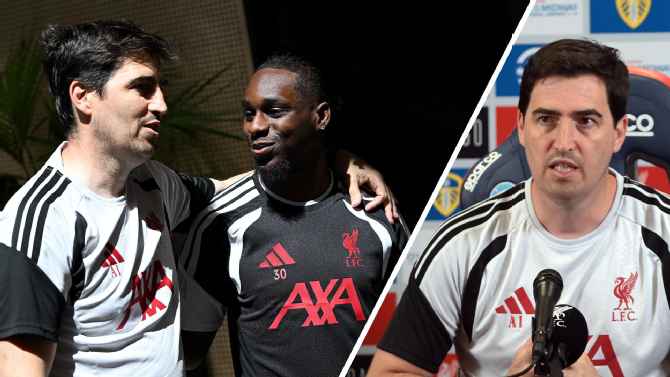
Iraola: Liverpool have to sign new players
“In Spain, it’s customary to allow the players to take the lead; they’re the ones who participated in the game, while we usually remain behind the scenes. In England, however, it seems the managers are expected to engage with the fans. So, I’ve adjusted to this cultural difference as I’ve settled in a new league.
“Now, I grasp what people expect. I always emphasize that we are here to support the players. They are the focal point; our role is to assist them, as they are the ones who will ultimately secure success. It’s quite clear that we’re less important than they are.”
At Liverpool, however, the ultimate accountability falls on the manager—in this case, Iraola. Despite his previous successes, it’s undeniable that stepping into the role at Anfield raises the bar in terms of expectations, both on and off the pitch.
“Right now, my focus is on assembling a cohesive and challenging team,” Iraola concluded. “If we can become that team I envision, success will follow. However, discussing long-term objectives is less important than actually executing the work needed.”
“It’s critical for the supporters to feel a connection with the team they see on the pitch. It’s not just about scoring beautiful goals; often, the supporters just want to see hustle, commitment, and a team that fights for every ball until the end. When they observe this dedication, it’s easier for them to rally behind the team. I’ll encourage my players to embody these qualities.”
He added: “Ultimately, the most crucial thing we can offer is our performance. It doesn’t matter if I communicate articulately or not; the fans essentially want to see the team perform well and achieve positive results. I’m cognizant that this represents 90% of my role.”
This insight is prudent. The fact that Slot was let go a mere year after winning the Premier League highlights how swiftly circumstances can change if standards slip, and Iraola is keenly aware that the pressure to perform at a club like Liverpool is both immediate and intense.
However, since that letter to Anfield 13 years ago, Iraola has established himself as a commendable figure in the football world. If he can replicate that finesse in his managerial role, perhaps he’ll be more inclined to share the full details of his journey next time.