



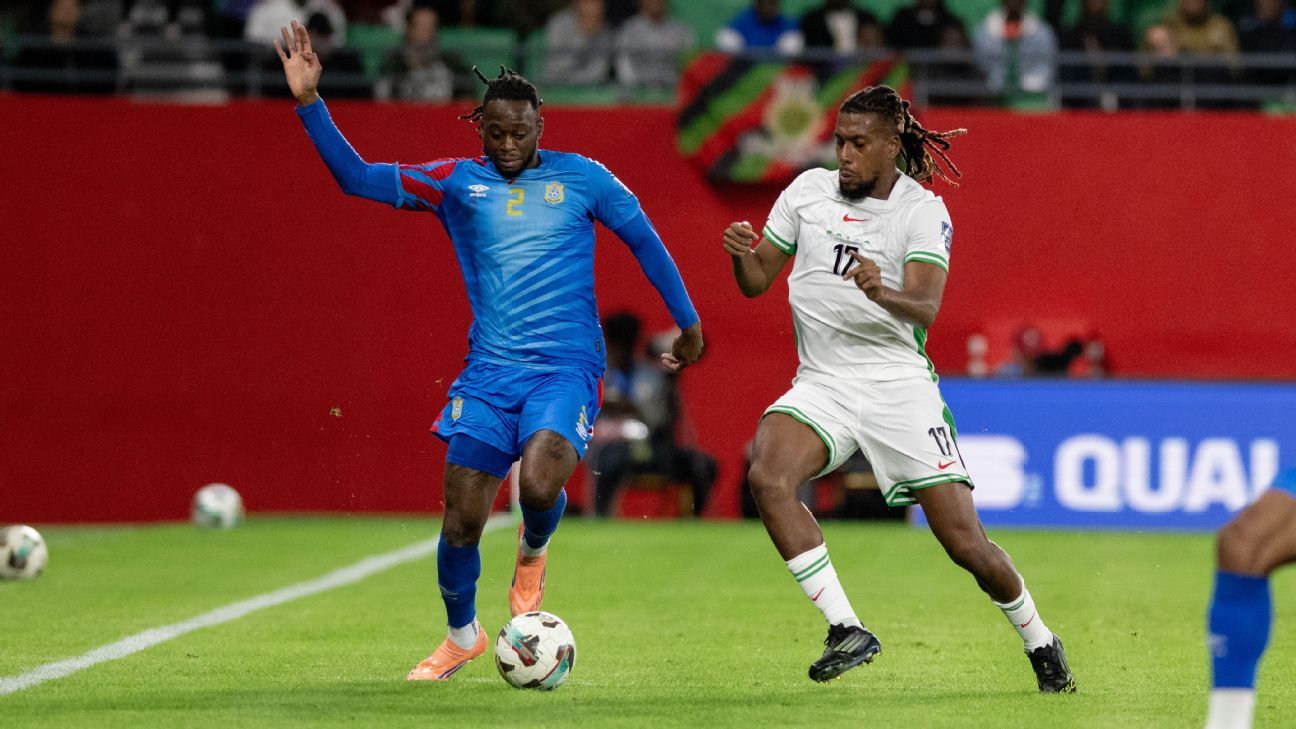
Nigeria is seeking to rejuvenate its chances of qualifying for the 2026 World Cup by formally complaining to FIFA regarding the participation of up to nine ineligible players by Congo DR in last month’s qualifying playoff.
The Nigerian Football Federation (NFF) has joined forces with Cameroon, which previously lodged a similar complaint to FIFA concerning the eligibility of players who switched their national allegiance from European countries to represent Congo.
– Nigeria’s ‘voodoo’ accusations were ‘nonsense’ – Former DRC coach
– What lies ahead for the DRC’s Leopards after surpassing Nigeria?
The Super Eagles faced a heartbreaking loss, succumbing 4-3 on penalties to Congo DR in the CAF Playoff final on November 16, which allowed the Congolese to progress to the FIFA intercontinental playoffs.
Following the draw, Congo DR is set to face either New Caledonia or Jamaica in the semifinals, with the winners advancing to compete for a final World Cup spot next year in the United States, Canada, and Mexico.
However, the NFF is now contesting the eligibility of several dual nationality players used by Congo DR in the World Cup qualifying matches, asserting they were not properly cleared to change their national affiliation.
Reports suggest that between six to nine players used by Congo DR during the qualifiers may have switched national allegiances but failed to comply with Congolese law, which requires them to renounce their European citizenship before representing the nation.
“According to Congolese law, dual nationality is not permitted,” stated NFF general secretary Mohammed Sanusi during a press conference on Tuesday. “Many of these players hold European passports, including some from France and the Netherlands. The regulations are clear. We cannot disclose more at this moment, but we have lodged our protest with FIFA.”
“Some players obtained their passports in only three months, which we believe constitutes a violation of the rules. This led us to take this action.”
While Congolese law does not recognize dual citizenship, FIFA’s rules only stipulate that players must hold the nationality of the country they represent to be deemed eligible. The players in question possess valid Congolese passports, which led FIFA to grant them eligibility.
However, Sanusi contends that FIFA may have been misled into granting these clearances.
“FIFA’s regulations differ from those in the DRC, which is why they cleared the players,” he explained. “FIFA guidelines state that as long as you possess a passport from your country, you are eligible to play. We maintain that FIFA was perhaps deceived as it is not their responsibility to enforce Congolese law. They relied on the documents provided to them, which is how they cleared the players. We assert that this process was fraudulent.”
FIFA has not yet replied to the complaint, but NFF officials informed ESPN that an investigation is underway, with a decision anticipated before the intercontinental playoffs in March.
It remains uncertain whether this appeal will succeed, but if it does, it could open the door for the Super Eagles to re-enter World Cup qualifying, providing a second chance in the same series.
In the previous round, South Africa was penalized for fielding an ineligible player and had three points deducted. Unfortunately for Nigeria, they were unable to capitalize on this opportunity and ended the group stage in second place behind Bafana Bafana.