



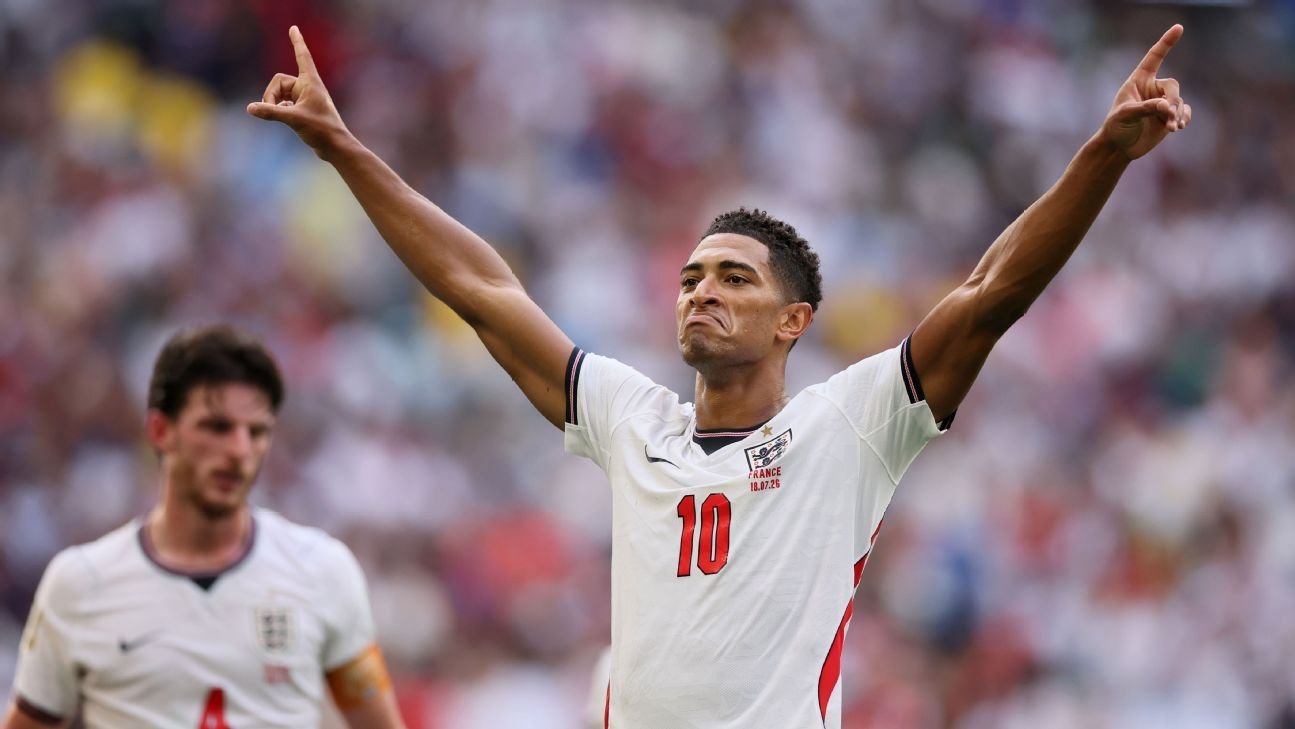
MIAMI GARDENS, Fla. — It all commenced with boos and concluded with a bronze medal. In between, the match unfolded as one of the most exhilarating encounters in World Cup history, challenging the notion that no one wanted to compete.
France, admittedly, seemed to wake up only in the second half after an atrocious first half where they found themselves down 4-0, displaying a lack of seriousness in what was supposed to be the third-place playoff.
However, they reorganized to expose England’s vulnerabilities, reminiscent of Argentina’s approach in the semifinals, as Kylian Mbappé spearheaded their offensive resurgence, bringing France within a goal with 24 minutes remaining. Yet, Bukayo Saka completed his hat trick, followed by a stunning solo effort from substitute Jude Bellingham, resulting in a 6-4 triumph for England, marking their best finish in a men’s World Cup since 1966.
No manager can be fully satisfied with a 6-4 final score, and if there were a second half, one might bet on France taking it. However, Thomas Tuchel began the evening facing jeers as the teams were announced and ended it as England’s most successful World Cup manager in six decades.
This achievement gives him a solid defense against the harsh criticism aimed at his strategy following England’s semifinal exit to Argentina.
“It’s the first medal in 60 years, the best World Cup performance abroad, so I hope the players can take pride in that with time,” Tuchel remarked post-match. “… The lows and the drama from the Argentina game were significant, but listen, that’s part of it. The optimal response is to react on the field and secure the next win. Everything else is mere talk, and talk doesn’t earn you points. You have to endure, be resilient, and maintain belief.”
“I’m glad we showed that reaction. We wanted it, and it was truly impressive.”
It’s important to note that such moments stem from the unusual nature of third-place matches. Do they carry any significance? Can real insights be gleaned from these encounters? After all, both teams are grappling with the disappointment of being eliminated.
Both squads made seven changes, but it was England who initiated the match with genuine intensity. Once Didier Deschamps, in his last game after 14 years with France, enacted significant halftime substitutions to remind his players that they were indeed part of a World Cup match, the entertainment value skyrocketed.
Attacking became synonymous with both sides; defense was largely ignored. They played a high line, accepting the risks. It felt like a video game on the easiest setting: nonstop running with the ball, outmaneuvering defenders, firing shots. The match saw an astounding 38 attempts, equally split, with 20 hitting the target. Bellingham’s goal could have won almost any match, yet it happened in a game that felt more like an afterthought of the tournament.
The cynical perspective may view this as England only showcasing their potential when the stakes are lower. Declan Rice opened the scoring within the first three minutes, while Ezri Konsa added a second, and Saka contributed two more to heighten the tally.
France’s dismal defending, particularly with their high defensive line, certainly played into England’s favor. England attacked with an intensity and determination that led to reflections on what could have been had they maintained this energy in their semifinal match against Argentina.
While England’s first-half performance deserves praise, their second-half display raises eyebrows. They dropped deeper, lost their imposing presence, and flirted with squandering a massive four-goal lead in the most absurd fashion.
Bellingham’s introduction in the 79th minute helped stabilize England’s performance. He orchestrated a brilliant pass to the left flank, where Djed Spence was fouled, allowing Saka to convert a penalty and elevate England’s lead to 5-3.
Following a response from Ousmane Dembélé, who scored a well-executed goal, Bellingham embarked on a mesmerizing run, showcasing why he’s regarded as one of the elite in the world.
The medal ceremony felt somewhat anticlimactic. As France departed the pitch, English FA chair Debbie Hewitt embraced Harry Kane and most of the players as they collected their bronze medals. The team posed for a photo, uncertain whether to kneel or crouch for the gathered media, as the protocol on such occasions remains ambiguous.
Regardless, the match provided ample entertainment. It’s an experience no one present will forget but also one that few would wish to relive.