



-

Jeff Kassouf
The NWSL Players Association (NWSLPA) has lodged a grievance against the league, claiming that the introduction of the new “High Impact Player” (HIP) mechanism breaches both the collective bargaining agreement (CBA) and federal labor laws.
This grievance, submitted this week, marks the second one the NWSLPA has initiated against the league in just six weeks. The previous grievance remains unresolved.
According to a news release from the NWSLPA on Wednesday, the union is seeking the immediate repeal of the HIP Rule, a commitment from the league to engage in good faith negotiations regarding any proposed player compensation rules prior to their implementation, and restitution for affected players due to the league’s unilateral decisions.
“This was a unilateral decision by the League to alter how a player’s fair market value is assessed,” said NWSLPA executive director Meghann Burke. “We agree that increasing investment in player compensation is vital for maintaining competitiveness in the global labor market. The solution is straightforward: raise the salary cap through collective bargaining.”
“The league cannot unilaterally create a pay system outside of the salary cap that was never negotiated, then restrict access to compensation through league-controlled criteria that excludes certain players.”
Later in the day, an NWSL spokesperson stated to ESPN that the new pay mechanism for the league’s top talents is essential to prevent high-profile players from migrating to other leagues.
“It’s crucial for the NWSL’s growth and stability that its clubs can compete on an international level for talent against the world’s leading soccer clubs,” the spokesperson explained. “The HIP Rule is a focused mechanism designed to enhance compensation for all players on the roster, while allowing NWSL teams to attract players with exceptional skills who can elevate the league’s competitive and commercial profile.”
“We disagree with the NWSLPA’s claims that challenge the NWSL’s right to implement the HIP Rule. The NWSL has adhered to the CBA and federal law and will defend these positions through the grievance process.”
Last month, the NWSL revealed the High Impact Player (HIP) initiative, allowing teams to expend up to $1 million over the salary cap on specific players who fulfill certain criteria established by the league’s board.
Just five days prior to this announcement, NWSLPA executive director Meghann Burke had expressed opposition to the rule, suggesting it was an attempt by the league to “control and interfere” with compensatory decisions for certain players.
The union contends that any such rule should be subject to collective bargaining. They proposed an alternative to the league, suggesting a $1 million increase in the salary cap without additional conditions, thereby granting teams the flexibility to allocate funds as they wish across all players.
“We believe determining a player’s value—both in terms of performance and market factors—is complex,” Burke stated to ESPN in December. “This isn’t simply a matter of a few bullet points. Teams should have the authority to make those evaluations, as we agreed to a free agency system that operates on free market principles.”
The CBA stipulates that “the NWSL may, at its discretion and after consultation with the NWSLPA, lower or eliminate the salary cap charge for certain roster classifications.”
However, the specifics of what “consultation” includes remain undefined, and Burke asserts that the players’ association does not categorize the HIP rule as a roster classification.
Conversely, the NWSL maintains it qualifies as such and believes it has the authority to proceed with the implementation of the rule despite the union’s opposition.
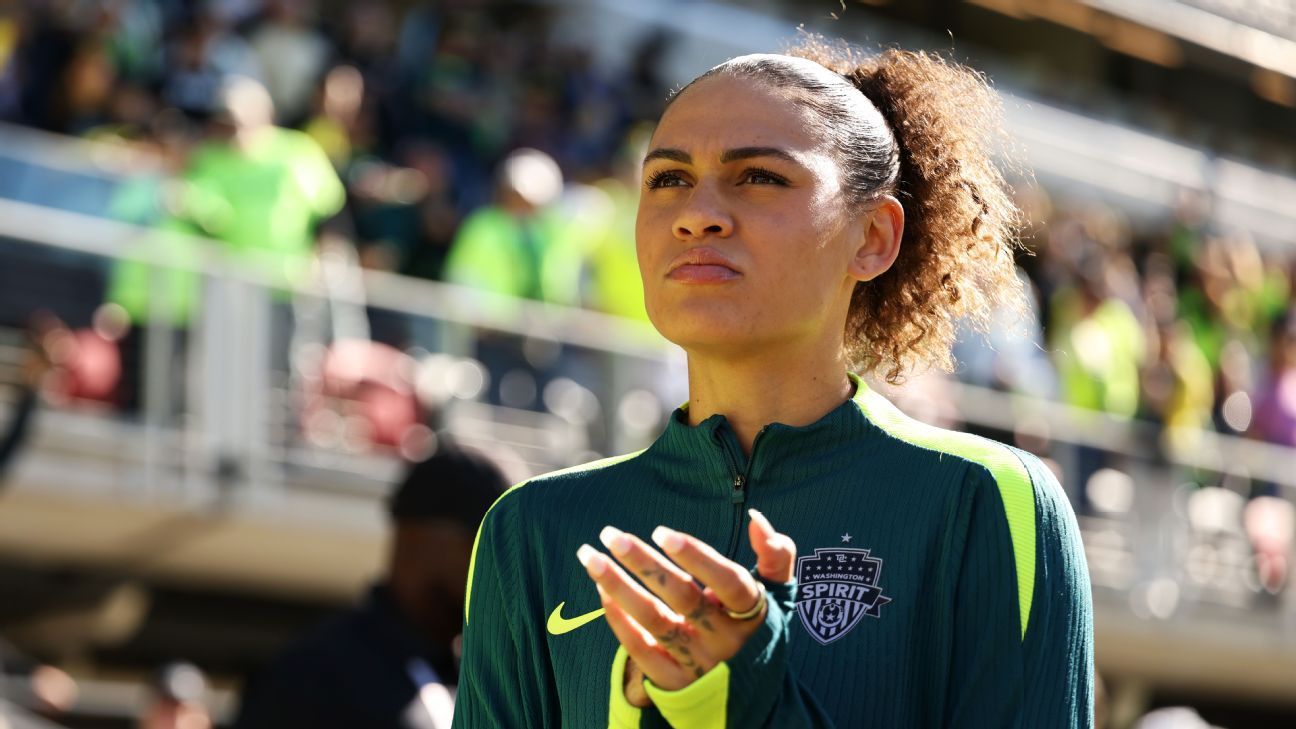
Sources informed ESPN that discussions about the HIP rule took place throughout 2025, with urgency around its implementation growing recently, particularly concerning the future of prominent United States women’s national team forward Trinity Rodman.
Rodman is seeking a fair market salary which she and her team, the Washington Spirit, believe to be at least $1 million annually.
Under the existing $3.5 million hard salary cap from 2025, the Spirit are unable to match other teams’ offers for Rodman. In late November, they negotiated a creative solution to backload a four-year contract, banking on a significant salary cap increase based on revenue from a new media deal.
NWSL commissioner Jessica Berman rejected this contract, claiming it violated the “spirit” of the regulations and accusing Rodman of attempting to circumvent the salary cap.
Following this, the NWSLPA filed a grievance on Rodman’s behalf, declaring that the league’s rejection constituted a “flagrant violation” of her free agency rights and breached multiple sections of the CBA.
Rodman’s previous contract lapsed on December 31, and she is now a free agent.
NWSL teams are slated to begin preseason reporting on Thursday, and Rodman is scheduled to join the USWNT for training camp next week, her first since April.
As per the CBA, the NWSL is obliged to furnish a written response affirming or denying the union’s grievance. Sources have confirmed to ESPN that the league recently issued this response after an extension was granted for the holiday period, though the content of that response remains undisclosed.
With the formal grievance filed against the HIP rule, the league is similarly required to respond again.
The next steps involve a review by a grievance committee comprised of one representative from the league and one from the players’ association. If a resolution is not achieved, the dispute will proceed to arbitration.