



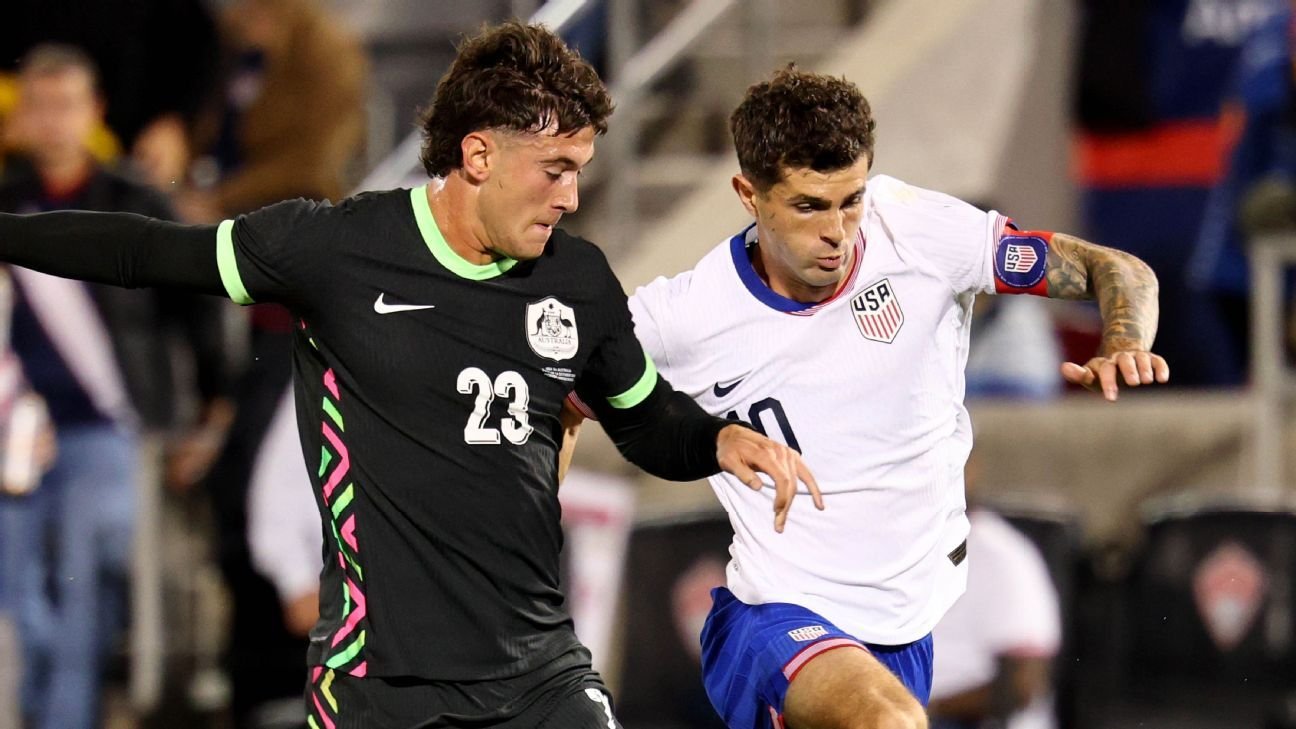
The U.S. men’s national team continues their FIFA World Cup journey on home ground, facing off against AFC representatives Australia at Seattle Stadium (Lumen Field) this Friday.
Coach Mauricio Pochettino’s squad kicked off their World Cup campaign successfully, securing a 4-1 victory over Paraguay in their opening match at Los Angeles Stadium (SoFi Stadium). Meanwhile, Australia earned a 2-0 win against Türkiye in Vancouver. Although the two teams met in October in a friendly match in Colorado, which the U.S. won 2-1, this upcoming game will see both sides entering under different circumstances, with a spot in the round of 32 on the line.
ESPN’s Jeff Carlisle and Joey Lynch analyze the matchup between the two teams in Seattle and identify which side might hold the upper hand.
 Australians Look to Leverage Height and Speed
Australia heads into the match buoyed by their upset win over Türkiye, where coach Tony Popovic surprised many with his lineup choices while executing a brilliantly organized defensive strategy.
Employing a 3-4-2-1 formation while in possession and a 5-4-1 setup defensively, the Socceroos adopted a proactive approach by pressing Türkiye in their own half. However, when Türkiye pressed forward, Australia solidified their defense, limiting central space and forcing their opponents to the flanks.
The Australian defensive unit, featuring several players over 6 feet tall, including the towering Harry Souttar, effectively dealt with aerial threats. When they regained possession, the Australians sought quick transitions aimed at getting striker Mohamed Touré and winger Nestory Irankunda behind the defense.
Irankunda showcased his skill and decisiveness by scoring the opening goal, which is crucial given that the Socceroos’ strategy relies heavily on game context—they are less comfortable taking the initiative when having to control possession.
Pochettino will need to devise a plan to contain Irankunda, a former Bayern Munich prospect known for his speed and ability to exploit spaces left by defenders, particularly against the Tim Ream-led backline.
Additionally, neutralizing Souttar’s presence in defense will be crucial, as he has quickly become one of the top defenders on the World Cup stage after overcoming multiple achilles injuries.
This match represents a fresh challenge for the U.S., facing a physically strong opponent that matches or exceeds their own prowess. Given their struggles with altitude during the previous friendly, Australia’s nearly month-long training camp in Florida may lend them a fitness advantage going into this contest.
Despite attempts to downplay the pre-match rivalry, Australians likely feel motivated by the comments from pundits in both countries. Previous dismissals from Hakan Çalhanoğlu regarding their team’s capabilities fueled their recent victory, creating a sense of unity and determination among the players.
 U.S. Must Sustain Momentum, Pulisic’s Status Uncertain
The U.S. delivered a phenomenal performance in their World Cup opener, overpowering Paraguay with a 4-1 score. They demonstrated dominance on both offense and defense throughout the match. However, as soon as the game concluded, the focus shifted to Australia, as the team understood that one win isn’t enough and that Australia will pose a more significant challenge than Paraguay.
This victory came at a cost, as U.S. forward Christian Pulisic aggravated a pre-existing calf injury just days before the match. Since then, he has not participated in full training sessions with the team.
Pulisic’s condition is currently labeled as “day-to-day,” leaving uncertainty about his availability for the match against the Socceroos. This is critical since the team’s performance visibly declined after he was substituted against Paraguay.
Who might fill in for Pulisic? Gio Reyna made a significant impact by scoring off the bench against Paraguay, though he has not completed a full match for club or country since December. Meanwhile, Alejandro Zendejas stands out as a likely replacement, although his game time has been limited in the lead-up to the World Cup, with options like Tim Weah and Brenden Aaronson also available.
In many ways, the U.S. faces similar challenges against Australia that they encountered with Paraguay. Australia is also known for being physically imposing with a robust defense and effective counterattacking capabilities. The threat posed by Irankunda, in particular, looms large over the U.S. defense.
The U.S. typically employs a hybrid tactical system, defending with a low block of four players, while allowing outside back Antonee Robinson to join the attacking phase. The U.S. excels in wing play, and despite the towering Australian defenders, they will likely seek to exploit space on the flanks to create goal-scoring opportunities.
This encounter will be intriguing to see how effective the U.S. press will be against Australia, particularly following its success against Paraguay. However, there have been instances when the U.S. struggled to defend against quick transitions.
Will Pochettino decide to risk exposing his defense to the quick runs of Irankunda and Touré, or does he choose to trust his squad’s attacking aptitude demonstrated against Paraguay? Navigating this risk-reward scenario will be key to determining the outcome of the match. — Carlisle