



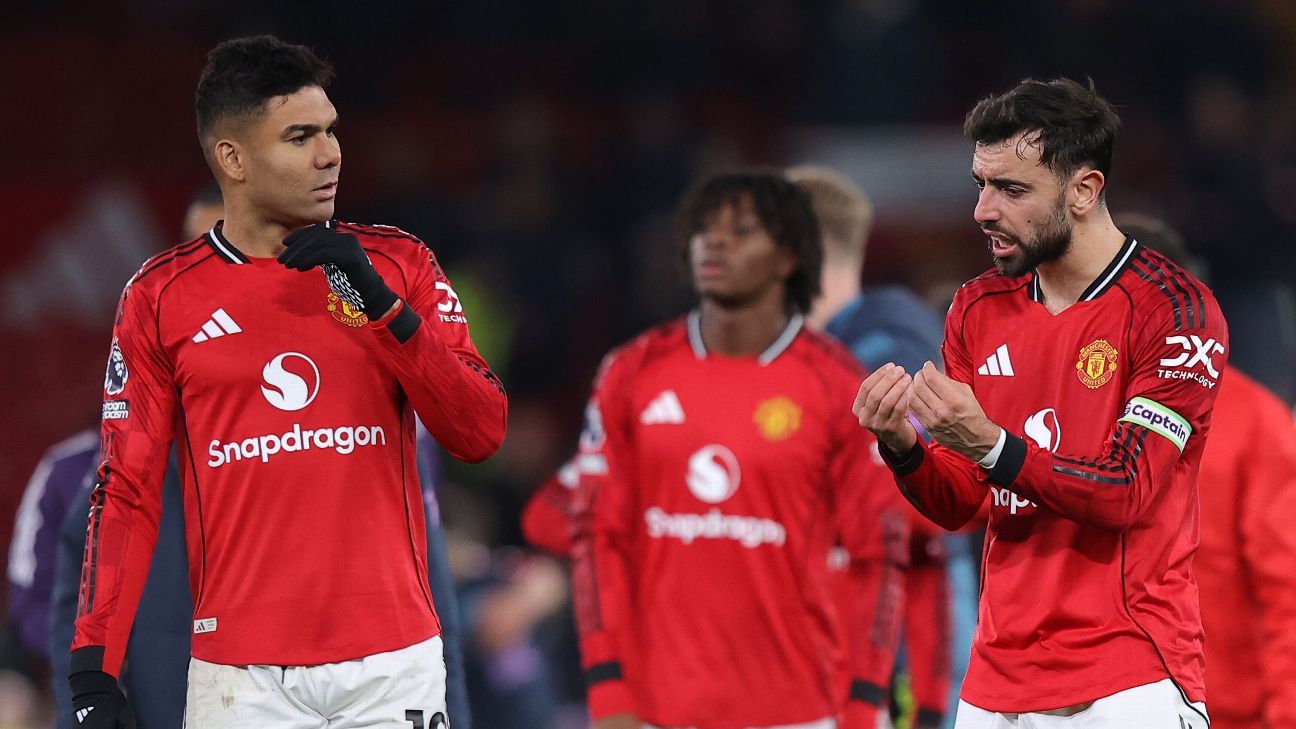
Manchester United has concluded its head coach search, appointing former midfielder Michael Carrick as the interim manager at Old Trafford for the remainder of the season. However, the challenge of finding a replacement for Ruben Amorim is just one of several critical issues the club is currently facing.
With Carrick now at the helm, CEO Omar Berrada and director of football Jason Wilcox will need to concentrate on summer recruitment and identifying a permanent manager for the 2026-27 season.
Additionally, the future ownership of the club remains uncertain due to a clause that allows the Glazer family, the majority owners based in the U.S., to sell without needing the minority shareholder Sir Jim Ratcliffe’s approval.
While Carrick may bring some stability to on-the-field affairs, the club is still in a transitional phase off the pitch. ESPN’s Mark Ogden and Rob Dawson delve into what to expect from the club moving forward.
– Why did Man United, Chelsea, Real Madrid fire their coaches? Culture
– A loyal, safe option: How Man United chose Carrick as head coach
– Predicting the Premier League table: How will all 20 teams finish?
With Carrick on board: What are the best and worst-case scenarios for him?
Ogden: Let’s discuss the worst-case scenario first, as it’s the most pressing issue for Carrick. If he fails to ignite a change in performance — a challenging task given his first two fixtures against Premier League leaders Manchester City and Arsenal — United could see themselves slipping further down the table, possibly missing out on European competition altogether.
The best-case scenario? Carrick could steer United back to winning ways and achieve a top-four finish, leading to calls for him to be offered the job permanently.
I wouldn’t dismiss this possibility; just because Ole Gunnar Solskjaer’s shift from interim to permanent manager soured doesn’t mean Carrick will face the same fate. However, significant challenges lie ahead as United currently appear far from Champions League contenders.
Dawson: A best-case outcome for United would be qualifying for the Champions League. Finishing in the top five should suffice (thanks to European Performance Spots), and considering they are now in seventh, just one point behind Brentford, this is certainly within reach.
If Carrick achieves this, some fans will likely advocate for him to remain as head coach in the summer, although club management looks to be keeping their options open.
Conversely, the worst-case scenario could see results plummet. United had only secured one win in seven games before Carrick’s arrival, and the situation could deteriorate further. Without cup runs to bolster motivation, Carrick will depend heavily on the players’ resolve to pursue European qualification.
There’s a historical warning here; under Ralf Rangnick towards the end of the 2021-22 season, results dropped sharply after exiting the Champions League, culminating in five losses in nine games and a sixth-place finish.
Ogden: As for Marcus Rashford, his loan at Barcelona marks a definitive end to his time at United. Even if the club appoints England coach Thomas Tuchel after the World Cup, the club appears ready to sever ties with him after numerous off-field controversies. They are likely to pursue a permanent deal with Barcelona, who hold a €30 million option to buy him at the season’s end.
Rashford’s performance at Barcelona hasn’t prompted regret from United regarding his departure; thus, both parties may be inclined to move on.
As for Kobbie Mainoo, he will remain with United for now, but his future may be uncertain with a contract expiring in 2027.
At just 20 years of age, he has the time to improve, but if he fails to capitalize on his chances to play, a satisfying new contract may be out of reach.
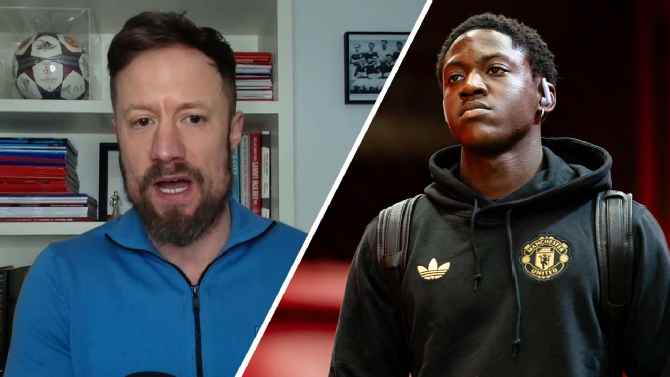
1:52
Does Amorim’s exit offer Mainoo & Rashford a future at Manchester United?
Rob Dawson explores whether Kobbie Mainoo and Marcus Rashford can revitalize their careers at Manchester United post-Amorim.
Dawson: While there’s always a slim chance for Rashford, the overall sentiment leans towards his time at United being effectively over. The decision to terminate Amorim was supported by Wilcox, Berrada, and Ratcliffe, indicating a lack of reversed fortunes for Rashford.
There’s also a possible downside: if Barcelona’s financial circumstances become troublesome for United, and if the next permanent manager desires to offer Rashford a fresh start, the equation could change — albeit under uncertain conditions.
As for Mainoo, his prospects for the remainder of the season should improve with Carrick’s preference for a three-man midfield, but his future beyond the summer remains uncertain.
There’s been minimal advancement regarding a new contract, and should a major offer for the academy prospect materialize, it may be difficult for United to turn it down, especially with expectations for at least one new midfielder coming in the summer.
Will Wilcox and Berrada face scrutiny for Amorim and what follows?
Ogden: The scrutiny directed towards Wilcox and Berrada will largely depend on Carrick’s performance in the coming months. Should Carrick deliver results and a stable environment, they can proceed to search for a new, more reputable manager. However, the Amorim appointment was a misstep, and Wilcox and Berrada must bear some of the responsibility for that decision, particularly for retaining him for too long.
If the Carrick decision also proves to be misguided, then serious concerns will arise about their capability to find the right coach for a forward trajectory come summer. Ratcliffe, who oversees day-to-day operations, is not known for his patience, placing significant pressure on Wilcox and Berrada to deliver success within the next six months.
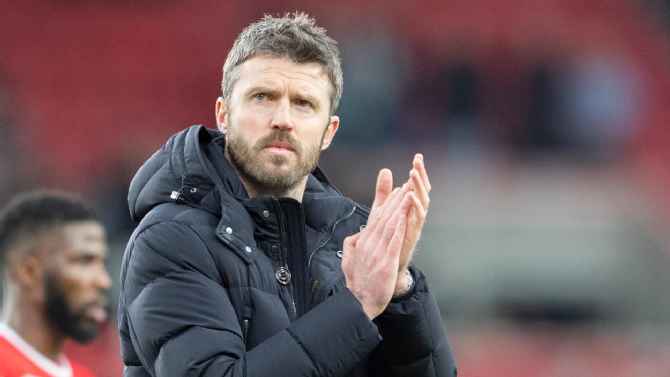
1:41
Is Michael Carrick the ‘least worst’ candidate for Man United?
Mark Ogden discusses the reports surrounding Michael Carrick’s potential interim role at Manchester United.
Dawson: Wilcox’s position as the director of football is under increased scrutiny following Amorim’s exit. Many fans are concerned he has too much influence over managerial decisions, which may not be positive for the club.
The feeling is that the former head of Manchester City’s academy is making all the critical decisions at Old Trafford, and he needs to demonstrate he can make the right calls moving forward.
Carrick’s performance over the next four and a half months is crucial, as is the process of selecting the next full-time manager. Currently, there’s a notable lack of trust in Wilcox among supporters, which can only be rectified through consistent, positive outcomes.
With Ratcliffe’s acquisition of a 29% stake in United in 2024, the terms allow the Glazers to force Ratcliffe to sell his shares if they choose to sell the club. What are their plans?
Ogden: Answering this is tricky, as the Glazers have always kept their intentions closely guarded.
The “drag-along rights” included in Ratcliffe’s acquisition allow the Glazer family to sell the club if an offer of $33 per share is presented after August 2025. Currently, this seems unlikely since shares are trading around $16.60 each.
Although the February 2024 agreement was meant to have Ratcliffe’s INEOS take charge of football operations, the reality differs significantly, as Ratcliffe’s team has made substantial changes, leaving the Glazers less involved.
This has turned the Glazers’ stake into a financial investment rather than an emotional one, suggesting they may entertain selling if the right price is offered — especially if someone meets that $33-per-share threshold, although finding a buyer appears challenging.
Dawson: The Glazer family has consistently prioritized profit above all else, which remains unchanged. The arrangement with Ratcliffe has worked to their benefit; they received a substantial payout while maintaining their lucrative investment, deflecting attention and oversight of club management onto Ratcliffe and INEOS.
There have been rumored bids from the Middle East, but concrete details on such proposals are scarce.
In terms of signings, what does this team need, either now or in the upcoming summer transfer window?
Ogden: United will not be making any moves during this transfer window. They aim to recruit two young, dynamic midfielders in the summer without compromising their budget by making January purchases.
Among their targets are Nottingham Forest’s Elliot Anderson and Crystal Palace’s Adam Wharton, both of whom may likely attend the World Cup with England, which could heighten their transfer fees and create fierce competition for United’s signatures.
In addition to midfield concerns, the need for reliable full-backs is critical. With Amorim’s departure, the focus on wing-backs has diminished, allowing United to prioritize defenders who excel in their fundamental duties.
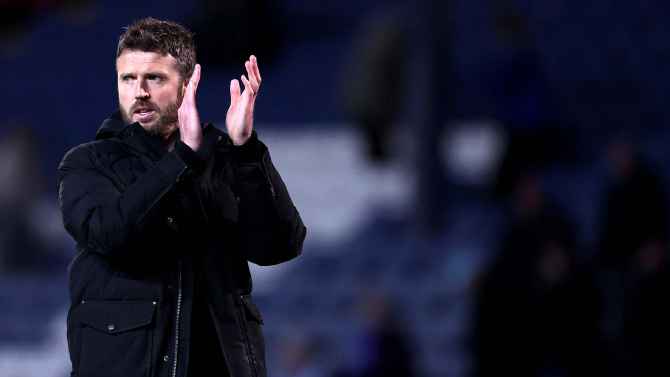
1:10
Will Michael Carrick be a successful interim manager at Man United?
Gab Marcotti and Julien Laurens discuss the potential effectiveness of Michael Carrick as Manchester United’s interim manager.
Dawson: The midfield situation requires a comprehensive rework come the end of the season.
Casemiro is expected to depart, and Manuel Ugarte is already seen as expendable. There’s also a chance Bruno Fernandes could opt for a move elsewhere.
United strives to bring in at least one high-caliber midfielder, accompanied by a more budget-friendly second option.
One could argue that a full-back and center-back are also needed. The situation regarding wingers is intriguing; Amorim’s 3-4-2-1 configuration didn’t rely on traditional wingers, but nearly every other manager employs a variant of 4-3-3 which prominently features wingers.
The pivotal question: Who will United target as their permanent manager and why?
Ogden: Thomas Tuchel stands out as a candidate who meets almost all criteria. With substantial experience at prominent clubs like Dortmund, PSG, Chelsea, and Bayern, along with a track record in the Premier League, he has secured prestigious titles, including the Champions League. His availability this summer is promising, given his England contract will expire post-World Cup.
However, Tuchel’s demanding nature doesn’t align with United’s preference for a collaborative coach willing to cooperate with Wilcox and Berrada. United may need to adapt their strategy to suit Tuchel or seek a less divisive alternative.
Mauricio Pochettino shares similar qualities but has been notably more diplomatic throughout his career. Meanwhile, Kieran McKenna, now managing Ipswich, and Oliver Glasner from Crystal Palace represent less prominent yet applauded candidates at Old Trafford.
While Tuchel would be the optimal choice, Carrick can’t be ruled out if he performs well, given that personality traits and financial considerations will significantly influence the final decision for the club’s next head coach.
Dawson: Ultimately, the critical issue for Ratcliffe, Berrada, and Wilcox is not merely identifying a preferred candidate but understanding their desired direction. Is the goal to appoint a high-profile manager who can deliver immediate victories, or do they want a young head coach who fits within the existing structure?
Hiring Tuchel necessitates accepting his demands around recruitment and respect for his training methods. Conversely, bringing in McKenna while expecting rapid championship competitiveness would be illogical. Given the struggles experienced under Amorim, selecting someone with Premier League experience would be prudent. What’s crucial is that the leadership defines their strategic vision before aligning that with the right managerial candidate.