



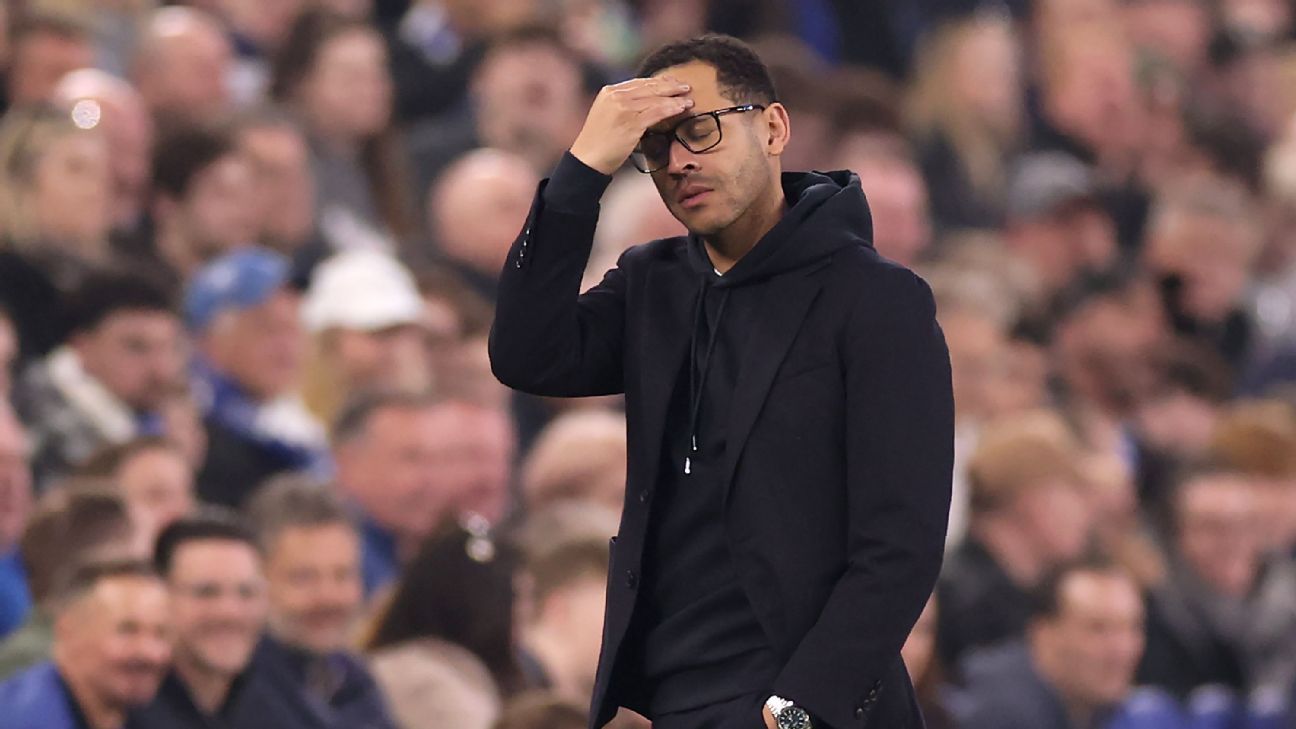
Liam Rosenior’s tenure as Chelsea head coach lasted only 106 days, and it became apparent on his second day that he was not suited for the role. In reality, it was evident from the start, given his limited top-level coaching background and the overly optimistic view from BlueCo, Chelsea’s ownership, that Rosenior could smoothly transition from coaching partner club Strasbourg to managing a team filled with high-profile players at Stamford Bridge after Enzo Maresca’s firing.
On the second day of his tenure, following his first training session with the team, Rosenior opted out of selecting the lineup or sitting on the bench during a 2-1 defeat to local rivals Fulham, instead choosing to take a laid-back position in the stands alongside Chelsea co-owner Behdad Eghbali.
This was just the beginning of a series of missteps by Rosenior. His faux pas became more pronounced and embarrassing: he awkwardly stated that his players were “respecting the ball” while surrounding referee Paul Tierney in a pre-match huddle, made a peculiar claim about “managing the school team when I was 11,” and handed Alejandro Garnacho a tactical note during the 85th minute of an 8-2 aggregate loss against Paris Saint-Germain.
Rosenior’s blunders, coupled with his jargon-filled references to “alignment” and “process,” made him a target of ridicule, even drawing mockery from former teammates who were baffled by his transformation. Reports suggest that the criticism deeply affected Rosenior, compelling him to confront his detractors, surprising many with his vulnerability.
So, why did that early mistake at Fulham matter? It underscored his inexperience and failure to grasp that as Chelsea’s head coach, stepping into the shoes of legends like José Mourinho and Antonio Conte, every action and word is scrutinized beyond anything he had encountered in his career before.
Having taken over from a predecessor who had not won in the last four games, a more experienced coach would have sought to assert authority immediately, proving to skeptical players and fans that he possessed the necessary skill set for the demanding Chelsea role. Instead, Rosenior remained passive while fans vented their frustrations at the owners.
He conveyed an aura of confidence in his abilities without convincing anyone of his actual competence. After a dismal stretch that included seven defeats in eight matches and a streak of five consecutive Premier League losses without a single goal, it became clear that the players were not swayed by their untested young coach.
During his short reign, Chelsea failed to secure a win against any of their traditional Big Six rivals or leading European clubs. Rosenior faced three losses to Arsenal, endured an embarrassing defeat in the Champions League to PSG, and suffered losses against Manchester City and Manchester United.
Rosenior also made headlines for handing Enzo Fernández an internal two-match ban for discussing a potential move to Real Madrid, while Marc Cucurella faced no repercussions despite echoing similar sentiments about Barcelona and questioning Maresca’s sacking.
Rosenior labeled the ban on Fernández as a “club decision,” suggesting it was influenced by higher-ups, further undermining his authority with players and fans alike. The very structure he had agreed to work within was ultimately a hindrance to his success.
BlueCo’s vision, spearheaded by sporting directors Paul Winstanley and Laurence Stewart, views the head coach as merely a component in a larger system.
This is reflected in the appointments of Maresca and Rosenior, both selected from relative obscurity to fit into the club’s framework. Following a successful initial season that included two trophies and Champions League qualification, Maresca was dismissed after demanding greater input in recruitment, which clashed with the BlueCo philosophy.
Rosenior was unlikely to adopt the confrontational stance of Maresca, which may have suited the club, but alienated supporters who perceived him as a “yes man.” The players recognized that he was not the ultimate authority but rather a figure appointed by superior decision-makers. Those very decision-makers are now likely to face increased scrutiny from the owners following the fiasco that Rosenior’s appointment has become.
Sources indicate that this failed experiment, which could jeopardize Chelsea’s Champions League aspirations, may catalyze a reassessment of the BlueCo approach, with an experienced coach now seen as essential. Figures like Xabi Alonso, Cesc Fàbregas, and Andoni Iraola are reportedly being considered, alongside Frank Lampard—who has previously managed Chelsea—after his success in guiding Coventry City to Premier League promotion.
However, by diluting the head coach’s role through the ill-fated hiring of Rosenior, who was evidently out of his depth, Chelsea has created a credibility issue of its own making.
Rosenior’s failure lays largely with his inadequacies, but those responsible for his hiring may bear even greater culpability than the coach who lasted merely 106 days.