



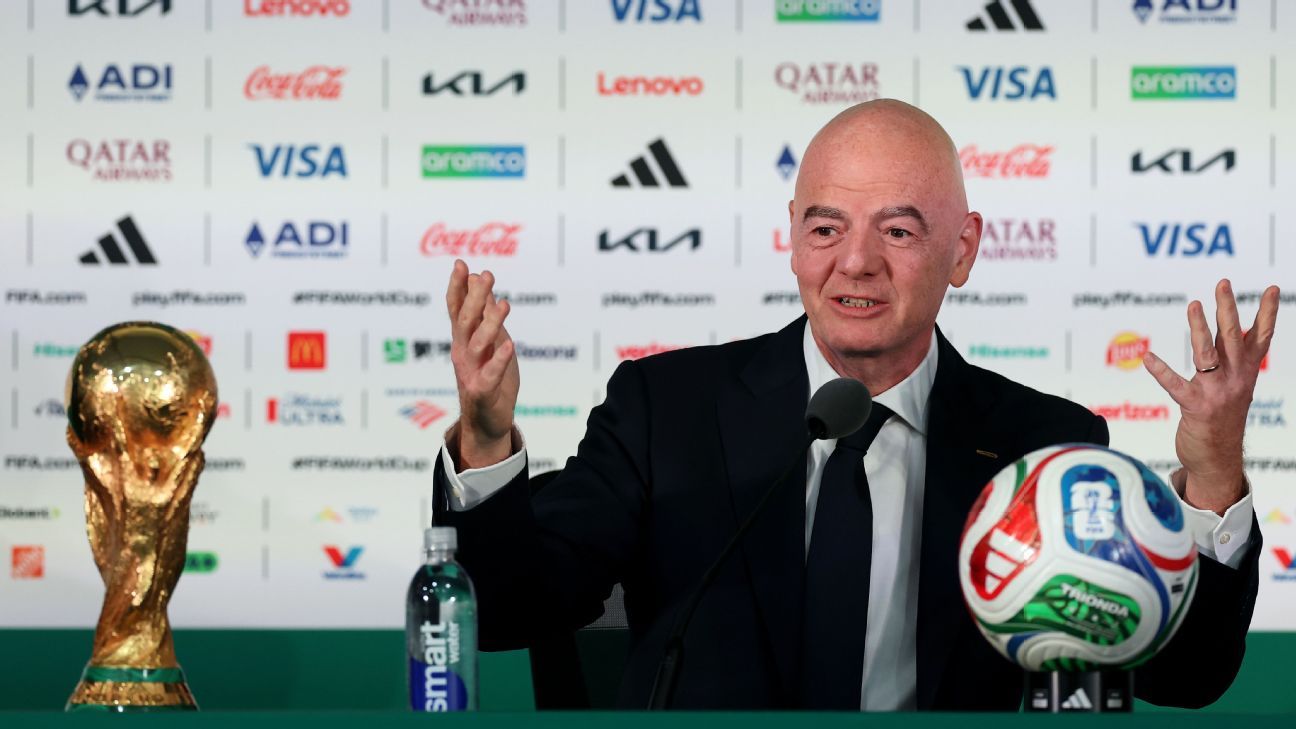
The FIFA World Cup 2026 is set to commence this Thursday, but in the lead-up to the tournament, numerous concerns have been raised. Issues such as travel difficulties, climate challenges, and an overloaded match schedule have contributed to waning excitement for this premier soccer event.
Yet, for each of these significant complaints, there exists a compelling counterargument, suggesting that the tournament could still deliver excitement on the pitch as we approach the crowning of the champion on July 19.
Complaint 1: The Expansion to 48 Teams
This expansion is believed to dilute quality, complicate the format (with a staggering 72 matches—more than the entire Qatar World Cup), and create a group stage devoid of jeopardy (a team could advance after winning just one match). Moreover, fans face an overwhelming schedule of four matches a day for the first couple of weeks.
Why watch teams you’re indifferent to, featuring players you might never see again? What excitement is there in knowing that a team can lose two out of three games yet still progress? And let’s be honest—who can handle eight hours of soccer daily for nearly three weeks? Isn’t that a bit excessive?
– World Cup Predictions: Our picks for winner, Golden Ball, and more
– Ian Darke’s World Cup preview: Teams to watch, favorites, and … Brazil to win?
– Complete fixtures, results, and updates from the 2026 World Cup
Counterargument: While it’s true that 48 teams complicate the format, FIFA’s rationale—promoting inclusion—could augment the tournament’s appeal. Yes, cynics might view it as a ploy to gain votes and generate sponsorship revenue. However, the situation isn’t as dire as it may seem. After all, we still revel in the unpredictable magic of the FA Cup.
Does it truly matter if giants like Argentina or France can afford to stumble in the group stage? Don’t you want to witness the likes of Lionel Messi and Kylian Mbappé in the knockout stage? Furthermore, the stakes will still be high—just not necessarily for the top-tier squads.
On to the schedule overload, I get it—it can be too much for many. But for devoted fans, the opportunity to savor the game they adore is unparalleled.

0:46
Nicol: I don’t think Spain are World Cup favourites
Complaint 2: Elevated Prices and Ticket Scalping
The terms “dynamic pricing” and “legal ticket scalping” signify that ticket prices—which were already exorbitant—are now outrageously high. The average fan feels priced out due to FIFA and ticket resellers’ greed.
Counterargument: It may be more accurate to label their actions as “irrational” rather than purely “greedy.” Despite the tournament starting this week, it still hasn’t sold out entirely. FIFA touts near-sellout status, but that seems lackluster when considering that the combined population of the three host countries is almost half a billion and there has been a decade of hype.
Regarding ticket resellers and dynamic pricing, the market often corrects itself. For example, last summer’s Club World Cup semifinal ticket prices plummeted from $473 to as low as $13.40 within just days. The possibility of resellers being left with thousands of unsold tickets, compelled to sell them at rock-bottom prices, is a thought that gives some solace, right?
Complaint 3: Travel Barriers and Safety Concerns
With travel costs being what they are, many fans face complex bureaucratic hurdles just to attend the World Cup. Even those who think they’re cleared for travel sometimes find their authorizations canceled last minute.
Counterargument: Indeed, ticket price inflation is frustrating, and this trend seems typical for major sporting events. As a frequent attendee of Champions League finals, I can attest to the exorbitant prices, having experienced similar in other tournaments.
The silver lining is, much like with dynamic ticket pricing, prices can fluctuate dramatically. Many U.S. hotels report bookings falling short of expectations, leading to significant price cuts.
As for those opting out of travel? That’s unfortunate, but reality can be harsh. One of the qualified nations, Iran, is currently embroiled in conflict with one of the host countries, and two competing nations, Haiti and Iran, face travel restrictions to the United States. Politicians often make decisions based on their constituents’ concerns, which doesn’t always align with the interests of a major sporting event.
Fortunately, both Mexico and Canada are also hosting. Moreover, the U.S. has many immigrant communities whose enthusiasm for the event ensures a cheering crowd for all participating nations.

1:58
Robson: Messi has ‘far more’ to offer than Ronaldo at the World Cup
Complaint 4: Host City Climates Affecting Play
Many are concerned that the heat and humidity in numerous host cities will hinder the quality of play, attributing potential slow-paced matches to cooling breaks and lackluster intensity.
Counterargument: This complaint seems to come up frequently. The World Cup—barring the exception of Qatar—is typically held in June and July when temperatures are high in the northern hemisphere. Both teams play under similar conditions, making it less of a disadvantage.
Cooling breaks have been implemented since the 2014 World Cup and are also found in leagues like the Premier League and Champions League finals; fans can generally adapt.
While matches may lack the intensity of high-stakes Champions League games held in cooler weather, the essence of the World Cup brings its own unique excitement. Until we determine that it must only take place in temperate months (which may give FIFA president Gianni Infantino a perplexing idea), this is simply the reality of summer tournaments.
Complaint 5: Quality of Playing Surfaces
Eight out of 16 venues have natural grass laid over synthetic turf, including where the finals and key matches will occur. Players like Harry Kane criticized the “dry” and “sticky” pitch during England’s recent friendly, while a viral moment showcased Senegal’s players reacting to a poor bounce.
Counterargument: Complaints about pitch conditions seem trivial in comparison to heat and humidity concerns.
For one, that viral Senegal match happened in Charlotte and is not representative of a World Cup venue. Players have historically expressed dissatisfaction with pitch conditions during World Cups. They’re creatures of habit, and even slight changes (like a new ball) will prompt grumbling. This was evident in previous World Cups across Brazil, Russia, and Qatar, where players similarly voiced their grievances.
While we cannot guarantee flawless pitches, FIFA has invested significant resources in their preparation. Experts have been working on the field conditions for years, and in some cases, stadium infrastructures have even been modified to facilitate high-quality gameplay.
Complaint 6: The Tournament Will be Overshadowed by Corporate Interests
Counterargument: Complaints about commercialization are not new; they’ve been around for over two decades. This commercialization is now intrinsic to major sporting events. While the half-time show is an unnecessary addition, the presence of sponsors and corporate messaging has been a staple since previous tournaments like Qatar with its segregated lanes for VIP hospitality.
From FIFA’s standpoint, revenue is critical, with sponsorships being a primary source. This often leads to decisions like eliminating parking for larger hospitality tents or banning refillable water bottles (thankfully reversed due to backlash). Infantino plans on reaching $13 billion in revenue, which drives many of these decisions.
Nonetheless, for 99.9% of fans, the World Cup is primarily experienced through screens, be it in homes, bars, parks, or even phones. This shared global spectacle functions much like major cultural moments—imagine the moon landing or the latest Taylor Swift concert.
Most fans are less concerned about the surrounding intricacies and more focused on the unity fostered by the event. For a brief moment, our divided world converges, discovering common ground amidst the excitement. That by itself represents immense value.