



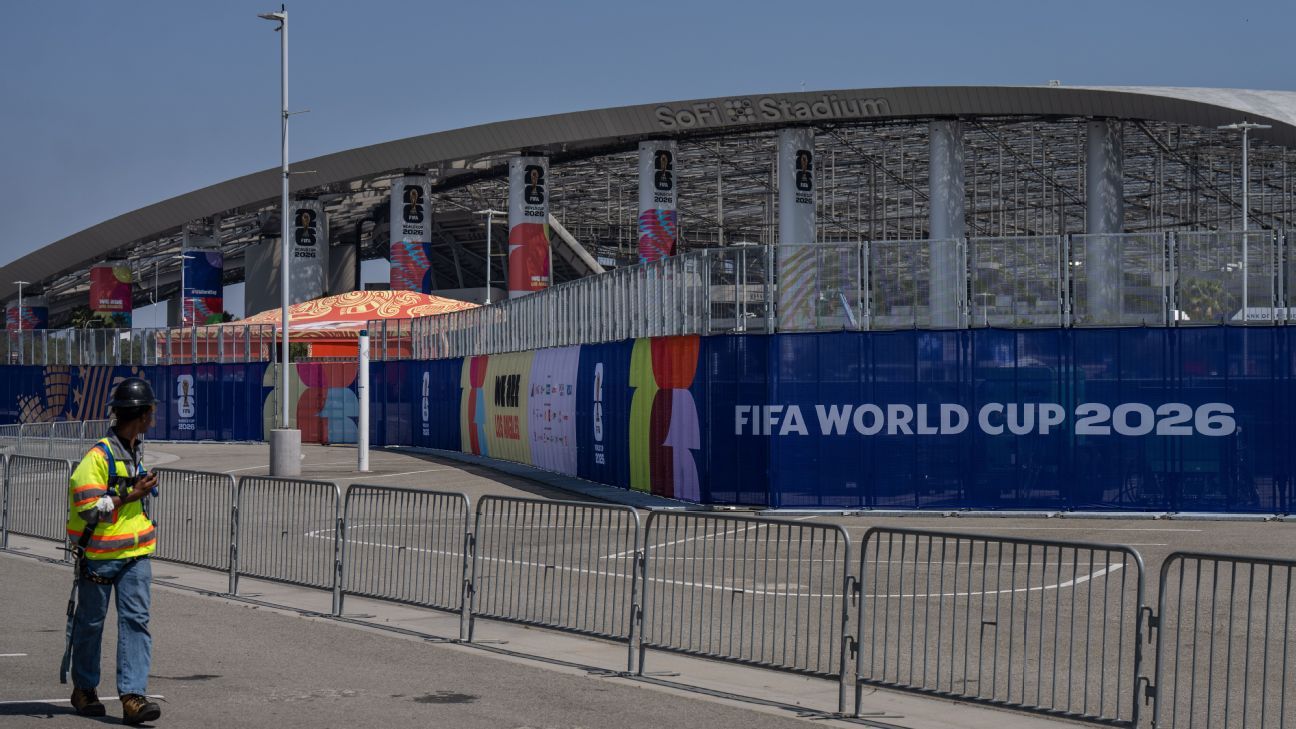
INGLEWOOD, Calif. — Workers at SoFi Stadium, located near Los Angeles, have voted to authorize a strike as preparations intensify for the opening match of the United States men’s soccer team in the World Cup.
This vote does not automatically mean that the approximately 2,000 bartenders, servers, cooks, and dishwashers will initiate a walkout, but it does provide them with that option after negotiations with the stadium’s food service provider have stalled.
The decision comes just days ahead of the U.S. team’s opening match against Paraguay. Union member Yolanda Fierro indicated that unless an agreement is reached, workers may choose to strike for the June 12 game.
Fierro highlighted concerns among workers about their wages and job security, especially in an environment of heightened immigration enforcement under the Trump administration. This week, Los Angeles County Sheriff Robert Luna announced that the U.S. Department of Homeland Security would have federal authorities on-site for security purposes during the matches, but not for civil immigration enforcement.
“What good is the World Cup for Los Angeles when workers can’t afford to pay rent and must worry about being apprehended by ICE?” asked Kurt Petersen, co-president of UNITE HERE Local 11. “If we do end up on strike, those luxury FIFA suites will only offer bottled water and snacks.”
Legends Global, which manages hospitality services at SoFi, expressed its long-standing partnership with the union and its commitment to reaching a satisfactory agreement through ongoing negotiations. “We are eager to provide an exceptional hospitality experience for fans attending the FIFA World Cup matches at SoFi Stadium,” the company stated on Wednesday.
Petersen criticized the pace of contract negotiations, describing it as “glacial.” He noted that while Legends has offered minimal wage increases for some kitchen staff, there have been freezes for several suite attendants and bartenders, despite the lucrative opportunities the World Cup presents. The union is also demanding protections against subcontracting and the threat of federal immigration raids.
Cesar Zamora, a bartender at the stadium, expressed his disappointment that his employer has not implemented necessary changes ahead of this significant event. “The FIFA World Cup will bring in massive profits, yet we are still fighting for basic dignity and security,” he stated. “We deserve better, and if that means striking, I’m prepared to do so.”
Community organizations in other World Cup host cities, including Atlanta and Miami, are also advocating for a suspension of U.S. immigration enforcement during the matches, concerned that arrests near stadiums and viewing parties could mar the celebratory atmosphere.
The World Cup is anticipated to attract millions of fans to matches slated for June and July across 11 U.S. cities, in addition to events in Canada and Mexico.