



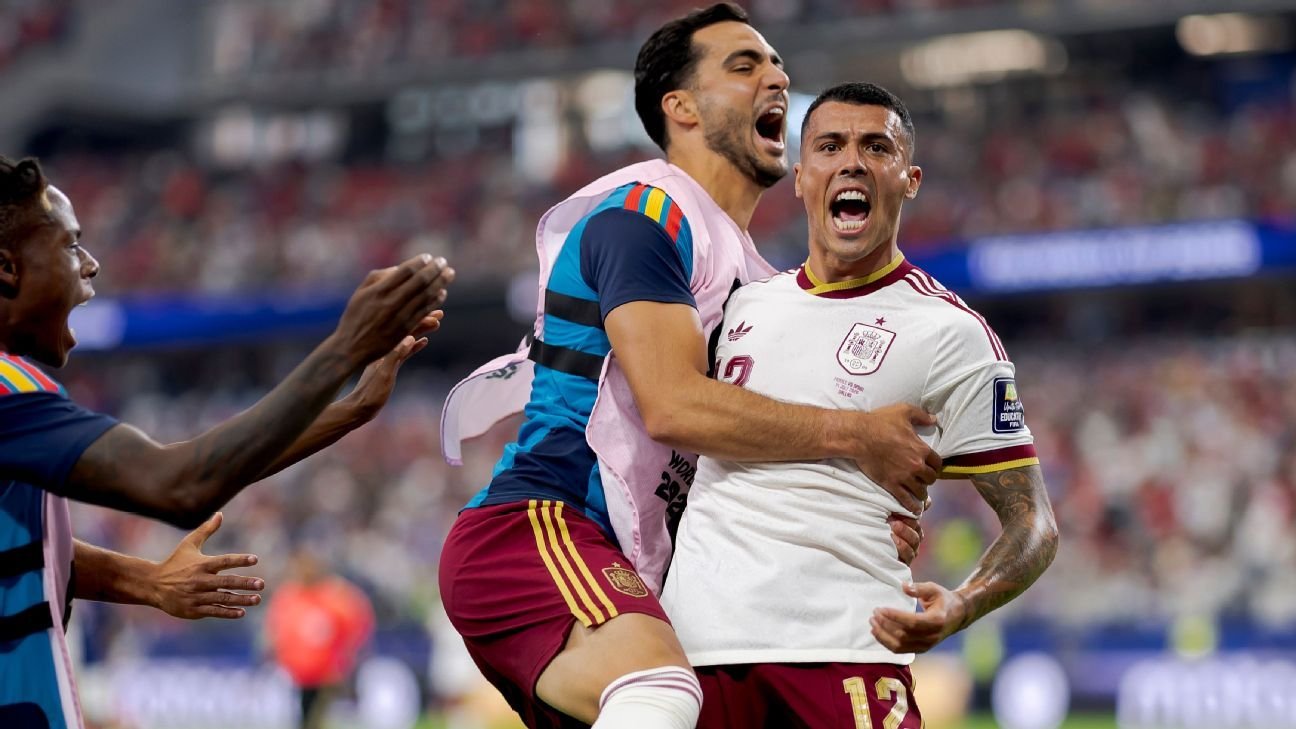
ARLINGTON, Texas — Spain secured their spot in the World Cup final set for Sunday, triumphing over France with a 2-0 victory.
Featured as a closely contested semifinal between two European titans, Spain asserted dominance for most of the match, fully meriting their win.
Spanish forward Mikel Oyarzabal opened the scoring from the penalty spot in the 20th minute after French left back Lucas Digne was penalized for inadvertently kicking Lamine Yamal in the penalty area. This was one of several blunders that marred a lackluster first half for France.
Didier Deschamps, who will step down as the French coach after the tournament, faced another setback just 10 minutes later when Arsenal center back William Saliba had to leave the pitch due to a back injury.
France, the reigning champions from 2018 and runners-up in 2022, showed signs of improvement after halftime. However, their momentum was quickly thwarted by Spain’s second goal.
Spain’s right back Pedro Porro combined expertly with midfielder Dani Olmo before calmly placing his shot past goalkeeper Mike Maignan.
Despite boasting a wealth of attacking talent, France ended the match with an expected goals (xG) total of only 0.3, as the reigning European champions Spain advanced to their second World Cup final, their first since winning the title in 2010.
They will face either England or Argentina, who are set to compete in the second semifinal in Atlanta on Wednesday. — Rob Dawson
French Favorites Fail to Shine
This match served as a reminder of the team nature of soccer. When executed well, the collective often excels beyond individual capabilities. Spain leveraged their technical prowess to counter France’s threats effectively, overwhelming Les Bleus on Bastille Day.
The stunning exit of the tournament favorites makes headlines, which is warranted, but it’s crucial to note that Spain was ideally suited to take on Deschamps’s side. Their ability to maintain possession and aggressively win it back suffocated France’s attacking efforts.
Spain’s midfield outmatched central players Adrien Rabiot and Aurélien Tchouaméni, who struggled for support from a defensive line not utilized to pushing forward. The situation worsened for France following Saliba’s exit, replaced by Maxence Lacroix.
This pattern is rare for teams faced with the signature strengths of Spain, as most World Cup competitors lack either the ball retention or pressing capabilities required. Such pressing was vital in denying France’s speedsters Bradley Barcola, Ousmane Dembélé, and Kylian Mbappé.
1:02
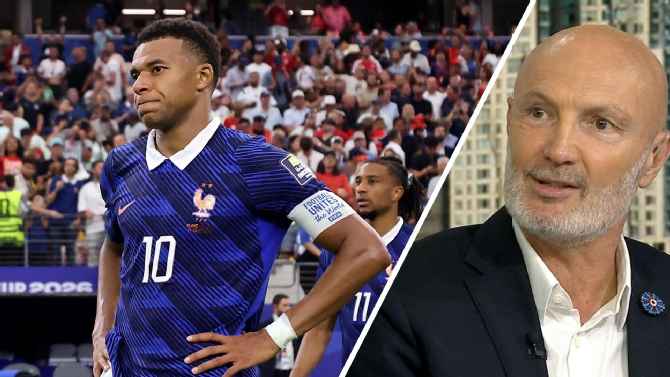
Leboeuf: France semifinal loss to Spain is ‘a failure’
Deschamps attempted to counter this by positioning Michael Olise deeper, but the Bayern Munich star’s day was challenging, trapped between Rodri and Fabián Ruiz. At halftime, he opted for Manu Koné, replacing Rabiot’s physicality with a more pass-oriented approach, but again with no success.
He waited for Spain to falter, relying on keeping Mbappé and Dembélé high up the pitch, anticipating a quick long ball could ignite a counter. This strategy, however, invited pressure and potentially another goal—a scenario that unfolded with Porro’s strike.
Ending his World Cup-winning tenure as France’s manager on this note won’t sit well with Deschamps, who will face criticism, especially when compared to de la Fuente’s more intricate tactical execution on the field.
Yet, how much blame can he shoulder?
Deschamps emphasized mental preparation, minimal tactical complexity, and permitted his front four to showcase their abilities—an approach that paid dividends throughout the tournament. However, it faltered against a team that denied them possession, space, and energy at every juncture. — Gabriele Marcotti
Spain Secures World Cup Final Spot
0:58
Why Spain will be ‘huge favorites’ no matter their final opponents
For the first time since their 2010 triumph, Spain will contest a World Cup final, and they will meet one of two compelling opponents in New Jersey.
They will face either England, who they defeated to capture Euro 2024, or Argentina, whom they were scheduled to play in the 2025 Finalissima, a match that was ultimately canceled due to the conflict in Iran and other scheduling issues related to fixture congestion and the inaugural FIFA Club World Cup.
A rematch against England won’t simply reprise their previous encounter, as manager Thomas Tuchel has implemented significant changes since Gareth Southgate’s tenure culminated in Berlin two years ago.
If they confront Argentina, fans will see how De la Fuente plans to handle Lionel Messi. Spain matches against Argentina are infrequent, having last met in March 2018—a friendly that Messi missed due to injury, concluding in a 6-1 Spanish victory. — Marcotti
French Attack Falls Flat
France underwent a transformation from the “Fantastic Four” to the “Invisible Four.”
After an impressive World Cup run, this formidable French front line of Mbappé, Olise, Barcola, and Dembélé went silent when it mattered most. While Spain deserves credit for neutralizing their threats, this constituted both an individual and collective failure for France’s key assets.
The thrust of this team relied on their attack. Despite being a typically conservative and defensive coach, Deschamps adapted by accommodating such talent, a strategy that had worked—until today. Against Spain, the change proved too ambitious.
Olise appeared uncharacteristically anxious, and this disappointing showing tarnishes a remarkable season for the winger. Spain’s Rodri effectively stifled his creativity, leading to uncharacteristic mistakes; he ultimately ended up hiding on the right wing.
Dembélé struggled as well, making poor decisions throughout the match. He lacks the excuse of inexperience; having lifted the World Cup and two Champions League titles, he should have performed better. However, similar to his experience in the 2022 World Cup final—where he was subbed off after just 40 minutes—he was absent for extended stretches, with only two late shots on target to his name.
Mbappé made the most significant contributions, albeit primarily from isolation, often forced to forge chances for himself.
On Barcola, Deschamps shoulders some blame as well. Though fellow PSG winger Désiré Doué was initially favored to start on the left, Deschamps revised his decision on game day, which didn’t pay dividends. France rarely created space behind Spain’s defense, making it difficult for Barcola to exploit his speed effectively.
Tactically, Deschamps failed to find the necessary answers, culminating in a somber day for Les Bleus and their celebrated attack. — Julien Laurens
Spain’s Stalwart Defense
Throughout the tournament, Spain conceded only one goal across their first six matches, largely due to their possession-oriented style, which minimized defensive duties. Nonetheless, against France’s dangerous assault, Spain’s backline showcased impressive resilience. Goalkeeper Unai Simón mainly had easy saves to make, amounting to just three.
With left back Marc Cucurella often involved in offensive play, defensive midfielders Rodri and Fabian Ruiz, along with right back Porro and center backs Aymeric Laporte and Pau Cubarsí, were tasked with eliminating threats. Each time a French attacker found a glimmer of opportunity, Spanish defenders swiftly closed it down, consistently winning confrontations.
Porro, Rodri, Laporte, Cubarsí, and Ruiz collectively secured 25 of 34 duels (74%) and made 44 defensive interventions. (Porro’s second goal also stemmed from a brilliant give-and-go play with Dani Olmo.) Meanwhile, Mbappé, who had been stellar throughout the tournament, managed to win only two of 11 duels and attempted just three shots with a measly 0.08 xG. France, despite multiple touches in the attacking third, managed just 10 shots overall.
France escalated pressure late on, which allowed Spain to retreat and play a low block—something they had often struggled against during the tournament. Unsurprisingly, Spain executed this strategy effectively; seven matches into the tournament—and just one left to go—they have allowed a mere one goal. — Bill Connelly
Rodri and Porro Rise Above Challenges
0:51
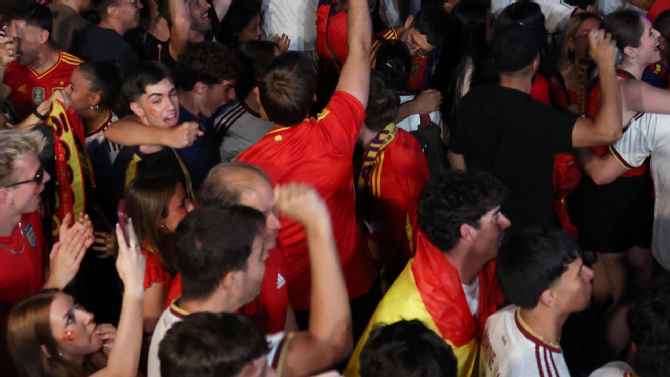
Fans in Madrid go wild as Pedro Porro doubles Spain’s lead
Rodri and Porro both experienced challenging domestic seasons in the Premier LeagueTottenham Hotspur side that faced relegation threats. For both players, it was a season to forget.
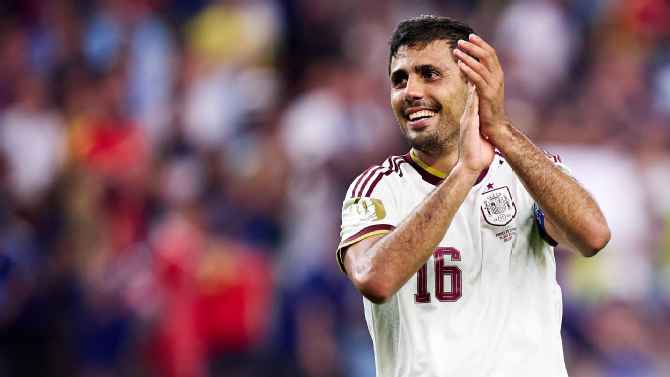
However, fortunes can flip rapidly. Throughout this World Cup, Rodri has returned to his dominant form. He delivered a quietly impressive performance in the semifinal, playing a vital role in stifling France’s gameplay in the first half by effectively disrupting their flow and reclaiming possession. This was the Rodri who earned the 2024 Ballon d’Or.
Porro also excelled; while keeping Olise, Barcola, and Doué on lockdown during the match, he made a crucial interception that thwarted a scoring chance for Mbappé when the score was still 0-0. To cap it off, Porro’s second-half goal sealed the match for Spain, confirming his standout performance.
Rodri and Porro transitioned from forgettable club seasons to potentially claiming World Cup winners’ medals by the end of the week. — Dawson