



-

Ryan O’Hanlon
Multiple Authors
Since the expansion of the World Cup to 32 teams in 1998, there have been 28 quarterfinal match-ups. Out of these, 14 matches were determined by a single goal, while only five featured outcomes with a two-goal difference. The other nine games were settled through penalty shootouts.
This illustrates that 82% of recent World Cup quarterfinals have had margins of victory of one goal or less, with approximately one-third ending tied after 120 minutes. As we narrow down the contenders for the 2026 World Cup, it’s likely at least one quarterfinal will proceed to penalties and three will conclude with merely a one-goal win.
Given soccer’s inherently low scoring nature and the rarity of shots on target converting into goals, a solitary goal often indicates which team managed to put more shots on target rather than showcasing overall dominance. However, at this stage of the tournament, individual talent and pressure situations greatly influence outcomes.
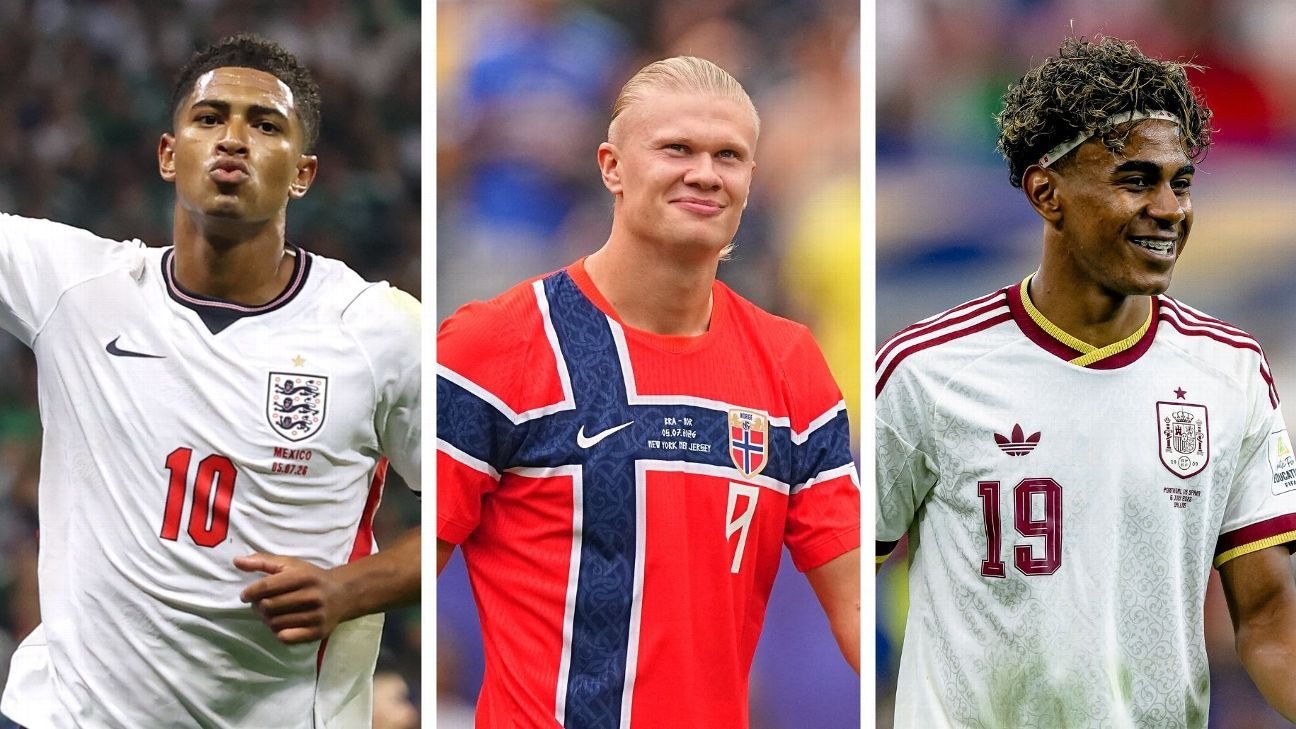
As we get ready for the quarterfinals, it’s the perfect moment to highlight the key players likely to make a significant impact on the outcomes.
Here are the eight crucial players to watch in the quarterfinals of the 2026 World Cup.
France: Michael Olise, attacking midfielder
France’s team dynamics are teetering on the edge of dysfunction. It isn’t due to internal discord but rather a lack of cohesion among the players. The defense is primarily focused on defending, the forwards on attacking, and the midfielders are there to cover ground without effectively linking the two units.
Successful teams blend roles: attackers that defend, defenders that join the offense, and midfielders who facilitate transitions. France lacks this balance; however, Olise is the exception to this rule. Without him, this team would struggle, but with him, they emerge as World Cup favorites.
Soccer often involves trade-offs. Aggressive passing can lead to a lower completion percentage, and prioritizing possession might hinder goal-scoring opportunities. Yet Olise defies these norms.
According to Futi stats, he participates in 11% of France’s plays — the highest on the team. He ranks second in expected goals (xG) and leads the tournament with five assists while posting an impressive 83% pass completion rate. He’s also top in progressive passes and carries while effectively contributing in defense.
This diagram illustrating Olise’s contributions throughout the tournament follows, courtesy of Futi:
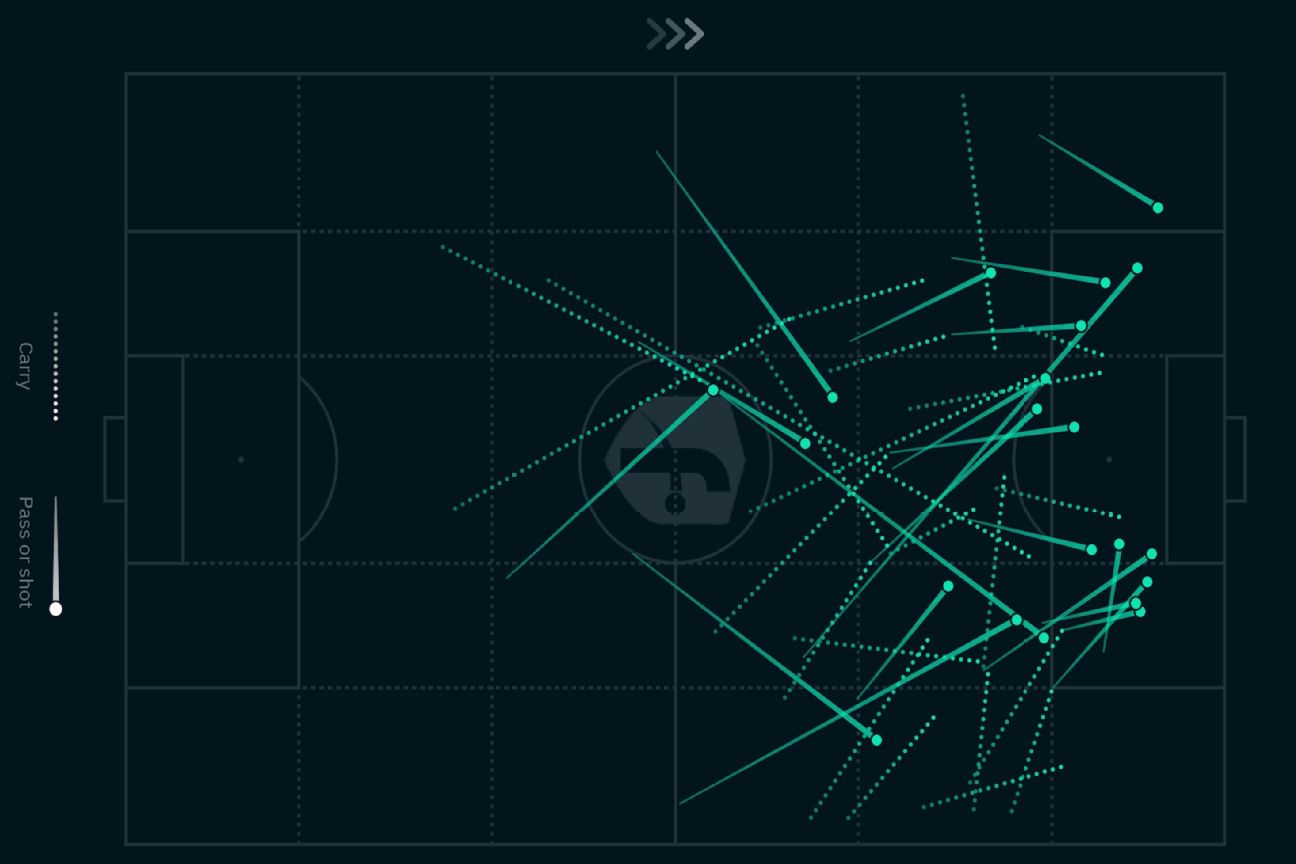
France can field defenders and attackers without much crossover, yet with Olise, the team shines remarkably in all areas.
He not only excels as a passer but also generates shots effectively. While opponents focus on Kylian Mbappé, the key to thwarting him lies in disregarding Olise.
Morocco: Achraf Hakimi, right back
In a similar vein to Olise, Hakimi serves as the pivotal player for Morocco, performing multiple roles that allow teammates to focus solely on their strengths.
His involvement constitutes 12% of Morocco’s plays—the highest on the team—and he has orchestrated 80 successful plays that raised their chances of scoring, far outpacing his teammates. Hakimi also leads the team in shots and expected goals.
While it’s impressive to utilize a right back in a multifunctional role, Hakimi elevates this by excelling as both a playmaker and goal scorer. His contributions during this tournament highlight his ability to execute double duties with ease.
When Morocco faces France, questions arise as to whether Hakimi can simultaneously neutralize Mbappé and contribute significantly in offense. Ultimately, while it may be too much to expect perfection against such a formidable opponent, Hakimi remains uniquely equipped to handle such a tall task.

Norway: Erling Haaland, forward
It’s crucial to tread lightly here: Haaland embodies the archetype of an exaggerated soccer star—blazing fast, extraordinarily aerial, and a natural goal scorer.
While he may not contribute significantly to Norway’s possession as evidenced by limited passing and dribbling activity, his shooting prowess elevates him to elite status, ranking in the 99th percentile for shot value and pass receiving.
With 18 shots under his belt, he stands apart from his teammates, producing an impressive 4.9 expected goals (xG)—far beyond that of any other Norwegian player.
Labeling Haaland as “Norway’s key player” is an understatement; his versatility enables the team to adapt to varying tactics, whether exploiting counter-attacks or taking the lead with effective possession play.
As Norway looks to advance past England, their tactical approach will likely dictate whether Haaland can capitalize on opportunities, particularly when they present themselves on the counter.

England: Jude Bellingham, attacking midfielder
While Harry Kane is often celebrated as England’s star, Bellingham emerges as the player whose value is perhaps even higher.
Despite the ongoing debate over his ranking, Bellingham’s vast skill set encompasses shooting, dribbling, linking, and ball recovery, making him a fulcrum for the team’s attack.
A prime example of his impact was evident when he made a deep run to score against Mexico. With challenging defensive markers in his way, Bellingham’s sharp instincts allowed him to net the goal from considerable distance.
HEY JUDE! 🏴
England takes a 1-0 lead in Mexico City courtesy of the Jude Bellingham header! pic.twitter.com/p0oE3MWRdb
— FOX Sports (@FOXSports) July 6, 2026
Bellingham’s deep runs disrupt defensive formations, challenging defenders and creating chaos in the box. His dynamic movement is a crucial asset within England’s more conservative playstyle, often leading to significant scoring opportunities.
Engaging consistently in winning phases, he has become the glue that keeps the team connected while also being its offensive difference-maker.

Spain: Lamine Yamal, winger
In their initial five matches, Spain has amassed a remarkable 2,944 touches in the attacking third, leading all World Cup teams. Known for their methodical and adept ball movement, Spain exhibits a unique ability to maintain possession.
However, challenges arise when converting those possessions into goals. The difference lies in the finishing touches following their intricate plays.
Yamal boasts impressive dribble and carry value metrics but lags in terms of shots taken and chances created. Despite his reputation, the tournament has yet to showcase his elite level of shot generation.

Belgium: Jérémy Doku, winger
As the quarterfinals approach, Belgium enters as significant underdogs, with only a 4% chance to win it all, according to expected outcomes analysis. With a volatile asset such as Doku, Belgium could leverage his big-play potential to advance.
Doku has only started three matches and averages marginal minutes on the field. Though performance has been somewhat lackluster thus far, his prior season demonstrated his exceptional talent as one of the league’s top players.
Renowned as an exceptional ball carrier, Doku harnessed his abilities to generate considerable expected assists that could provide Belgium with an invaluable boost if he finds his rhythm in tournament play.

Argentina: Lionel Messi, forward
Messi remains a powerhouse, perhaps still the finest soccer player globally. He and Haaland share the distinction of being in the top tier of value-added statistical performance during the tournament.
Leading all players in both expected goals and expected assists solidifies Messi’s status as Argentina’s crucial player. His ability to create, score, and facilitate remains unrivaled.
The challenge for Argentina is to minimize the distance Messi must cover to have a significant impact on the game. Recent lineup strategies have been more supportive of Messi, allowing him to play closer to the goal and focus on high-efficiency plays.
One of the keys to this plan lies in the performance of Lisandro Martínez, who excels in delivering progressive passes and defensive actions.

Switzerland: Gregor Kobel, goalkeeper
Despite limited standout goalkeeping performances thus far, Kobel is pivotal for Switzerland, especially as their biggest underdog status in the quarterfinals suggests a need for exceptional play.
Having played a crucial role in Borussia Dortmund’s run to the Champions League final, his shot-stopping abilities have transferred over remarkably well to international play this summer, evident in his performance during the shootout in the round of 16.
With a notable gap in expected goals conceded, Kobel’s skills will be essential to Switzerland’s hopes of advancing past Argentina in the quarterfinals.