



-

Leander Schaerlaeckens
Multiple Authors
Before delving in, there’s something important that Matt Freese wants to convey. It’s true that this story will touch a lot on his father. He understands the narrative pull of discussing his father, the brilliant medical mind who questioned Matt’s choice of a soccer career and passed away far too soon, making it a compelling aspect of his journey. However, it’s critical to recognize the foundational role played by his mother, Marcia Geary Wolicki, who championed his soccer aspirations amidst academic and social pressures; she raised Matt and his three older siblings largely alone after their parents’ divorce when Matt was just 8. She was the one who diffused conflicts and handled the chaos of their household, often taking Matt to early morning training sessions to help him fulfill his ambitions.
“A lot of the focus is on my dad,” Matt Freese acknowledges in his deep, slightly husky voice. “But I really owe so much to my mom. I don’t want her to miss out on recognition just because my dad’s story holds more dramatic appeal.”
This sentiment sets the stage for what’s to come.
Matt’s father, Dr. Andrew Freese, is remembered as a “noted neurosurgeon and pioneer of gene therapy,” per his obituary in The Philadelphia Inquirer. As the former chief of neurosurgery and the neurological medical director at Brandywine Hospital, he was involved in groundbreaking surgeries, including one of the first gene-therapy procedures aimed at curing neurological disorders. He treated gunshot victims, healed paralysis, and turned a young boy with Canavan disease into the longest-living person diagnosed with the condition, extending patients’ life expectancies by more than a decade.
Dr. Freese had a distinguished academic background, publishing research while at MIT under the guidance of the founder of Moderna. He spent countless hours working, sharing breakthroughs with his children, including the concept of mRNA long before it became globally significant during a health crisis.
Coming from a family steeped in science, with both parents working at the National Institutes of Health and a sister, Dr. Katherine Freese, who is a physics professor at the University of Texas, Andrew Freese was exceptionally bright, never losing an argument with his kids. He had a passion for art and culture but was indifferent to sports.
When Matt decided to leave Harvard after three semesters to pursue professional soccer with the Philadelphia Union, his father struggled to support such a choice. Tragically, Dr. Freese passed away from kidney failure at the age of 61 in July 2021, never witnessing his son’s evolution into a starting goalkeeper for New York City FC or his subsequent call-up to the U.S. men’s national team. Matt reflects, “My father was remarkably intelligent. Much of our family is rooted in academia and medicine, and while he had exceptional talent and was deeply caring in his medical career, he expected his children to pursue meaningful work.”
As the youngest of four siblings, Matt was known for his humor and exuberance. He once dressed as a cheerleader from a rival school for Halloween in second grade.
“He was such a funny child,” recalls his sister, Dr. Lyssa Freese, an assistant professor of earth system science at the University of California, Irvine. “Matt demonstrated strong observational skills and leadership, not typical for the youngest in a family.”
Matt earned the nickname “Booger,” courtesy of oldest brother Jack, who found little Matt to be quite bothersome.
During his early years, the family relocated often for his father’s job—moving from Philadelphia to Minneapolis, South Carolina, and back. Soccer became Matt’s means to forge friendships in each new place. In South Carolina, he admired a local goalkeeper, prompting his brother Tim to practice shots on him in their backyard.
“He was a natural athlete,” Tim recalls. “He made incredible saves that surprised me, although I couldn’t foresee him becoming a national team goalkeeper at that time.”
All four siblings exhibited athletic prowess; Matt, standing 6-foot-3, is slightly shorter than his brothers. Matt was involved in the jazz band at school, excelled in track, and played multiple sports.
His maternal grandfather, Jack Geary, had been drafted by the NFL’s New York Bulldogs in 1949 but didn’t play in a regular season due to an injury. Nevertheless, his athletic legacy is still felt by Matt, who embodies his grandfather’s spirit of leadership and is partial to stylish clothing.
The family’s frequent relocations brought the siblings and their mother closer together, a bond solidified by the absence of their father.
“His career was all-consuming, and while it was a point of pride, at times it felt like he was more invested in saving others than his own family,” Matt reflects. “It stemmed from an altruistic place, but as a son, it was often difficult to see.”
With his siblings having left home, Matt and his mother developed a close bond, often watching the movie “Miracle” about the 1980 U.S. Olympic hockey team together, a ritual they found especially meaningful.
Geary Wolicki felt signs of Matt’s potential in sports but was typically caught up in the daily grind of parenting and household duties. She looks back now, realizing the indications were there long ago.
In elementary school, when asked who he would like to have dinner with from anywhere in the world, Matt chose then-USMNT goalkeeper Tim Howard. A few years later, he jokingly presented his mother with a forged letter purportedly from Real Madrid inviting him to join their academy, a mix of prank and sincere desire. By high school, Matt was fully immersed in the Philadelphia Union academy and even trained with prestigious clubs like Manchester United.
Matt’s dedication was evident early on; he often woke up at 5 a.m. to practice alone. “I enjoyed it, and our family emphasized hard work as an expectation,” he explains.
While his mother supported his soccer dreams, his father had reservations, seeing professional sports as perhaps a selfish career choice.
1:20
Nicol: Pulisic’s form key for USMNT’s World Cup momentum
Despite having offers from numerous colleges to play soccer, Freese chose Harvard, honoring his father’s legacy. This decision symbolized a balance between fulfilling his father’s academic aspirations and nurturing his soccer pursuits.
At Harvard, Freese intended to double-major in economics and computer science, actively participating in various campus organizations. When he left school, he maintained a thirst for knowledge by auditing advanced sports business courses at the University of Pennsylvania’s Wharton school, often seeking the professors’ insights.
After a year, he returned to Harvard to complete his education, initially as a double major but eventually streamlined his focus to economics. He graduated in May 2022, just a year after his father’s death, who had come to accept and support Matt’s career path.
Being both a student and a professional athlete generated unique advantages for Freese. “My dual commitment helped me excel on the field,” he reflects, noting the cognitive benefits of academic engagement during sports training.
Throughout his tenure with the Union, he trained under distinguished goalkeeper Andre Blake, valuing the opportunity to learn from one of the best.
Alongside sports, Freese made an impact off the field by joining U.S. Soccer’s Athletes’ Council and becoming a team representative in the Major League Soccer Players Association. He completed an internship with a private equity firm in 2022.
Despite his impressive achievements, Freese still views himself as the underdog in his family. His mother feels differently, arguing that his journey showcases the intellectual dedication required to get to where he is today.
Freese undertook a confidential research project at Harvard focused on penalty-takers, which he prefers to keep private, viewing it as a competitive advantage in his career as a goalkeeper, particularly known for his skills in saving penalties.
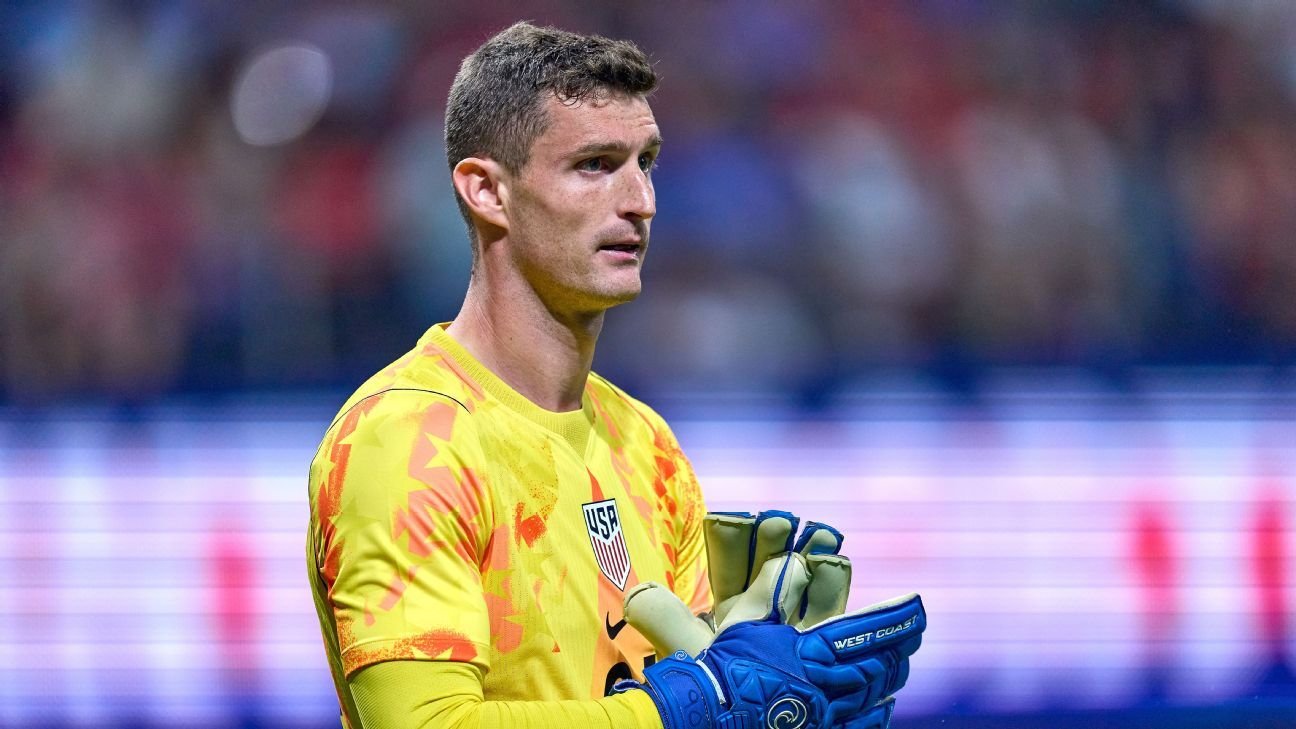
As February unfolds, Freese finds himself on a sunny hotel patio in Palm Springs, California, reflecting on the pressures of being the U.S. men’s national team’s starting goalkeeper as World Cup aspirations loom. However, he remains focused on the present, knowing there’s much soccer ahead.
Freese maintains an unconventional perspective as he views his soccer career not as an endpoint but as part of a larger journey leading to future endeavors in sports management. He has recently taken on a role on U.S. Soccer’s board of directors to gain insights and influence.
His pregame routine is meticulous, underscoring the importance of preparation for goalkeepers. “It’s crucial to stick to a routine,” he explains, detailing how he approaches his game day with purpose.
His regimen kicks off two days prior to the game, including film analysis, meditation, and ample sleep to prepare both physically and mentally. He opts for consistent meals to maintain a stable routine and foster confidence.
Freese has also engaged in community service, volunteering at local soup kitchens while on the road with the Union, embodying a commitment to giving back.
As he continues navigating his dual roles as an athlete and an educated individual, Freese remains dedicated to honing his skills, contributing to the sport, and serving his country as its goalkeeper.