



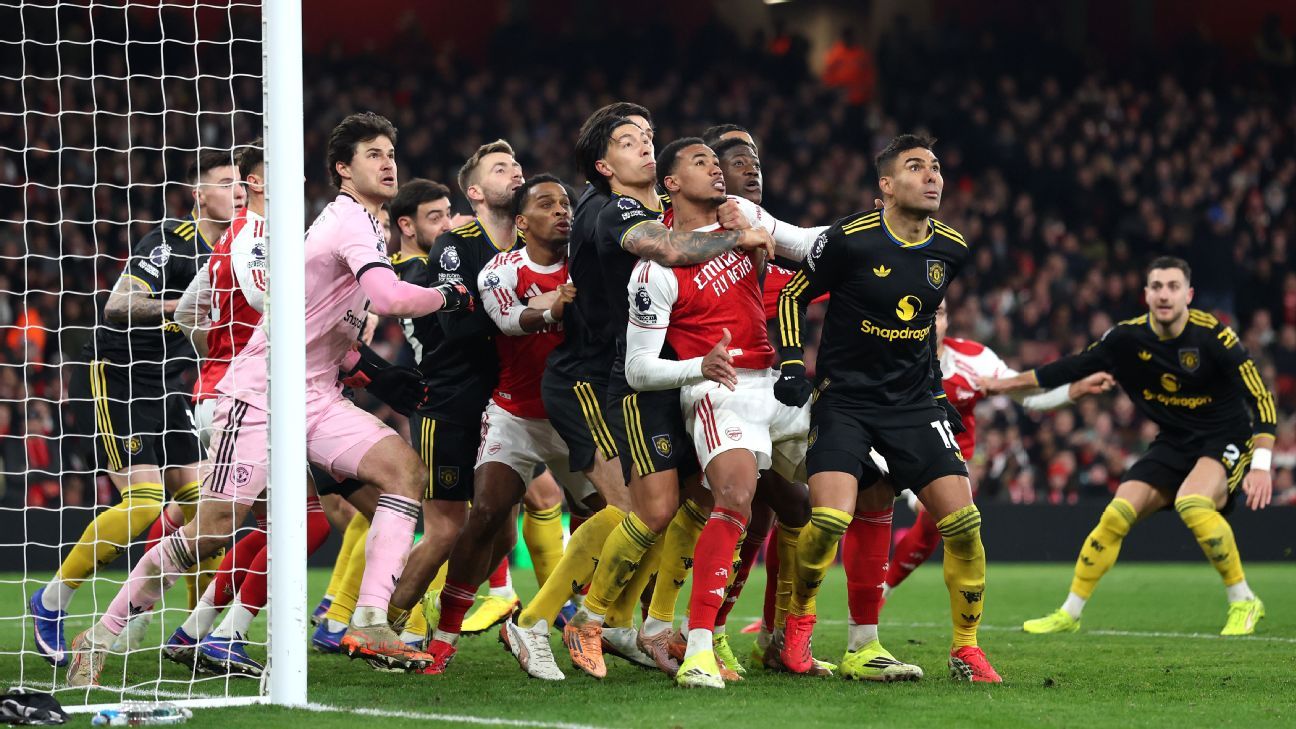
If you’re like me and watch numerous games, you might not notice the subtle changes in the sport over time. It’s much like the frog in boiling water analogy; gradual changes can easily go unnoticed. However, I encourage you to pay attention next time there’s a corner or free kick from a wide angle. Observe the grabbing, holding, twisting, blocking, and players whose primary role seems to be colliding with their opponents. You’ll notice this occurring while the ball is in the air and, often even more, before play actually starts.
It might feel normal to you, which is understandable. It has struck me as typical at times as well.
But it shouldn’t be this way. This behavior is detrimental to the game, and taking a step back reveals that it doesn’t have to be a part of it.
Recently, I attended a match between Chelsea and Brentford. Brentford took nine corner kicks, and each time was filled with the same antics. One of their central defenders—usually Kristoffer Ajer, or occasionally Nathan Collins—would focus on shielding Chelsea’s goalkeeper, Robert Sánchez. Chelsea’s counter-strategy often involved Enzo Fernández attempting to shove Ajer out of the way. They grappled like two NFL linemen, with the smaller Fernández trying to gain leverage against the larger Ajer, and several times, both ended up tumbling into the net.
They weren’t alone in this chaos. The penalty area turned into a hotspot of shirt-pulling, holding, and wrestling as players jostled for an advantage.
I fell in love with this sport because of its grace and skill, not the chaotic brawling. Grown men wrestling and shoving each other shouldn’t be part of the experience. It’s not part of soccer’s essence, and it’s certainly not tolerated anywhere else on the pitch. If Declan Rice were to hug Kylian Mbappé to prevent him from running, it’s a foul. If Virgil van Dijk body-checks Lamine Yamal into the crowd, it’s a foul. But during a corner kick? Usually, it’s overlooked.
I don’t blame the players; it’s in their nature to test the limits of what referees will allow. Anyone who has played sports understands this. I don’t solely fault the referees either. They operate under the directives from their associations, and for reasons unknown, have permitted such incidents to slide.
One former referee commented, “Before the ball is in play, almost anything goes. At worst, you might get a warning. Once the action begins, referees often avoid calling fouls if the pushing and shoving seems mutual or if it’s a light shove. Two hands, however, will typically draw a whistle… Most of the time, at least; interpretations vary by league and competition.”
Some argue that consistency from referees is key, and as long as that’s maintained, there’s no real issue.
That might be a valid stance, but I find a fundamental issue with it. Not only does this create complications for referees, as seen with the Díaz penalty, but it also detracts from the aesthetics of the game without adding anything of value. The pre-kick melee is not what drew me to soccer in the first place. The resulting goals, often resulting from chaotic scrambles in the six-yard box, are not particularly thrilling. Watching highly paid players engage in this behavior is unappealing; it’s something I could witness in a local under-10 game.
This isn’t a criticism of scoring from set pieces or teams bringing in specialized set-piece coaches (yes, Arsenal, I’m referring to you, but it’s applicable to others as well). That aspect can be exciting and is part of the sport. However, skilled set-piece players would excel regardless of the interference when it comes to being blocked and tussled during corner kicks.
It’s not that I oppose physical play—quite the opposite; I relish aggressive tackles and shoulder challenges! I’m all for it. Just not when it involves players using their hands.
Arsene Wenger, now the “Chief of Football Development” at FIFA, advocates for a “daylight rule” regarding offside, believing it would lead to more goals. You want to hear what would truly result in more scoring? Eliminating the tendency for opponents to tackle Erling Haaland during corner kicks.
Surely no reasonable fan finds enjoyment in these tactics unless it benefits their own team, and I believe it’s time to put an end to this behavior.
The best part is this can be achieved without altering the Laws of the Game. Law 12.1 states a direct free kick is awarded if a player “holds an opponent” or “impedes an opponent with contact.” Simple! And according to the “Other Advice” section, referees are instructed to caution players who hold before the ball is in play and book them if they disregard this warning. Implementing this approach would lead to more goals, better performances from players, and likely reduce the surrounding controversies.
Is this an absolutist view? Perhaps, but players and coaches will quickly adapt. Ultimately, it’s simply about asking them to revert to what comes naturally: playing soccer.