



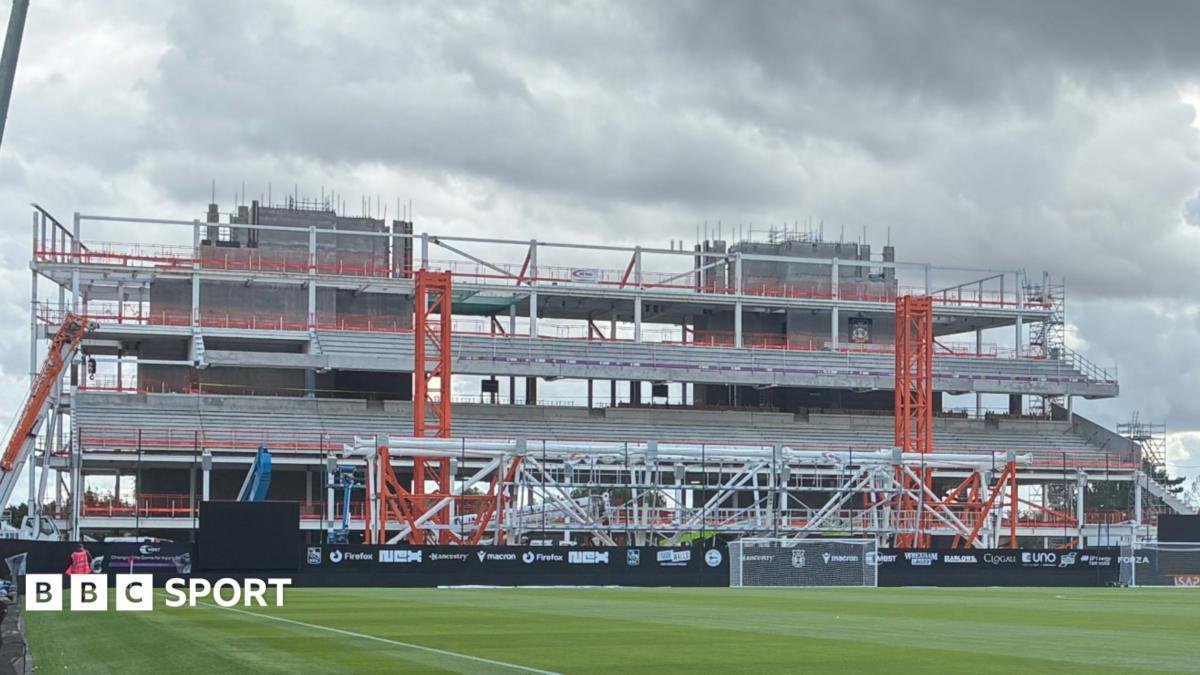
New amenities are also on the way. The dressing rooms and players’ tunnel are being moved to the Kop end of the ground—closer to the Turf pub where players originally changed before running out—with Parkinson and the sports science team helping shape the design.
Updated media facilities are planned too, along with a fan plaza by the railway station that will form a key gateway to the city.
“A year ago it was just a dirt patch,” said Williamson, who previously worked with Inter Milan during the San Siro’s renovation.
“Now you can see the steelwork and the foundations. It’s moving very quickly, and for the first time people can appreciate just how huge this stand will be.”
That’s no exaggeration, especially compared with the rest of the Racecourse, which still carries some of the lower-league character from the club’s past.
Against Watford, sharp-eyed fans may have noticed the massive steel truss that will support an LED screen almost 7 metres high and 18 metres wide.
“Everyone has been waiting a long time for the Kop to be developed, and over the past six months we’ve watched it rise from the ground,” said Parkinson, who couldn’t help but take in some of the 1,500 tonnes of steel on show during his pre-match walk.
“It’s hugely impressive. We’re pleased with the progress, and it’s going to be fantastic when we can finally get supporters in there.”
A small number of fans could be accommodated in the new stand before this season ends, though it won’t be fully operational—with all its features—until next term.
Whether that’s in the Premier League will depend on results on the pitch. After the draw with Watford, Parkinson was quick to note the team are two points better off than at the same stage last year.
The ambition is unmistakable, embodied by the rising stand that reflects Wrexham’s determination to keep building.