



-

Jeff Kassouf
Multiple Authors
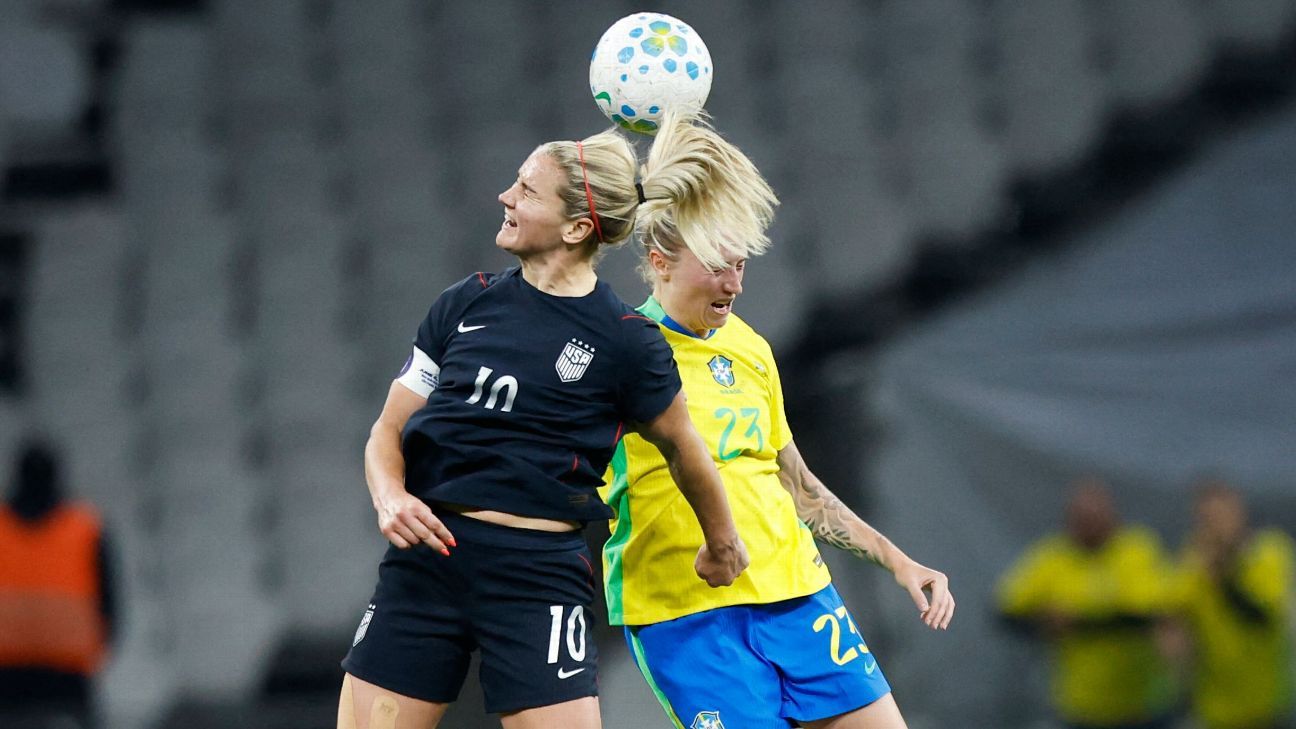
There’s nothing quite like the electrifying atmosphere of a packed stadium in Brazil, particularly when a crowd of 31,000 can sense that their team has gotten under the skin of the opponents. No tactical preparation or practice drills can fully simulate that kind of urgency.
The United States women’s national team faced that intensity head-on on Saturday in São Paulo, falling 2-1 to Brazil in a friendly match, their first encounter in the country since the 2016 Olympics. The first half’s challenges will weigh heavily on this relatively young squad as they approach the 2027 World Cup, but their determined second-half response showcased their resilience.
Sophia Wilson netted the U.S.’s first goal just under two minutes into the match, but the rest of the half saw Brazil relentless in their attacks, making the Americans feel as if they were off balance.
Taina Maranhão leveled the score after 11 minutes, exploiting a lapse in U.S. concentration during a throw-in. Just three minutes later, Brazil’s Bia Zaneratto took advantage of a quick transition to score, leaving the crowd in ecstasy.
U.S. coach Emma Hayes commented on the atmosphere, saying, “It was an incredible environment, and while I can prepare my team, nothing truly compares to experiencing it live. For many of my players, this was a first-time encounter with such crowd intensity.”
The match conditions were predictable. The U.S. faced boos each time they touched the ball early on and dealt with a game that was chaotic, a situation Hayes had both anticipated and desired.
However, the mostly inexperienced U.S. squad—only captain Lindsey Heaps remains from the Olympic team—fell victim to Brazil’s pressure. Frequently resorting to 50-50 balls, their decision-making and ability to control play lacked the necessary finesse.
Brazil consistently capitalized on U.S. turnovers in the attacking third. A youthful midfield duo of Claire Hutton and Lily Yohannes were unsupported by a backline that had never played together, with goalkeeper Mandy McGlynn unexpectedly starting in a crucial match. Brazil’s onslaught continued unabated.
Wilson stood out for the U.S. in the first half, valiantly attempting to hold the ball. She nearly equalized just before halftime and was involved in a play that could have earned a red card for Maranhão, who pulled U.S. defender Emily Fox down just outside the box. Maranhão escaped with merely a yellow card, allowing the U.S. to head into halftime just a goal down.
With the introduction of forward Michelle Cooper and defender Avery Patterson at the start of the second half, Patterson quickly made an impact, winning a battle from a Brazil goal kick that led to a powerful shot from Hutton in the 57th minute, tipped onto the bar by Brazil’s goalkeeper Lelê. The U.S. continued to press on the subsequent corner, but Patterson’s follow-up shot was deflected wide.
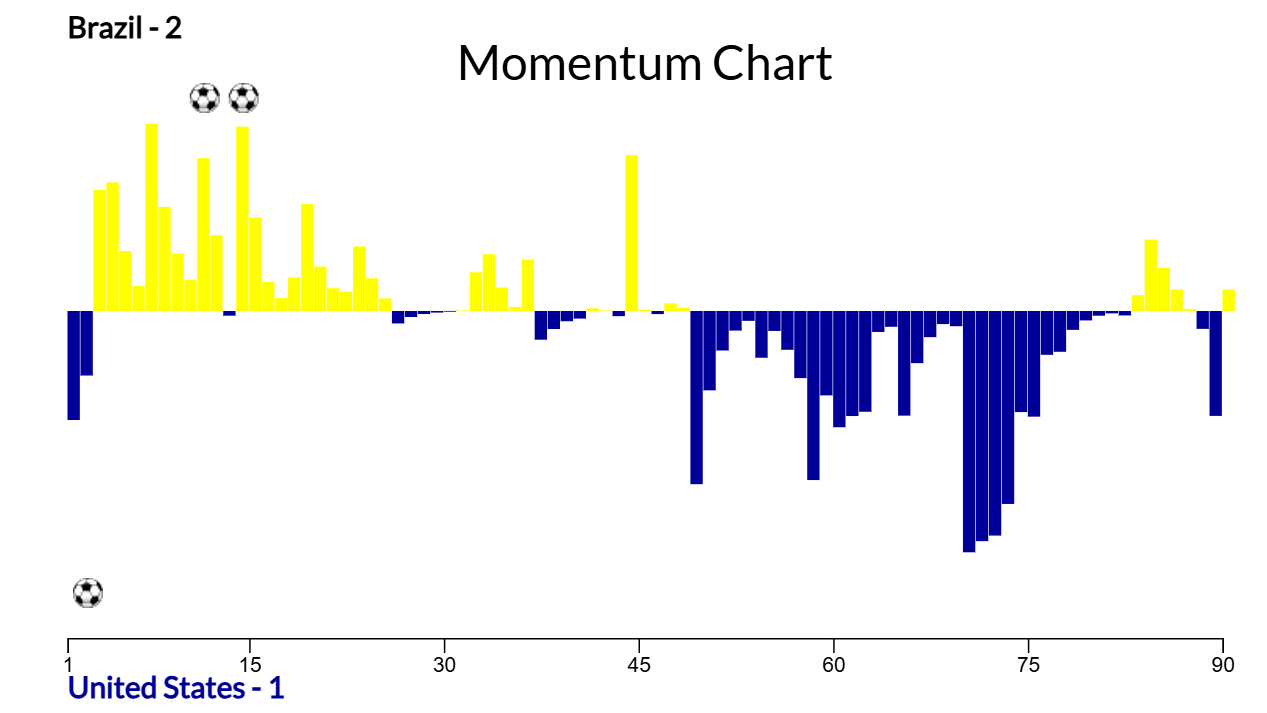
After halftime, momentum shifted decisively in favor of the U.S. The players displayed greater energy and urgency to win duels, adapting quickly to the Brazilian defense approaching them.
“You have to compete first,” Hayes said regarding the team’s improved performance. “Winning your one-on-ones, physicality is crucial. Many of our players don’t get that experience at club level, so there’s plenty to improve on because this kind of gameplay is different. At times it feels like a different sport. But you must earn the chance to play, and both Avery Patterson and Michelle Cooper brought that required physicality.”
However, despite matching Brazil’s physicality, the U.S. struggled in the final third, often failing to convert opportunities. At times they missed shooting chances or, like in the 75th minute, Cooper was unable to pick out a teammate after getting behind the defense.
If Wilson’s early chance or Cooper’s late offensive play had resulted in goals, the narrative could have shifted dramatically, but instead, the U.S. faced their fifth loss in 44 encounters against Brazil, marking their third defeat on Brazilian soil. This match added to their recent streak of losses, having fallen 2-1 to Brazil in California last year.
Emphasizing the margin of difference in modern soccer, Hayes pointed out, “The dominant victories of the past simply aren’t feasible in the current landscape. Teams are so evenly matched, and tactics matter immensely.” She also noted the challenges ahead as Brazil prepares to host the World Cup next year.
“I’m grateful for the experience, because if we wanted things easy, we’d stay in L.A. or somewhere else,” she stated, gesturing emphatically. “But we don’t seek out the easy path.”
The U.S. will have another opportunity to learn and adapt when they face Brazil once more in a rematch in Fortaleza on Tuesday under similar physical conditions against a challenging crowd.
This was precisely why the USWNT chose to come to Brazil, Hayes reiterated: “As my father used to say, ‘Wipe your mouth, move on, and prepare for the next challenge,’ because it’s going to be another fierce contest.”